
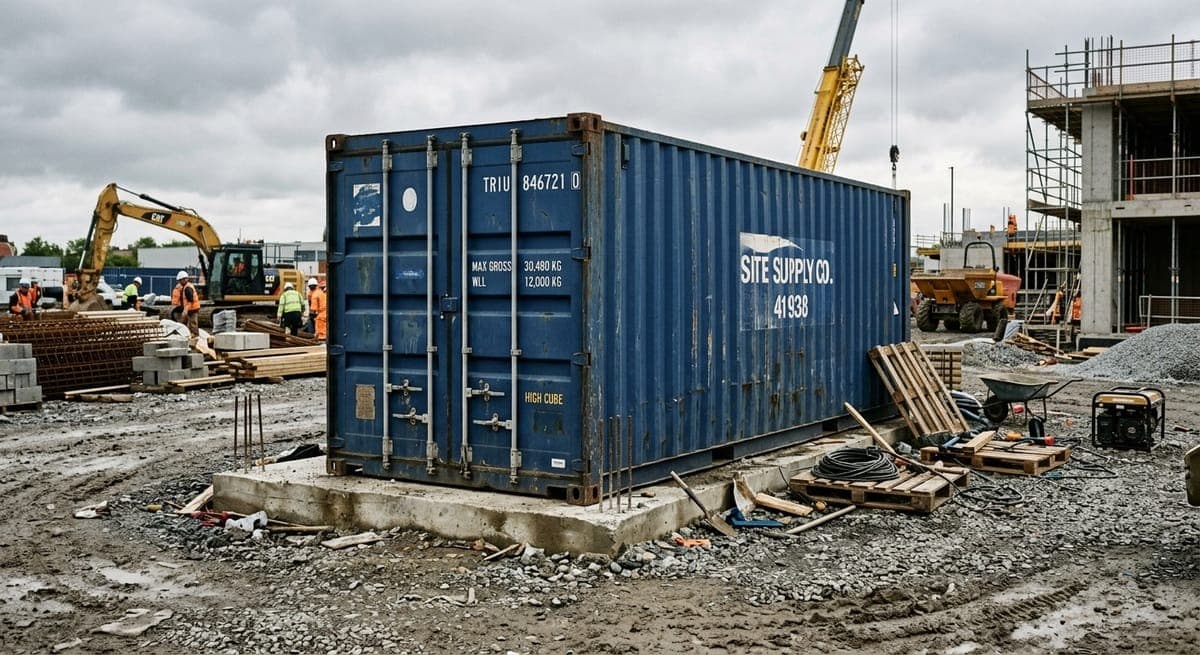
Construction sites lose between $300 million and $1 billion annually to equipment theft, according to the National Equipment Register. A single stolen generator can halt your project for days. Yet many contractors still rely on flimsy job site sheds or leave equipment exposed overnight.
Construction storage containers solve this problem with steel security, weather protection, and flexibility that traditional storage can’t match. These repurposed shipping containers provide lockable, weatherproof storage that relocates as easily as your project schedule changes.
At E&S Equipment Sales, we’ve supplied construction site storage solutions across Florida, Georgia, and Eastern Alabama since 2010. We own our inventory, inspect every unit with our licensed surveyor, and handle modifications in our workshop.
Why Choose E&S Over Broker Services
Most online container companies are brokers who don’t own containers, inspect them, or see the units they sell. They mark up prices and outsource delivery to whoever’s cheapest.
E&S operates differently:
We hold a licensed container surveyor certification, qualifying us to issue CSC certificates for ocean-worthy containers.
Our modification workshop has operated for 15 years. We install roll-up doors, man doors, windows, wall-mounted A/C units, and custom ramps without outsourcing.
Delivery comes from our CDL-licensed drivers who understand construction site logistics. They navigate tight residential streets, coordinate with site managers, and handle all our deliveries.
Member credentials include:
- National Portable Storage Association (11+ years)
- Florida Self Storage Association (8+ years)
- System for Awards Management (SAM.gov) for federal contracts
- Columbia and Suwannee County Chambers of Commerce
Top 5 Uses for Construction Site Storage Containers
1. Equipment Storage and Tool Security
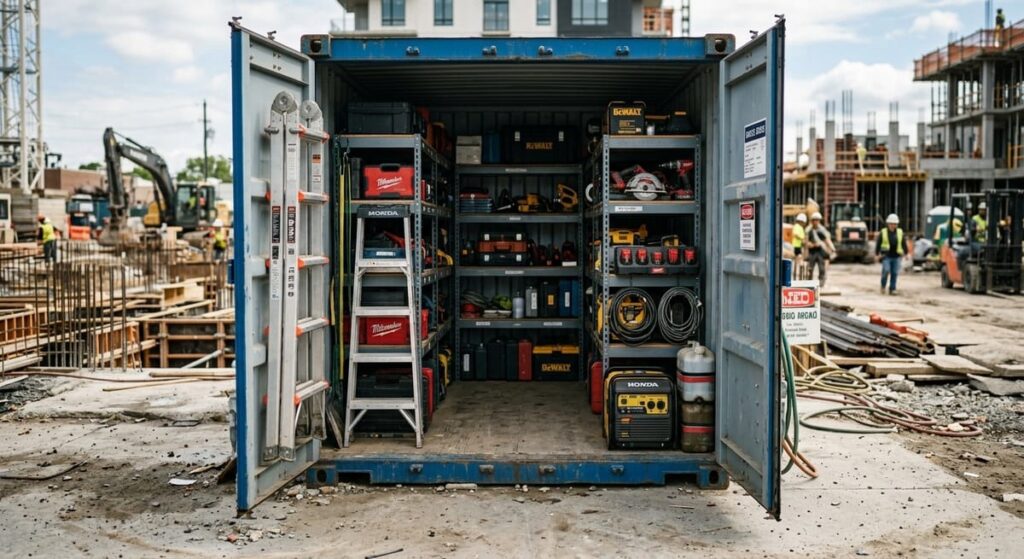
Lockable steel construction prevents theft that plagues open job sites. A 20-foot container holds power tools, hand tools, ladders, generators, and compressors for crews up to eight workers. The organized interior keeps equipment accessible without searching multiple locations.
The 14-gauge Corten steel walls withstand prying attempts, while marine-grade locking mechanisms resist bolt cutters. Weather protection extends tool lifespan by preventing rust and moisture damage.
Wall-mounted tool racks, pegboard systems, and heavy-duty shelving transform containers into organized workshops. Proper ventilation prevents condensation that damages electronics and precision instruments.
2. Weatherproof Building Materials and Supply Protection
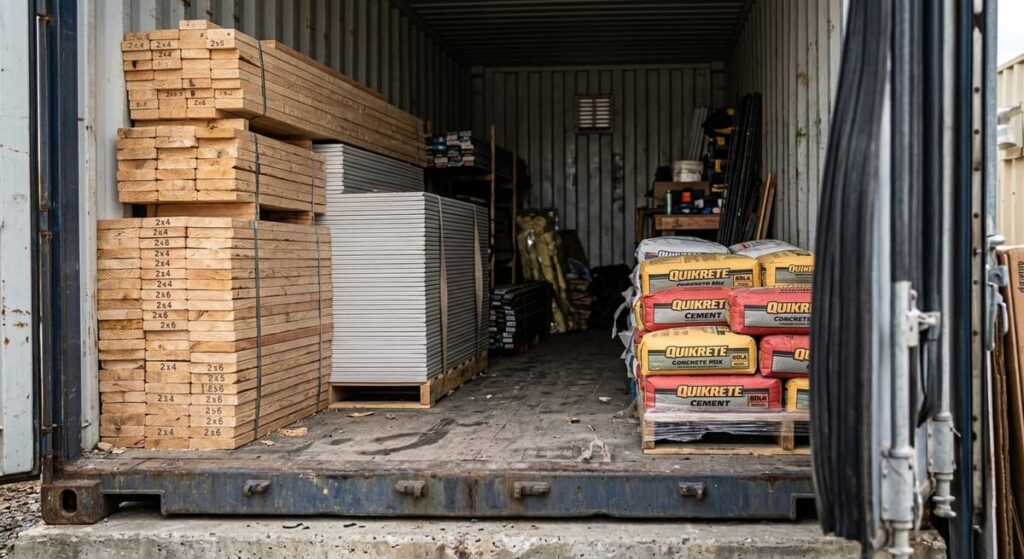
Keep lumber, drywall, concrete bags, and finish materials dry regardless of weather. A 40-foot container holds materials for around 2,000 square feet of construction, preventing weather delays from damaged inventory.
Bulk purchasing becomes practical with secure storage. Order materials three weeks ahead at volume pricing instead of paying premium rates for just-in-time delivery. This strategy saves 15-20% on material costs for multi-month projects.
The watertight rubber door gaskets prevent moisture intrusion even during hurricane-force winds. Ground-level access simplifies material handling: containers sit low enough for direct forklift access without ramps or lifts, reducing labor time and injury risk.
3. Mobile Office and Break Room Space Solutions
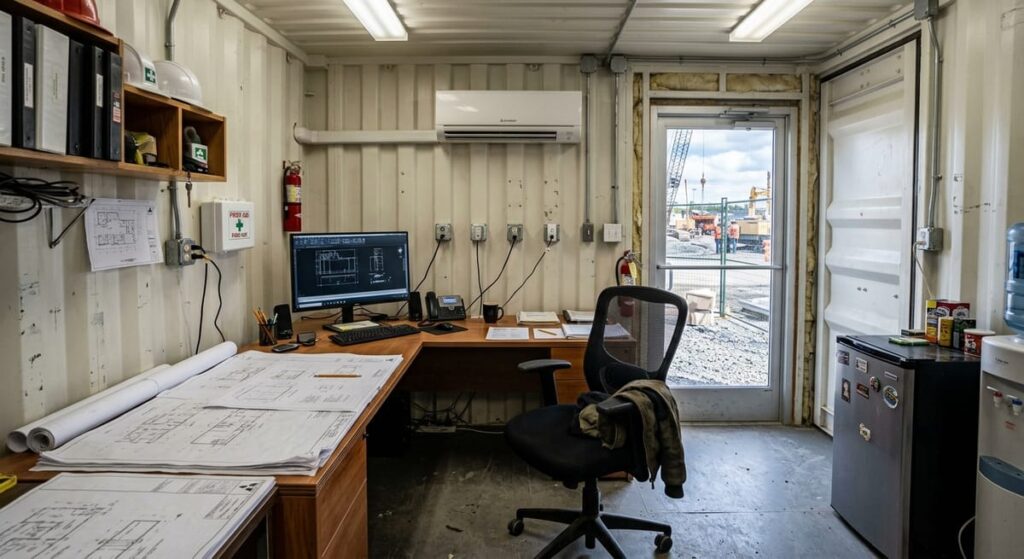
Modified units with doors, windows, and wall-mounted A/C create climate-controlled workspace for site managers. Documents, plans, and computers stay secure and accessible without requiring daily transport.
OSHA requires adequate break facilities for construction crews. A basic modification with ventilation and seating provides compliant break areas for less than mobile office trailer rentals.
Insulation and interior paneling create comfortable environments year-round. Electrical packages support computers, printers, and charging stations. Some contractors install small refrigerators and microwaves, improving crew morale by eliminating off-site lunch runs.
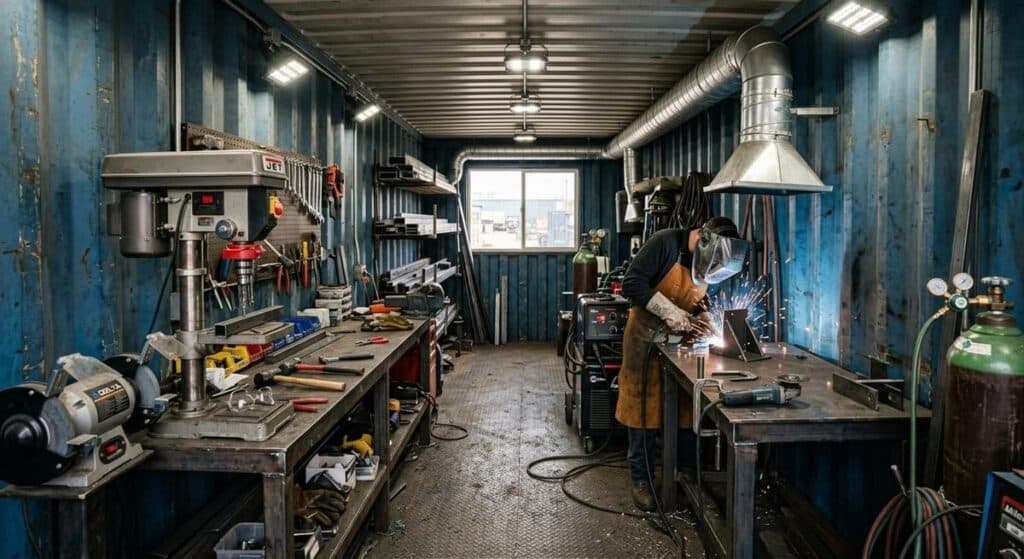
4. On-Site Workshop and Fabrication Areas
Dedicated space for cutting, welding, and small repairs keeps fabrication work separate from active construction zones. Contractors use 20-foot units as tool maintenance stations, eliminating trips to off-site workshops for minor equipment repairs.
Spark containment during welding operations protects nearby materials and workers. Ventilation systems exhaust harmful fumes outside, meeting OSHA air quality standards. Reinforced floors support drill presses, band saws, and grinding stations.
5. Seasonal Equipment and Emergency Response Storage
Off-season equipment storage serves landscaping and agricultural contractors who need secure space between projects. Hurricane preparedness matters for coastal construction companies protecting equipment during storm season.
Year-round outdoor storage requires weatherproof protection. Containers prevent UV degradation, moisture damage, and temperature cycling that destroys equipment left under tarps. Sealed environments protect electronics, hydraulics, and precision instruments from humidity and dust.
For detailed guidance on selecting the right dimensions for your specific crew size and project scope, see our construction storage containers size guide.
How to Choose the Right Size and Grade
Two questions cover most of this decision: how big, and what condition. Your crew size, what you’re storing, and how long you need it on site answer both.
Learn more about renovation storage options.
Container sizes for construction work
We stockWe stock 10′, 20′, 40′ and 45′ shipping containers, with two height options available on most units. The 20-foot is the workhorse for most active job sites, holding tools, generators, ladders, and small equipment for crews of five to ten without running out of elbow room. Bigger crews and material-heavy projects (lumber, drywall, concrete bags) usually warrant a 40-footer, especially when bulk ordering makes more sense than weekly deliveries.
A 10-footer fits where bigger units can’t, which makes it the right call for tight residential lots, limited-access sites, and small crews. If vertical clearance matters (taller equipment, palletized materials stacked high), the 40′ high cube adds a foot of interior height.
Construction Site Safety Standards and Container Placement
Proper Container Foundation Requirements
Ground preparation prevents costly problems. Containers require level foundations supporting distributed weight across the entire footprint. Uneven ground causes door misalignment.
Foundation options for construction sites:
| Foundation Type | Best For | Advantages |
| Compacted gravel (4-6″) | Most applications | Drainage, prevents ground moisture contact |
| Concrete piers | Flood-prone areas | Elevation, minimal cost |
| Railroad ties | Temporary placement | Easy installation, moveable |
| Full concrete slab | Permanent installation | Maximum stability |
Avoid placing containers directly on soft soil, grass, or unprepared ground. Weight concentration at corner posts causes settling.
Construction Site Security Protocols
OSHA recommends maintaining 10-foot clearances between storage containers and heavy equipment operation zones. This buffer prevents collisions during excavation, crane lifts, and material delivery.
Anchor containers in high-wind areas. Coastal construction sites require tie-down systems preventing wind displacement during hurricanes. Position containers away from welding operations, fuel storage, and ignition sources (maintain 20-foot separation from propane tanks).
Load distribution prevents floor damage. Concentrate heavy equipment over floor joists rather than between them.
Access and Environmental Protection
OSHA mandates safe entry and exit for occupied containers. Modified units serving as offices require proper stairs or ramps; ladders don’t meet code.
Spill containment matters for containers storing hazardous materials. Secondary containment systems prevent fuel, oil, or chemical spills from contaminating soil.
Summer interior temperatures in uninsulated units can exceed 140°F in direct sunlight. Heat stress risks require ventilation, insulation, or air conditioning for occupied containers.
Frequently Asked Questions
What size construction storage container do I need for my job site?
For most construction sites, a 20-foot container provides adequate storage for crews of 5-10 workers, holding around 15-20 power tools, ladders, and small equipment. A 40-foot container better serves larger projects requiring materials storage plus tool organization.
How much does a construction storage container cost to buy or rent?
Pricing varies based on grade and size. Twenty-foot Wind & Water Tight containers start in the budget range, Cargo Worthy grade costs moderately more, and New 1-Trip containers represent premium pricing. All prices include delivery within 50 miles and applicable warranties. Rent-to-own options available with flexible payment terms up to 48 months.
Can a delivery truck access my construction site?
Delivery requires 14 feet of clearance width, 100 feet of straight access to placement location, and 15 feet of overhead clearance. Ground must support 40,000 pounds of weight. Send photos of your site to our team for free delivery feasibility assessment.
What’s the best grade for construction storage containers?
Cargo Worthy containers receive structural certification for overseas shipping, inspected by our licensed surveyor, and include two-year warranties. Wind & Water Tight containers serve storage-grade applications with sealed doors and no leaks but lack ocean transport certification. Both protect equipment from weather.
How quickly can you deliver a construction storage container?
Standard delivery takes 7-12 business days depending on your location within our Florida, Georgia, and Eastern Alabama service area. Expedited delivery options serve urgent construction project needs.
Do I need a permit for a construction storage container on my job site?
Permit requirements vary by jurisdiction. Most municipalities require permits for containers remaining on-site longer than 30-90 days. Contact your local building department for specific requirements; we provide container specifications and documentation needed for permit applications.
What maintenance do construction storage containers require?
Inspect door seals annually and replace worn gaskets. Keep drainage channels clear of debris. Touch up paint scratches preventing rust progression. Lubricate door hinges and locking mechanisms yearly. Properly maintained containers serve 25-plus years with full weather protection.
Still have questions?
Talk to our container experts at 800-995-2417 or request a quote.
Get your construction storage container delivered to your job site within 7-12 days. Better containers, professional service, zero broker markup: that’s the E&S difference.
0 Comments