
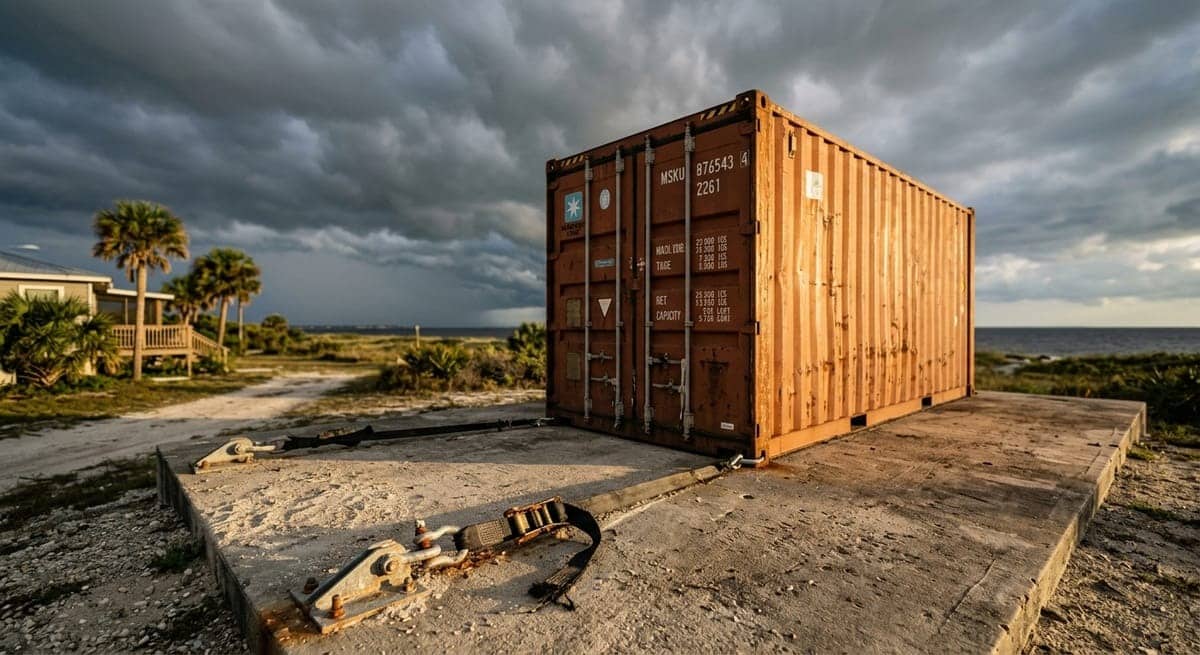
Shipping containers hurricane proof? No. An inspected shipping container can be hurricane resistant, but its performance depends on its grade and condition, where it sits, and whether the site calls for anchoring. Wind, flying debris, and flooding can each damage a container or what is stored inside.
For Florida, Georgia, and Gulf Coast properties: Choose a sound container, check the flood risk and delivery site, and ask about any local placement or anchoring requirements before storm season.
Are Shipping Containers Hurricane Proof?
No. A shipping container offers sturdy, weather resistant storage, but “hurricane proof” is not a rating for a standard container. It is not a storm shelter, and you should never stay inside one during a hurricane.
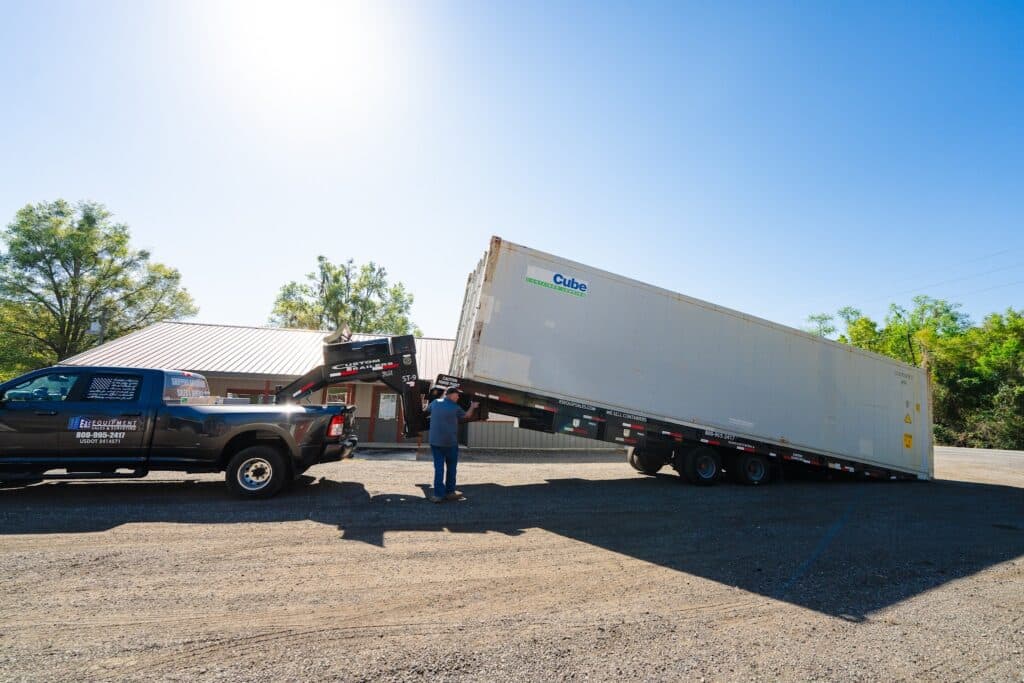
Hurricane Proof vs. Hurricane Resistant
Hurricane resistant is the accurate term. A sound steel container can help protect stored equipment from ordinary rain and wind exposure. It cannot guarantee protection from extreme winds, flying debris, falling trees, or storm surge.
That distinction matters when you choose a container. Inspection tells you about its condition. The grade tells you whether it has met a defined standard. Placement and site conditions determine which storm hazards it will face.
How Do Shipping Containers Perform in Hurricane Winds?
The hurricane category tells you the storm’s sustained wind speed. It does not give a shipping container a wind rating or predict whether a particular unit will survive.
| Category | Sustained wind speed | What to check at your site |
|---|---|---|
| 1 | 74 to 95 mph | Check the doors, seals, nearby trees, and anything loose that could strike the container. |
| 2 | 96 to 110 mph | Expect a greater risk from flying debris and damage to doors or added openings. Review placement and any site requirements. |
| 3 | 111 to 129 mph | This is a major hurricane. Do not rely on the container’s weight or grade alone. Wind damage and flooding depend on the site and the storm. |
Categories 4 and 5 bring still stronger winds. At every category, flooding and storm surge need separate attention because the wind scale does not measure them.
What Affects a Container’s Storm Resistance?
Placement and anchoring
Start with the property. Avoid low areas that collect water, look for hazards such as large trees, and make sure the delivery truck can reach the proposed spot.
Anchoring is a site specific decision, not a requirement for every container. Local rules, soil, flood exposure, and the intended use may affect what is needed. Ask the local permitting office or a qualified professional when you are unsure. E&S’s container delivery guide can help you plan access and placement before ordering.
Container condition
Check the roof, doors, seals, frame, and any added openings. A container with damaged doors or significant structural corrosion needs attention regardless of its listed grade. An inspection helps you understand the condition of the unit you are buying.
Flood exposure
A sealed door does not make a container flood proof. If the proposed location is exposed to storm surge or flooding, choose a safer location and follow local guidance for the property. For more storage planning ideas, read E&S’s guide to protecting valuables during a hurricane..
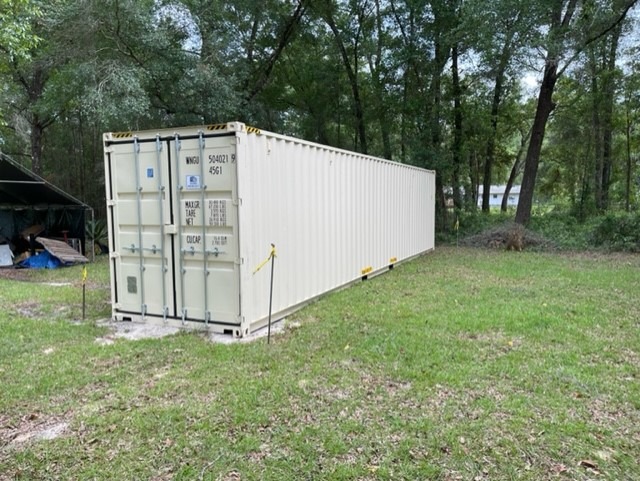
Does Container Grade Matter?
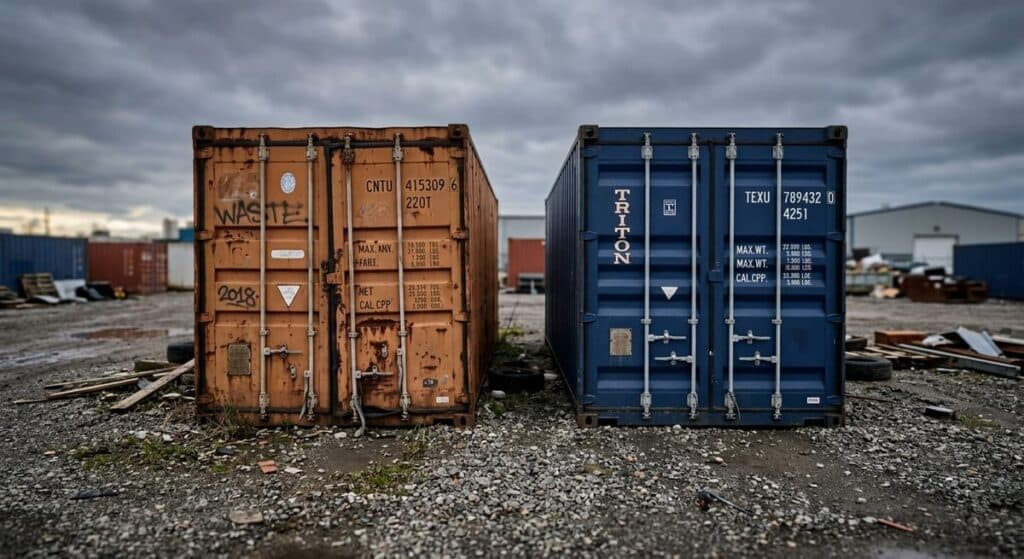
Yes. Grade helps you understand what has been inspected and whether the container meets standards for cargo use. It is not a hurricane rating.
| Grade | What it tells you |
|---|---|
| New one trip | A newer unit with limited use. Inspect its doors, seals, roof, and any modifications before relying on it for storage. |
| Cargo Worthy | A used container certified for ocean cargo use. E&S inspects its containers before sale. |
| Wind and Water Tight (WWT) | Describes a container’s ability to keep out wind and water under normal storage conditions. It does not mean the unit meets Cargo Worthy standards for ocean shipping. |
| As Is | Condition varies and may be unverified. E&S does not sell As Is containers. |
If you are comparing used units, ask which grade you are being quoted. E&S explains the differences in its shipping container grades guide. Its buying guide covers other questions to settle before delivery.real consequences when storm season arrives. For a full breakdown, see the complete shipping container grades guide.
Frequently Asked Questions
Are shipping containers hurricane proof?
No. “Hurricane resistant” is the more accurate term. An inspected container can provide sturdy storm season storage, but its performance depends on its condition, placement, site conditions, and any anchoring required for that location. It is not a storm shelter.
What wind speed can a shipping container withstand?
There is no single wind speed rating that applies to every shipping container. The container’s condition, doors, modifications, placement, and site conditions all matter. A hurricane category describes the storm’s sustained winds, not a guaranteed outcome for a container.
Will a shipping container blow away in a hurricane?
A container can move or sustain damage in severe weather. Its weight alone is not a guarantee that it will stay in place. Check local requirements and get site specific advice if you are concerned about anchoring.
Does container condition affect storm protection?
Yes. Check the roof, frame, doors, seals, and any added openings. An inspected Cargo Worthy container has met a defined standard for cargo use, while a Wind and Water Tight label does not mean the unit meets that same standard. Neither grade is a hurricane rating.
Can a shipping container handle hurricane flooding?
Do not rely on a standard container to protect its contents from floodwater or storm surge. Door seals help with normal weather exposure, but they do not make a container flood proof. Review the shipping container buying guide as you plan your site.
Which container grade should I buy for hurricane season storage in Florida or along the Gulf Coast?
Start by comparing inspected New One Trip and Cargo Worthy containers. Then consider what you will store, the condition of the specific unit, flood exposure, and placement. E&S does not sell As Is containers and delivers across Florida and Georgia.
What certifications should a container have for hurricane resistant storage?
There is no standard cargo container certificate that guarantees hurricane performance. Cargo Worthy status and CSC documentation relate to suitability for international cargo transport. Ask about the container’s grade and inspection, but do not treat those documents as a hurricane wind rating.
How do I know if my site needs special anchoring?
Check with your local permitting office or a qualified professional. The answer can depend on local rules, soil, flood exposure, placement, and how the container will be used. Anchoring is not a universal requirement for every storage container.
E&S inspects its containers and delivers across Florida and Georgia. Call 800-995-2417 or request a written quote to discuss the container and delivery location. Rent to own options are also available.
0 Comments