
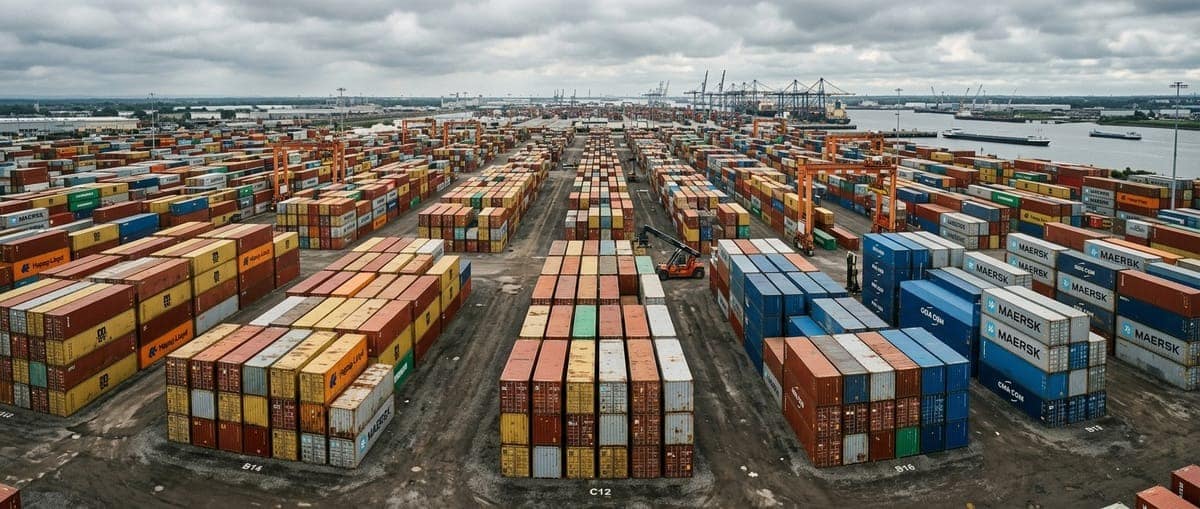
Finding a legitimate shipping container dealer in Florida or Georgia shouldn’t feel like a guessing game. But every week, buyers across the Southeast lose thousands to fake dealers, brokers playing dress-up as direct sellers, and outright scammers who ghost the moment a deposit clears.
After more than 30 years in the shipping and intermodal industry, and over 11,000 containers delivered, our team has seen exactly what separates trustworthy container suppliers from the operations that vanish after taking your money. Some of the warning signs are obvious. A lot of them aren’t.
This guide walks through what makes a legitimate shipping container dealer, how to verify their credentials before you buy, what questions to ask about delivery and warranty coverage, and which red flags should send you running. Whether you need ISO shipping containers for commercial work, government projects, or personal storage, knowing what to look for protects your money and gets you the container you actually paid for.
What Makes a Legitimate Shipping Container Dealer?
Here’s the strange truth about this industry: it operates with almost no regulation. That gap creates an opening for brokers and scammers to dress themselves up as established container suppliers. Knowing the difference shapes everything that follows. Product quality, delivery reliability, and your ability to fix problems if something goes sideways.
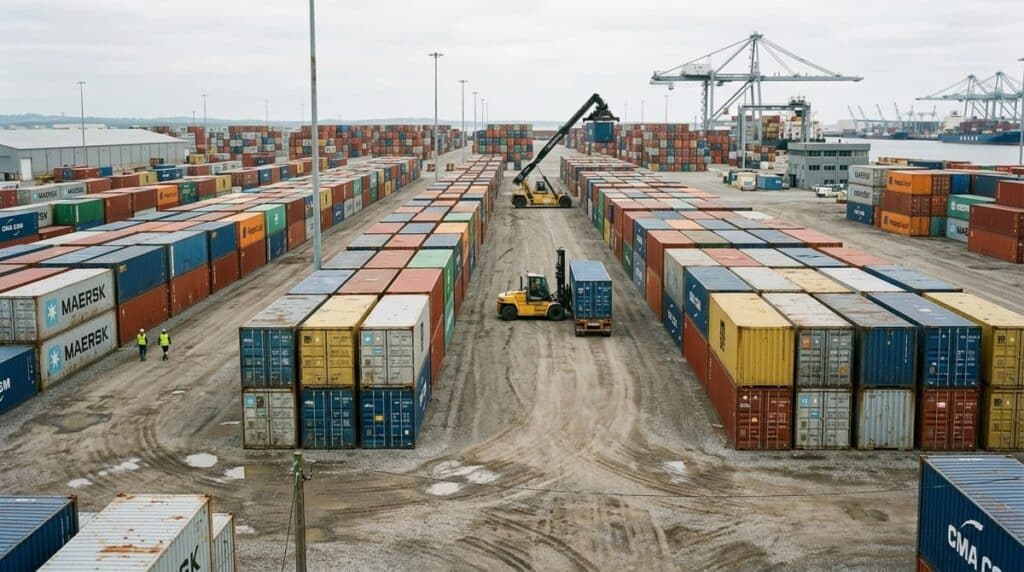
- True container dealers own what they sell. They keep physical yards stocked with containers you can actually inspect. They run their own delivery trucks with CDL-licensed drivers on staff. They handle modifications in-house. Containers come directly from shipping lines and depots, get inspected by the dealer’s own people, and the dealer stays accountable from quote to delivery to whatever happens after.
- Brokers list containers they don’t own. They book deliveries through whichever third-party trucking company will take the job. They have no physical location for you to visit, can’t show you inventory before you commit, and rely on whoever inspected the container last to be honest about its condition. Brokers stack markup on top without adding value, and when delivery problems happen, accountability gets murky fast. Everyone points at the next person in the chain.
- Online marketplaces aggregate listings from a mix of legitimate dealers, brokers, and the occasional scammer. They do limited verification on sellers. They rarely inspect anything listed. And when a transaction goes sideways, your recourse is usually thin.
Working with a direct dealer means consistent quality because one company controls the whole process. Brokers introduce variables they cannot control. Delivery timing depends on whoever they can find with a truck. Container condition depends on someone else’s inspection standards. And problem resolution turns into a shuffle between three or four parties who all blame each other.
7 Signs to Look for when Buying Shipping Containers from a Dealer
- Physical Container Depot With Verifiable Address
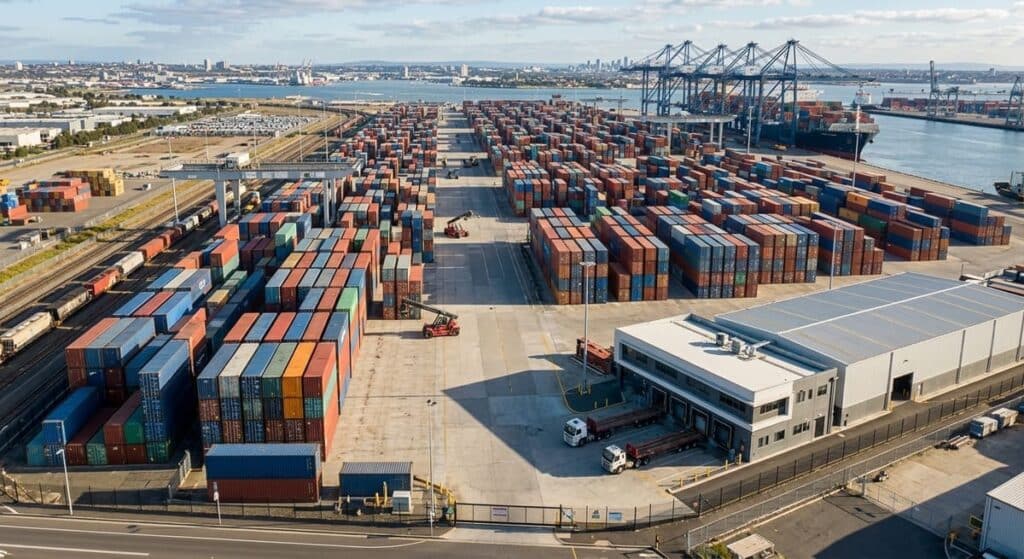
Real container dealers operate from real facilities, not virtual offices or P.O. boxes. Plug the address into Google Maps. You should see an actual container yard with visible inventory. If you can drive by, do it. Be cautious of “by appointment only” operations that never quite seem available when you’re free.
- Delivery Equipment and Licensed CDL Drivers on Staff
Direct dealers maintain their own delivery trucks. These are specialized tilt-bed trailers and crane-equipped vehicles, not generic flatbeds. Ask to see photos of the fleet with company branding. Brokers coordinate third-party delivery, which usually means scheduling problems and finger-pointing when something doesn’t go as planned.
- Years in Business With Consistent Local Presence
Check business registration dates. Look at the Better Business Bureau. Verify how long they’ve operated from their current location. Established container suppliers have 10+ years of verifiable history. Fly-by-night operations swap names and locations every couple of years.
- In-House Inspection and Certification Capabilities
Dealers with licensed container surveyors on staff can issue CSC (Container Safety Convention) certification without farming the work out to a third party. That matters because CSC certification is required for any container heading overseas. At E&S Equipment Sales, our owner is a licensed container surveyor, which means we can certify cargo worthy containers in-house. Most dealers can’t.
- Direct Customer Service With Container Expertise
When you call a real dealer, you reach people who know shipping containers. Not generic sales reps reading off a script. Legitimate dealers answer detailed questions about structural integrity, modifications, and delivery logistics from hands-on experience. If your questions get bounced around or met with vague answers, that tells you something.
- Transparent Business Credentials
Real dealers share their business licenses, insurance certificates, and professional memberships without making a fuss. They participate in industry organizations like the National Portable Storage Association and the Florida Self Storage Association. They’re happy to verify their credentials because they’ve got nothing to hide. E&S Equipment Sales has been a member of the NPSA for over 11 years, the FSSA for over 8 years, and is registered with SAM.gov for federal contracts.
- Check their website and online reviews before you buy
Honestly? This is one of the easiest ways to separate a legitimate company from a fly-by-night operation, and most buyers skip it. A company’s website and review history paint a pretty clear picture of how they actually do business.
A real container company’s website should make it obvious who they are, where they operate, and what they sell. A few things to look for:
- A clearly stated service area, with the cities and regions they actually cover
- Information about who owns the company and their background in the industry
- A working contact form, phone number, and email address
- Photos of real trucks and depot locations, not just generic stock images
- Professional memberships, licenses, or certifications listed plainly
Vague websites are a problem. If the “About” page reads like it could apply to any business in any industry, you’re probably looking at a broker site or a template that someone slapped a logo on. Real dealers tend to brag a little, and they should. Decades in the industry, specific delivery counts, member organizations, names of the people running things. That’s the stuff you want to see.
Before you commit, run through these 16 questions to ask any seller
Red Flags That Signal Container Scams to Avoid
Prices Significantly Below Market Rates
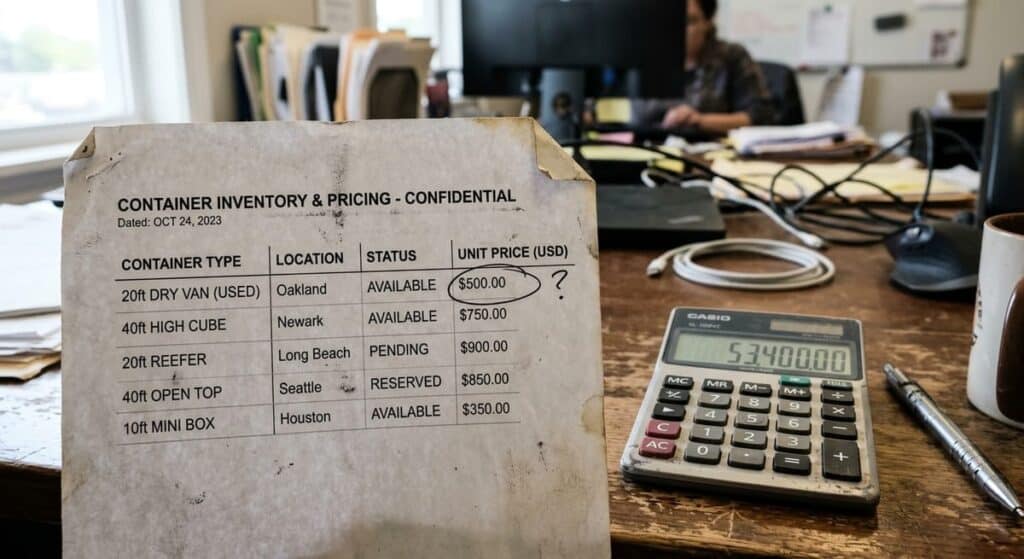
Scammers use unusually low prices as bait. Then they tack on hidden fees, deliver something far worse than described, or deliver nothing at all. If a quote comes in 30% or more below everyone else, something is off. Industry reality: shipping a single empty container from overseas costs tens of thousands of dollars. Anyone advertising new containers at fire-sale prices is either lying about the grade or running a scam.
Learn what drives shipping container prices
No Physical Address or Virtual Office Only
Operations that list only a phone number, use mail forwarding services, or won’t tell you where their yard is can disappear the second your deposit clears. Scammers avoid physical presence because physical presence creates accountability.
High-Pressure Tactics and Artificial Urgency
“Only 2 containers left at this price.” “Sale ends today.” “Lock it in before the price goes up.” Real dealers don’t pressure you because they don’t need to. Their inventory turns over consistently, and their reputation does most of the selling.
Cannot Provide CSC Certification or Inspection Reports
For cargo worthy containers headed overseas, valid CSC certification isn’t optional. Dealers who can’t provide certification documentation either don’t actually have cargo worthy containers (they’re selling something else and calling it CW), or they don’t have the expertise to inspect properly.
Refuses to put anything in writing
If a dealer won’t email you a written quote, won’t provide warranty terms in writing, or won’t confirm delivery details in writing, walk away. There’s a reason they don’t want a paper trail.
Check out our entire article on avoiding shipping container scams.
E&S Equipment Sales: Your Local, Full-Service Container Dealer
Unlike brokers selling containers they’ve never laid eyes on or online marketplaces stitching together questionable listings, E&S Equipment Sales operates as a true full-service container dealer across Florida and Georgia. We’ve been at this for over 15 years. Container sales, rentals, custom modifications, inspections, deliveries. All of it happens in-house, by us, with our own people and equipment.
We’re family-owned. Our owner Michael Bader is a licensed container surveyor with more than three decades in the shipping and intermodal industry. We have inventory in Miami, Jacksonville, and Savannah, and we deliver throughout Florida and Georgia.
If you’ve got questions about container quality, delivery to your specific property, or what grade of container fits your project, give us a call. We’d rather take 20 minutes to walk you through it now than have you stuck with the wrong container later.
Contact E&S Equipment Sales to discuss your container needs, verify delivery to your location, request detailed quotes, and schedule site consultations
Frequently Asked Questions About Buying Shipping Containers
How can I tell if I’m dealing with a legitimate shipping container dealer versus a broker?
Legitimate dealers own physical inventory you can inspect at their yard location before purchase. They operate their own delivery trucks with company branding and employ CDL-licensed drivers directly. Brokers operate virtually without physical yards, coordinate third-party delivery, and make excuses about why you can’t see containers before purchase.
Do I need CSC certification if I’m only using containers for storage?
CSC certification is only legally required for international ocean transport. If you’re using containers exclusively for domestic ground-based storage, certification isn’t necessary. However, Cargo Worthy containers with certification provide higher quality and longer warranties even when certification itself isn’t required..
0 Comments