
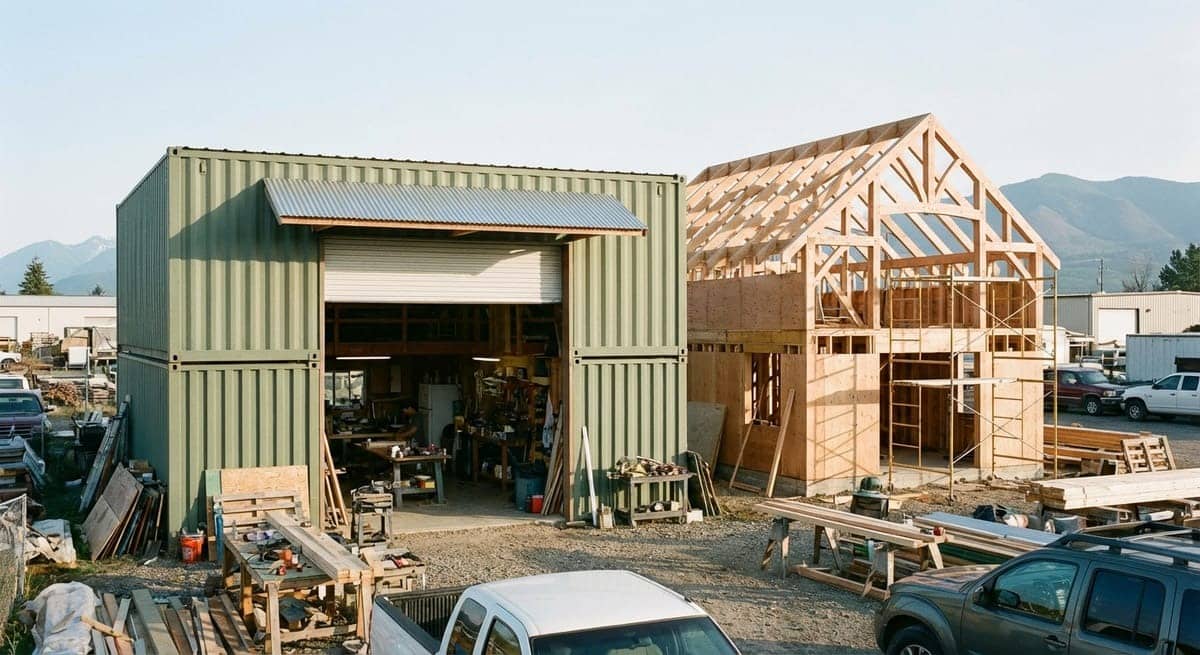
Shipping container workshop conversions solve a problem thousands of property owners face: traditional construction costs $25,000-$50,000+ and takes 6-12 months to complete. Container workshops deliver the same functionality for significantly less, ready to use within 4-8 weeks, all made possible with storage container modifications.
Whether you’re a woodworker tired of cluttered garages, a farmer needing equipment repair space, or a business owner expanding operations, shipping containers transform into professional workshop systems faster and cheaper than alternatives.
Why Container Workshop Solutions Beat Traditional Buildings
Traditional stick-built garages start at $25,000, while prefab metal buildings run $18,000-$35,000. Shipping container workshops deliver comparable functionality at lower costs.
Key Advantages of Container Workshop Design
Speed of deployment: Traditional buildings require 6-12 months from planning to completion. Container workshops finish in 4-8 weeks from order to move-in.
Durability: Corten steel construction withstands hurricane-force winds, extreme temperatures, and salt spray. These structures last 20-25+ years with minimal maintenance.
Security: 14-gauge corrugated steel walls resist break-in attempts that would compromise wood framing. Add a lockbox for maximum tool protection.
Portability: Relocate your workshop when you move properties. Particularly valuable for contractors, farmers managing multiple sites, and growing businesses.
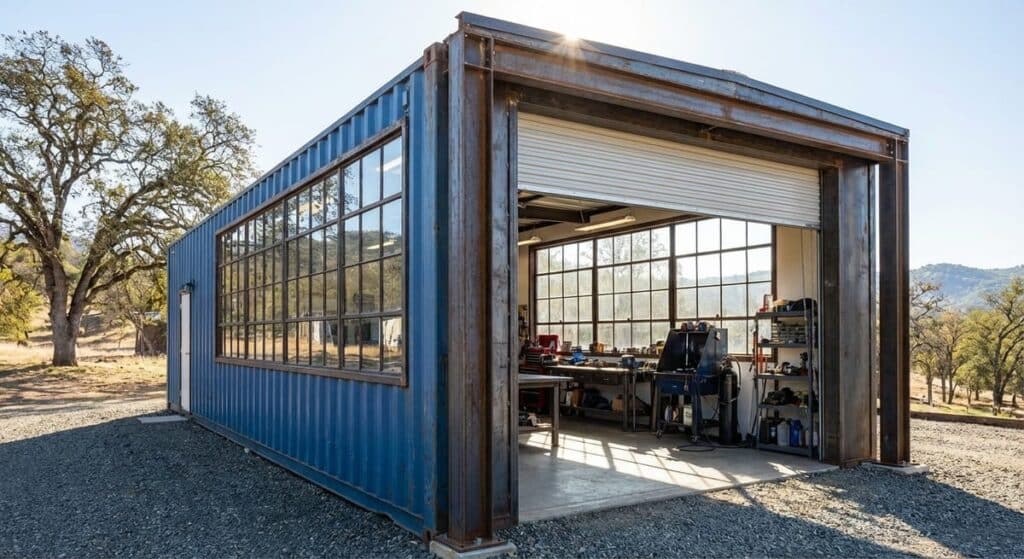
Customization flexibility: Steel accepts cuts for windows, doors, and ventilation. The frame accepts welded attachments for shelving and tool mounts without compromising integrity.
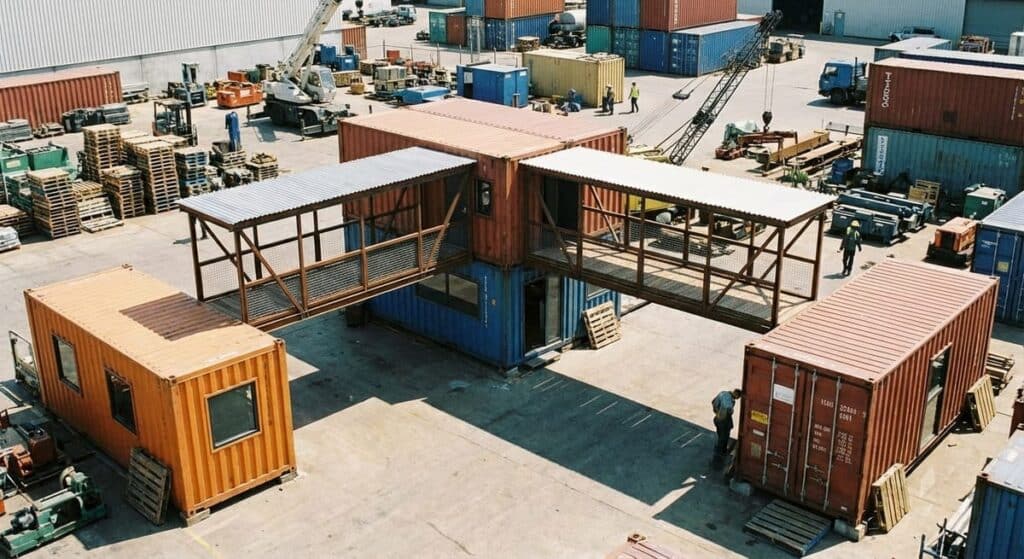
Expandability: Start with one 20ft container, add a 40ft unit later. Connect with pass-through doors or position separately for specialized areas.
Lower ongoing costs: Many jurisdictions don’t increase property taxes for containers qualifying as temporary structures. Steel doesn’t rot, warp, or attract termites.
15+ Shipping Container Workshop Ideas (Organized by Trade)
Woodworking & Carpentry Workshop Conversions
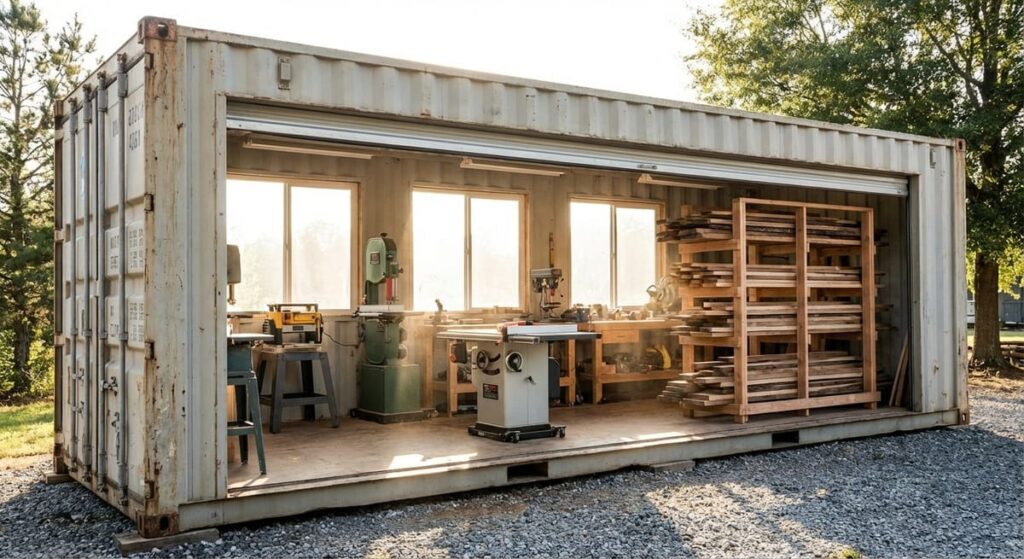
20ft hobbyist woodshop container: A 20ft Standard container (160 sq ft) accommodates a table saw, workbench, and wall-mounted lumber storage. Add windows for natural lighting, basic electrical (6-8 outlets plus LED lights), and a roll-up door for moving finished pieces.
40ft High Cube with vertical lumber storage: The extra foot of ceiling height (9.5ft vs 8.5ft) enables vertical lumber storage. Mount 2×4 racks along walls for 8ft boards, install dust collection with overhead runs, and add multiple 220V circuits.
Production workshop with dual 40ft containers: Connect two 40ft containers via pass-through door to create separate zones: one for cutting/shaping, another for finishing/assembly. This 640 sq ft configuration provides true production capacity with organized workflow.
Automotive & Mechanic Workshop Systems
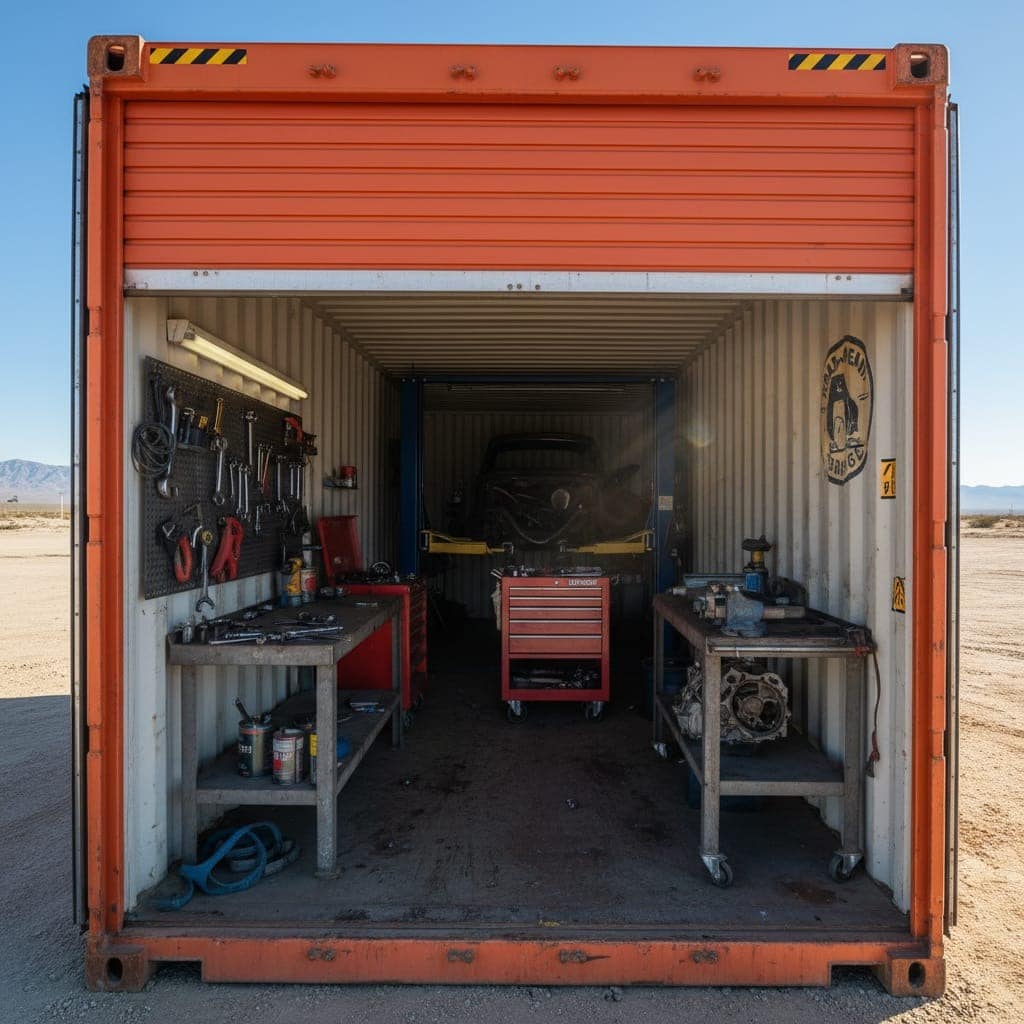
Full-service 40ft auto repair container workshop: A 40ft Standard container accommodates most vehicles with workspace around them. Install an 8ft x 8ft roll-up door, add 220V circuits for air compressors and welding equipment, and apply epoxy floor coating for oil resistance.
Mobile mechanic 20ft setup: Portable workshop containers benefit contractors providing on-site equipment repair. Stock with essential tools, workbench, parts storage, and basic electrical.
Dual-door drive-through workshop access: Containers with cargo doors at each end allow pull-through access, eliminating tight maneuvering. Particularly valuable for agricultural operations servicing tractors.
Welding & Metalworking Container Workshop Plans
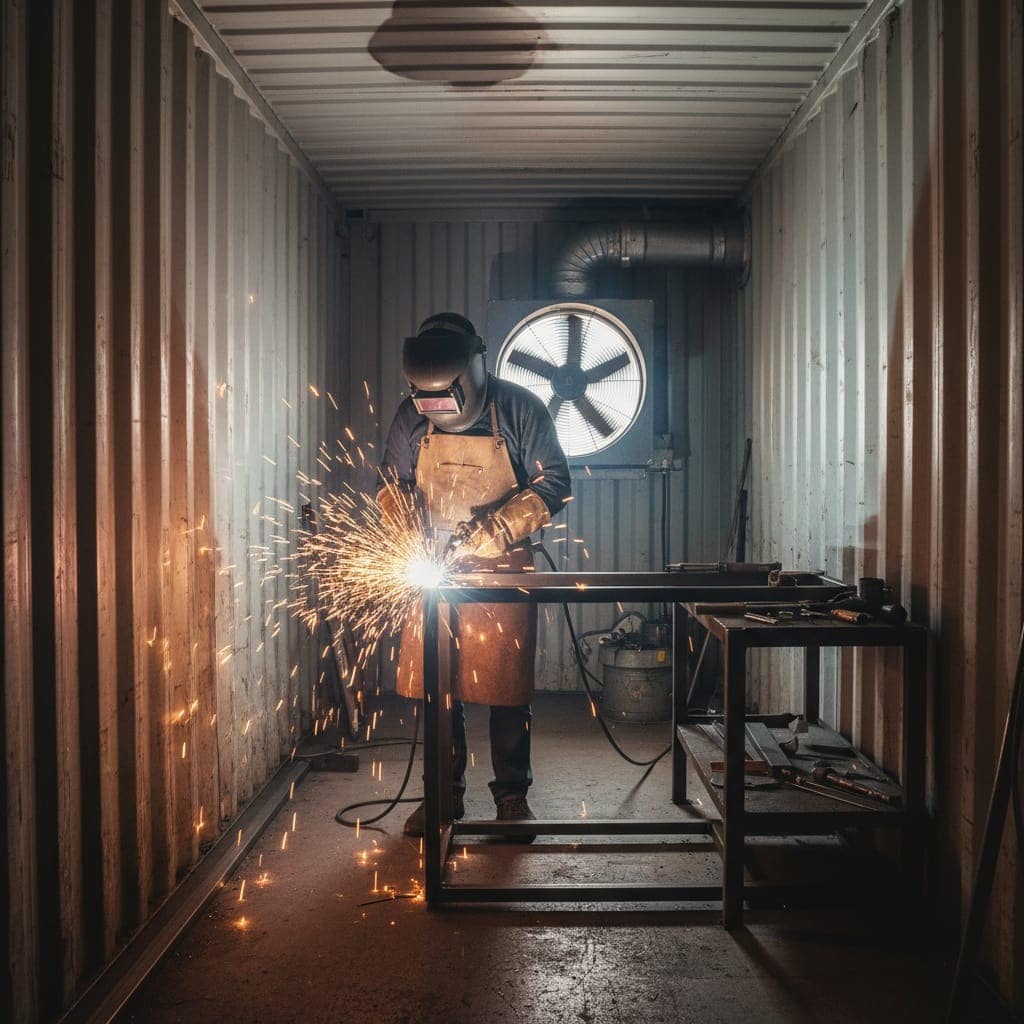
Ventilation-focused welding workshop: Install industrial exhaust fan in one end wall, add weather-stripped man door, and include multiple 220V circuits for welders and plasma cutters. Professional metalworking requires proper ventilation to handle welding fumes safely.
Heavy-duty metal fabrication workshop: Professional metalworking requires 200A service panels with multiple 220V circuits handling welders, grinders, and compressors simultaneously. Add task lighting above work areas, metal storage racks, and adequate ventilation.
Plasma cutting station: Dedicated plasma cutting benefits from downdraft cutting tables pulling fumes and particles downward through filtered systems. Position near an end wall for exterior exhaust ducting.

Art Studios & Creative Workshop Spaces
Natural lighting artist studio: Install 3-4 windows along the long side (36″ x 48″), add roof skylight for overhead natural light, and supplement with full-spectrum LED fixtures. Spray foam insulation plus mini-split HVAC maintains consistent temperature and humidity for protecting artwork.
Photography studio container: A 40ft High Cube provides ceiling height for lighting stands and backdrops. Paint interior walls white for light reflection, install blackout window coverings, and add dedicated circuits for photography equipment.
Pottery and ceramics workshop: Install heavy-duty electrical for kilns (240V, 50+ amp circuits), add sink with water supply and drainage for clay work, and include ventilation for kiln operation. The steel structure handles pottery wheels, loaded shelving, and multiple kilns without extra reinforcement.
Electronics & Maker Space Workshop Ideas
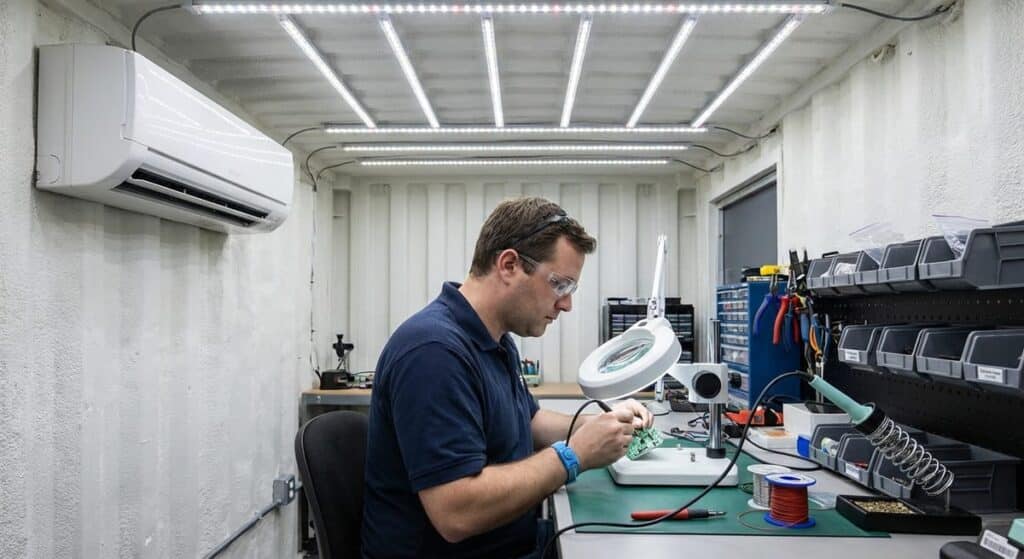
Climate-controlled precision workspace: Electronics work requires dust-free environments and stable temperatures. Spray foam insulation creates an airtight envelope while HVAC maintains consistent conditions. Install 12-15 electrical outlets, dedicated circuits for soldering stations, and LED lighting.
Community maker space container: A 40ft container divides into distinct areas for 3D printing, electronics assembly, and tool storage. Install soundproofing between workstations, add office area for computer work, and include sink for cleanup.
Farm Equipment & Agricultural Workshop Conversions
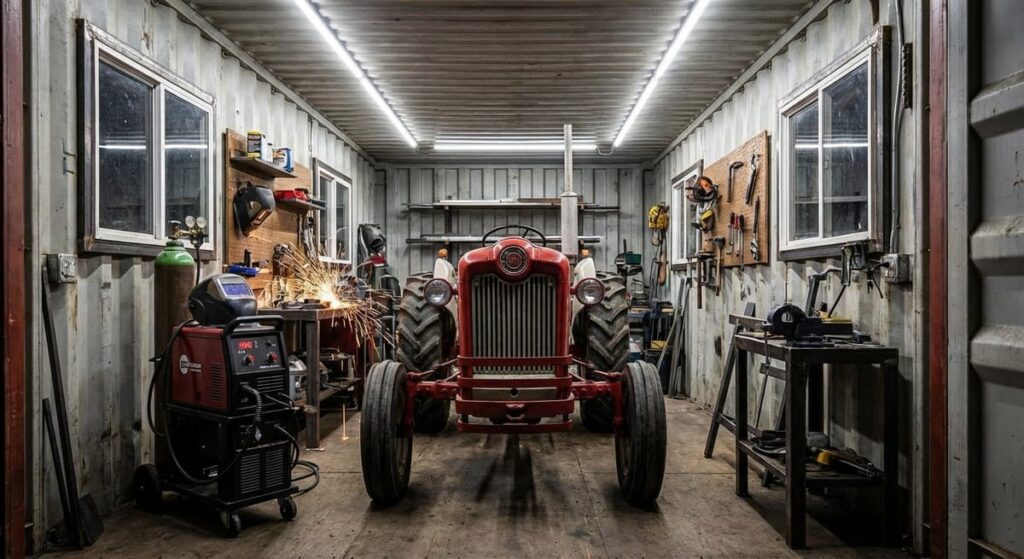
Budget farm workshop container: A 20ft Wind & Water Tight workshop for equipment maintenance needs minimal modifications: one roll-up door, basic electrical (4 outlets plus lighting), no insulation, standard paint. Handles tractor repairs, welding projects, and parts storage without unnecessary upgrades.
Equipment storage with workspace: A 40ft container stores tractors, implements, and supplies while providing maintenance workspace. Double-door containers allow equipment access from both ends without repositioning.
Seasonal harvest prep station: Set up dedicated workshops for pre-season equipment preparation and in-season emergency repairs. Stock with commonly needed parts, specialized tools, and basic welding capabilities.
Multi-Purpose & Connected Container Workshop Layout
Workshop + storage configuration: Position a 40ft workshop container next to a 20ft storage container, connecting via covered walkway or leaving separate. This 480 sq ft total provides workflow separation.
Expandable business design: Start with one container, add units as operations grow. Begin with a 20ft equipment storage container, add a 40ft workshop for repairs, then include a climate-controlled office container.
Specialized trade zones: Connect three 20ft containers to create separate zones for raw material storage, active production, and finished goods. Install pass-through openings between containers to move work in progress without exterior exposure.
How to Choose the Right Container Size & Grade
Container Workshop Size Comparison
| Size | Interior Dimensions | Sq Ft | Best Workshop Applications |
| 20ft Standard | 19’4″ L × 7’8″ W × 7’10” H | 160 | Compact hobby shops, mobile workshops, farm repairs, budget projects |
| 40ft Standard | 39’5″ L × 7’8″ W × 7’10” H | 305 | Full automotive bays, professional woodshops, metalworking, commercial use |
| 40ft High Cube | 39’5″ L × 7’8″ W × 8’10” H | 305 | Vertical storage, welding shops, taller equipment, overhead cranes |
Best Container Grades for Workshop Conversion
New One-Trip Containers: Made a single voyage from China to U.S. ports carrying the first cargo load. Arrive in like-new condition with minimal wear.
Ideal for climate-controlled workshops, professional operations, appearance-sensitive projects, and long-term investments. Include 5-year warranties.
Cargo Worthy Used (Recommended for Most Workshop Systems): Inspected and certified to meet legal and structural requirements for ocean shipping. Handled 8-14 years of cargo service before retirement.
Structurally sound with cosmetic wear (paint fading, surface rust spots, minor dents). Ideal for general workshops, heavy modification projects, cost-conscious quality buyers, and commercial operations. Include 2-year warranties.
Wind & Water Tight (WWT): Features sealed doors and no leaks, but not structurally certified for ocean shipping. Served longer in cargo service (15-20 years) with more cosmetic wear.
Ideal for budget workshops, basic storage, minimal modifications, and seasonal use without climate control. Include 90-day warranties.
Specialty Container Workshop Options
Double-door containers: Manufactured with cargo doors at both ends, providing drive-through access. Particularly valuable for automotive work and farm equipment repair.
Open-side containers: Full-length side access (20-40ft) allows loading oversized materials that won’t fit through standard 8ft-wide end doors.
Non-running refrigerated containers: Include factory insulation (3-4 inches of foam in walls, ceiling, doors) but lack functioning refrigeration. Provide exceptional climate control foundations.
Learn more about conex container grades and conditions.
Container Workshop Safety Standards
Structural Safety During Modifications
Containers maintain integrity through corner posts, top and bottom rails, and door-end frame assemblies. Corner posts support stacking loads and must never be cut. Safe modification practices include reinforcing areas around openings with welded steel framing.
Electrical Safety Standards
All electrical work must comply with National Electrical Code standards. GFCI protection is required for outlets within 6 feet of sinks or in damp locations. Container steel structure bonds to electrical system ground.
Fire Safety in Container Workshops
Place ABC-rated fire extinguishers within 75 feet of any point. Proper ventilation prevents flammable vapor accumulation from solvents, paints, and fuels. Maintain clear paths to doors (36 inches minimum).
Ventilation for Hazardous Fumes
Welding operations require dedicated exhaust systems. Position exhaust fans to draw fumes away from breathing zones.
Paint spraying requires explosion-proof electrical fixtures, adequate air exchange, and proper filtering of exhausted air.
Dust collection for woodworking prevents respiratory exposure and reduces explosion hazards from suspended wood dust.
Frequently Asked Questions
How long does container workshop delivery and setup take?
In-stock containers deliver within 7-12 business days. Custom modifications add 2-4 weeks.
Can I run heavy equipment like welders and air compressors in a container workshop?
Yes, with adequate electrical service. Professional 200A panels support multiple high-draw tools simultaneously. Welders require 30-50 amp circuits, air compressors need 20-30 amps.
Will container workshops rust in humid or coastal climates?
Corten steel withstands ocean salt spray during cargo transport. With annual inspections and prompt touch-up painting on scratches, containers last 20-25+ years even in challenging environments.
What’s the best foundation for a container workshop?
Most workshops function perfectly on compacted gravel pads (4-6 inches of crushed stone over level ground). Concrete piers work for uneven terrain. Full slabs only become necessary for heavy equipment like vehicle lifts or when local codes require permanent foundations.
What’s the difference between Cargo Worthy and Wind & Water Tight containers for workshops?
Cargo Worthy containers meet international certification for ocean shipping, inspected for structural integrity, floor soundness, and weather-tight seals. 2-year warranties accompany Cargo Worthy containers. Wind & Water Tight containers feature sealed doors and no leaks but aren’t structurally certified. They work for basic workshops with minimal modifications. 90-day warranties reflect storage-grade status.
Can I add windows and doors to my container workshop after initial purchase?
Yes, though planning modifications during initial purchase proves more cost-effective. Professional services can cut openings and install additions anytime.
How do container workshops perform in extreme temperatures?
With proper insulation and climate control, container workshops function effectively in both extreme heat and cold. Spray foam insulation (R-13 to R-21) combined with appropriately sized HVAC maintains comfortable working temperatures year-round.
Ready to design your custom shipping container workshop conversion? E&S Equipment Sales has completed workshop conversions across Florida, Georgia, and eastern Alabama. Call us at 800-995-2417 to discuss your project, or request a custom quote online.
0 Comments