
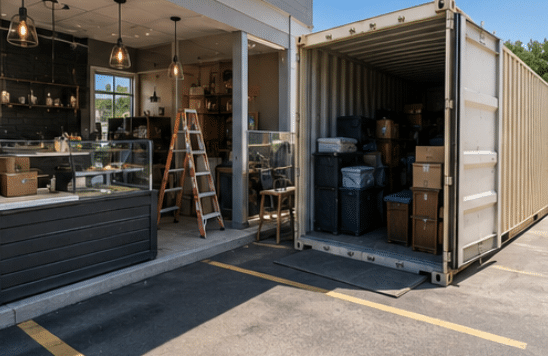
When comparing renovation storage options, having a solid plan before the demo crew arrives is critical. Otherwise, by Tuesday the living room is in the dining room, the dining room is in the garage, and nobody can find the coffee maker. Every remodeling project runs into the same wall early: all your furniture has to go somewhere, and the somewhere matters more than people expect
Furniture gets scratched. Drywall dust works into upholstery. Tools and inventory grow legs on an open site. Where you stage everything decides how much of it survives the project in one piece.
Two questions sort out the right answer for you. How long is the job, and how much are you moving. Get those straight and the choice is easy.
The four ways people store during a renovation
Shuffle it room to room. Free, and fine for a one-room refresh that wraps in a week. Past that, you are moving the same couch three times and exposing it to dust and foot traffic the whole way. Short jobs only.
A self-storage unit across town. Your things are off-site and out of the dust, which is the upside. The downside is the hauling. You rent a truck, load it, drive it, unload it, then do the whole thing in reverse in a few months, and you pay every month in between. For a staged remodel where you need things back room by room, the back-and-forth gets old fast.
A portable box dropped in the driveway. Companies like the national pod brands drop a container-style box, you fill it on your own schedule, and they haul it off. Handy for a move. For a renovation it has two catches. The boxes are smaller and lighter-built than a steel shipping container, and you are paying a monthly rental that ends with you owning nothing.
A steel shipping container on your property. A cargo-worthy or new one-trip container sits right where you need it, holds far more than a portable box, and locks up tight against weather and theft. You can buy it outright or put it on rent-to-own, and when the renovation ends you still own a secure steel building you can use for years. That is the difference that matters over a long project.
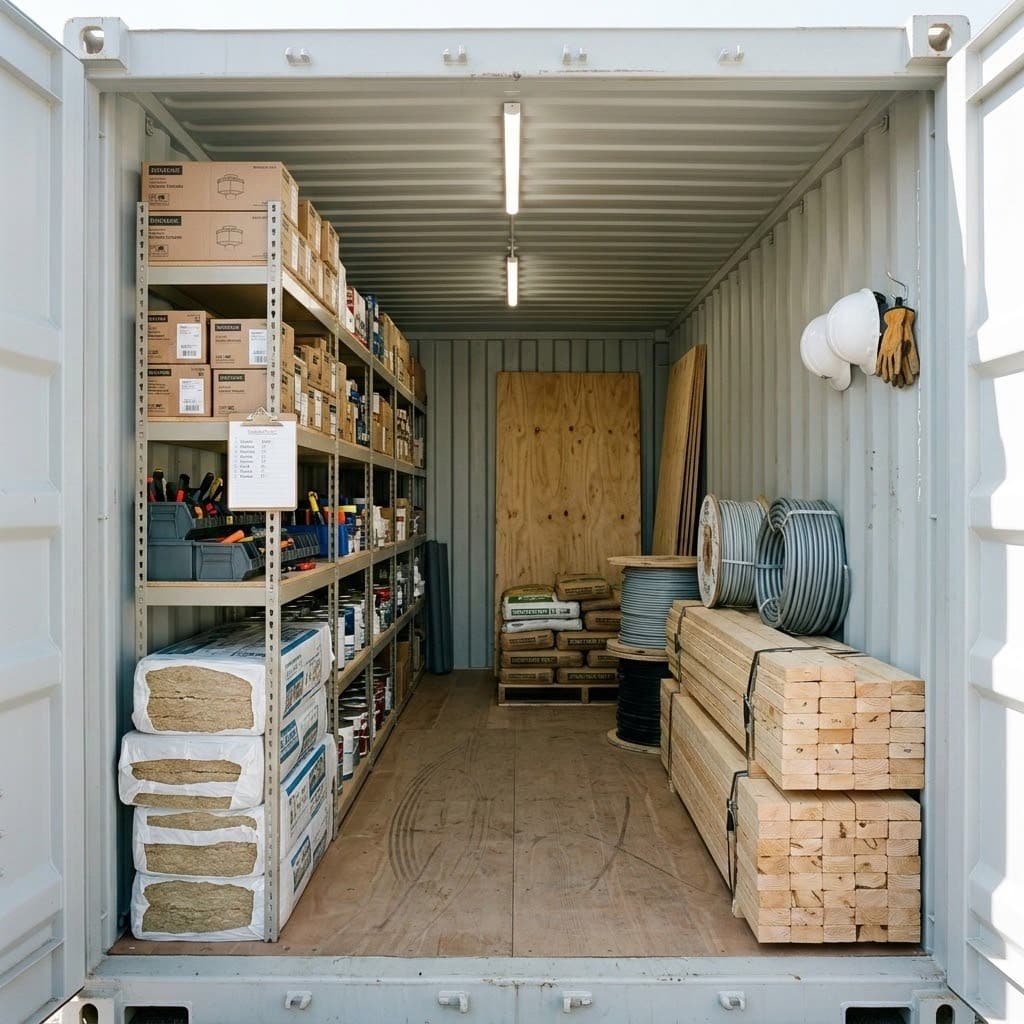
Which option fits which renovation
The math changes with the length of the job.
For a short cosmetic update, under a month, shuffling rooms or a small self-storage unit usually does the trick. Not worth bringing a container in for two weeks.
For a full gut or an addition that runs several months, an on-site container earns its keep. Everything stays on your property, you get to it whenever you want, and you are not paying a storage facility on the first of every month with nothing to show at the end.
For a staged, room-by-room renovation, on-site wins clearly. You pull the guest-room furniture back in when that room is done, then load the next room out, all without a truck or a drive across town.
And if you renovate often, a landlord turning units or a flipper running back-to-back projects, buying a container or finishing a rent-to-own term means you own the storage and roll it to the next job. We break the buy-versus-rent math down further in our guide to buying vs renting storage containers.
Renovating a business without closing the doors
A remodel is one thing at home. For a store, a restaurant, or a hotel, the renovation competes with the part of the building that still has to make money. Most businesses cannot shut the doors while the work happens.
That is where an on-site container does its best work. Move the fixtures, seasonal inventory, furniture, and equipment into a locked steel container in the back lot, keep the sales floor clean and open, and pull things back as each phase finishes. No off-site warehouse, no double-handling, no clutter in front of customers.
Retail remodels, restaurant refreshes, hotel room turnovers, and office buildouts all run the same play. If you are storing for a business project on a set timeline, our commercial container options cover the sizes and the delivery, and rent-to-own keeps the cash free for the renovation itself.
Learn more about business renovation storage.
What size container you need
Most home renovations land on one of two sizes. A 20ft container holds roughly the contents of a two to three bedroom home, and a 40ft high cube swallows a larger house or a business’s fixtures and inventory with room to move around inside.
If you are not sure, our shipping container buying guide has a fuller sizing breakdown by square footage. When in doubt, size up. The extra room costs little and beats a container packed so tight you cannot reach the box in the back.
Protect what you store
A container keeps rain, pests, and thieves out, but a few minutes of prep keeps your furniture in the shape it went in. Before you load:
- Wipe pieces down, since dirt and moisture do the most damage when they sit for months
- Wrap wood and upholstery in moving blankets or covers, and slip cardboard between stacked pieces
- Raise wood furniture off the floor on blocks or a pallet
- Break down bed frames and tables, and bag the hardware taped to the piece it belongs to
One honest note on climate. A steel container is weather-tight, but it is not climate-controlled the way an indoor unit is. For most furniture through a Florida or Georgia summer, a handful of moisture absorbers and a little airflow on dry days does the job. If you are storing true antiques or a piano for months, an indoor climate-controlled unit, or a non-running refrigerated container is the safer call for those particular pieces!
Getting it onto your property
Placement is simpler than people think. You need level, firm ground, about 14 feet of overhead clearance, and a straight approach for the delivery truck. Our tilt-bed trailers slide the container onto a prepared spot in 15 to 30 minutes, no crane required.
A driveway, a side yard, or a back lot all work as long as the ground is solid and the approach is clear. The full rundown on clearances and prep is in our delivery guide, worth a look before your delivery date so the spot is ready.
Do you load it yourself, or hire a crew?
A 20ft container holds a lot more than most people picture, and that cuts both ways. It is a full weekend of lifting if you and a couple of friends do it, and sore backs are the usual souvenir. A moving crew loads the same container in an afternoon, and they wrap and pad furniture better than most of us manage on a Saturday.
If you are in our Florida and Georgia delivery area, most local movers will load a container sitting in your driveway, just say so when you book. Outside our area the same play works. Folks running a gut remodel in central Texas hire Round Rock movers to handle the heavy pieces while the container stays parked on site for the whole project.
Either way, load the room you need last toward the back and the room you need first by the doors. Future you will be grateful.
Why E&S
We have delivered more than 13,000 containers across Florida and Georgia since 2010, plenty of them to homeowners and business owners mid-renovation. Every container is inspected by our owner, a licensed container surveyor with over 30 years in the industry, so what shows up is what you were promised. New one-trip units carry a 5-year warranty, cargo-worthy a 2-year, and everything is weather-tight for your furniture and are in good solid working condition!
Buy it or rent-to-own it. Either way you end the renovation with a secure steel building instead of a stack of storage-unit receipts.
Frequently asked questions
Will my furniture be safe from humidity in a container?
Steel containers are weather-tight and keep rain and pests out. In Florida and Georgia humidity, add a few moisture absorbers for a long project, and raise wood furniture off the floor on blocks. For a multi-month store, that is usually all it takes.
How long can I keep the container?
As long as you need. If you buy it, it is yours for good. On rent-to-own, you pick a 12 to 48 month term, and you can pay it off early with a discount whenever the job wraps.
Can it sit in my driveway?
Yes, as long as the surface is firm and level and the truck has clearance. Some cities ask for a temporary permit if it sits on the street or stays past a set number of days, so a quick call to your local building office is worth it.
Do I have to buy it, or can I return it after the renovation?
Our program is built around ownership, not short-term rental. Most renovation customers either buy outright or use rent-to-own and keep the container afterward for storage, a workshop, or the next project. Give us a call and we will figure out what fits your timeline.
Ready to clear the space before demo day?
Call E&S Equipment at (800) 995-2417 and we will help you pick the right size and get it placed before the crew arrives. Serving Florida and Georgia with better containers and professional service since 2010.
0 Comments