
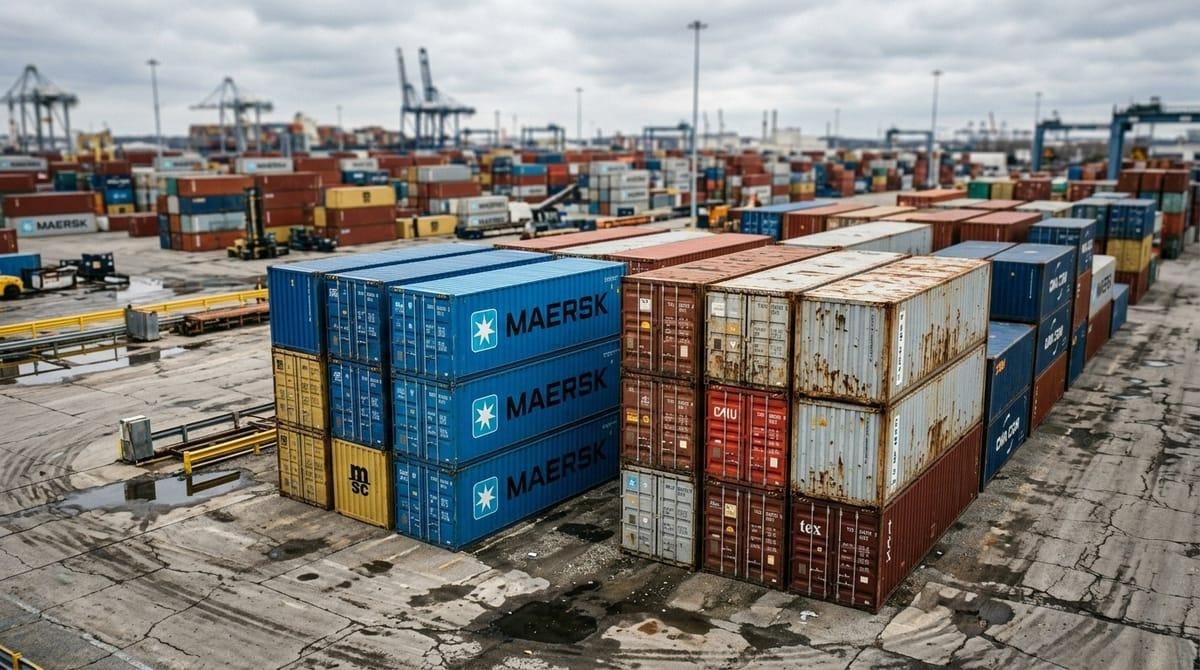
Before you hand over thousands of dollars for a shipping container, you need real answers. For a broader overview of buying a shipping container, see our guide. Most buyers ask three or four basic questions and assume the rest. That’s how people end up with a rusted-out unit labeled cargo worthy, or a delivery truck that can’t fit down their driveway.
The shipping container industry has a trust problem. Brokers misrepresent grades, sellers hide structural damage, and buyers discover too late that their “cargo worthy” container can’t legally ship overseas.
E&S Equipment Sales has delivered over 11,000 containers across Florida and Georgia since 2010. These are the questions we wish every buyer asked before signing a purchase order.
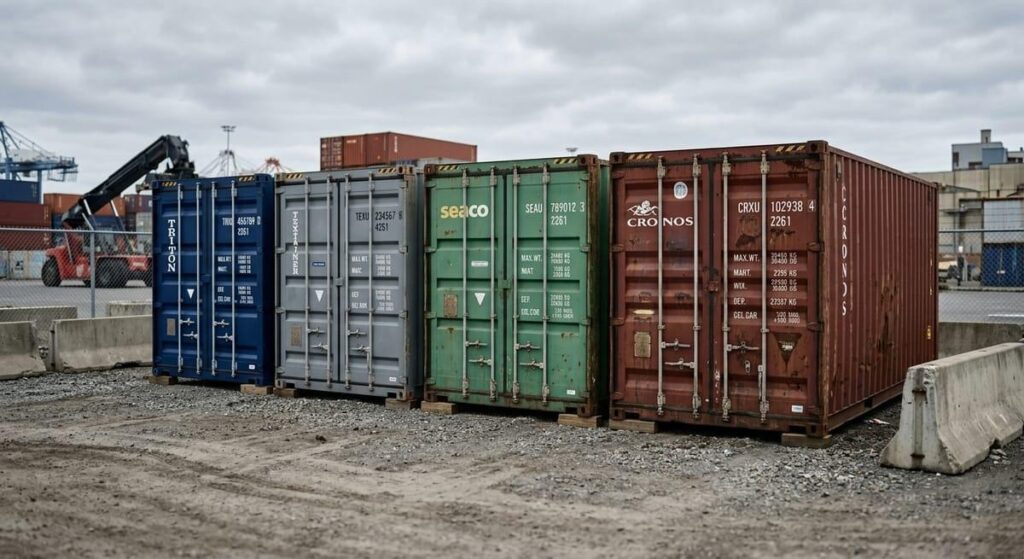
Container Quality and Condition Questions
Semantic
1. What Exact Grade Is This Shipping Container?
Container grade determines structural integrity, legal usability, warranty coverage, and cost.
| Grade | Warranty | Certification | Ideal For |
| New 1-Trip | 5 years | Full CSC for ocean shipping | Conversions, appearance matters, maximum lifespan |
| Cargo Worthy | 2 years | Valid CSC plate, ISO 1496 compliant | Quality storage, certified shipping needs |
| Wind & Water Tight | 90 days | None, storage only | Domestic storage, budget-conscious |
| As-Is | None | None | Parts salvage only |
New 1-Trip containers (also called one trip containers) are like-new units used once to transport cargo from manufacturer to the US. They feature minimal cosmetic wear, 14-gauge corrugated walls, and factory-applied marine-grade paint.
Cargo Worthy containers are structurally certified for ocean transport. They meet ISO shipping container standards, withstand forces of 1.8g vertically, and provide proven quality at lower cost. Recommended for buyers needing certification or proven quality.
Wind and Water Tight containers are storage-grade only. Doors seal and the container doesn’t leak, but these units aren’t certified for ocean shipping. Many sellers falsely label these as Cargo Worthy to charge higher prices.
As-Is containers have structural issues and no guarantees.
2. Who Certifies Your Containers and Can You Provide Documentation?
CSC (Container Safety Convention) certification is required for ocean transport and proves structural integrity. Only licensed container surveyors can legally certify ISO shipping containers and issue valid CSC plates.
The CSC plate contains: manufacturer identification, country of manufacture, container serial number, maximum operating gross weight, date of manufacture, and date of last inspection.
If a supplier can’t provide CSC documentation for containers advertised as Cargo Worthy, they’re either brokers reselling uncertified units or mislabeling lower grades.
E&S Equipment Sales owner Michael Bader is a licensed container surveyor with 30+ years in the shipping industry. Every container gets inspected and certified in-house before delivery.
3. What Should I Inspect When the Container Arrives?
Even with warranties, verify the condition on delivery.
Critical inspection points:
Door seals: Rubber gaskets intact with no gaps, tears, or missing sections. Run your hand along the seal perimeter. You shouldn’t feel air movement.
Floor condition: Check for soft spots, holes, or rotted plywood. Apply pressure across different sections. Any give indicates underlying frame damage.
Frame integrity: Corner posts and crossbeams should show no major dents or compromised welds.
CSC plate presence: Verify the plate is present and certification date is current. The plate should be riveted or welded to the left door.
Watertight test: Look inside during rain or request a hose test on suspicious areas.
Take photos immediately if issues exist.
4. What Condition Issues Are Acceptable Versus Grounds for Rejection?
Acceptable on Cargo Worthy containers: Surface rust that doesn’t flake when scraped, minor dents on walls under 2 inches deep, paint fading from UV exposure, scratches and scuff marks from handling, previous shipping decals, minor door alignment issues that don’t prevent sealing.
Reject-worthy issues: Any holes regardless of size, rotten or soft flooring that flexes, broken or missing door seals creating gaps exceeding 1/4 inch, frame damage with bent corner posts exceeding 1/2 inch deviation, missing CSC plate when Cargo Worthy was purchased, doors that won’t close properly, interior water damage indicating previous leaks, compromised welds showing cracks.
Surface rust is cosmetic and natural on steel containers. Frame rust, where metal actively corrodes and weakens, indicates the container shouldn’t be certified as Cargo Worthy.
5. How Long Will This Storage Container Last?
Lifespan varies based on container grade, usage history, climate, and maintenance. Once containers exit ocean service, life expectancy increases because salt-spray exposure stops.
Factors affecting lifespan:
Humid Florida climates need regular painting maintenance every 5-7 years. Coastal environments accelerate corrosion rates compared to inland locations.
Steel thickness provides structural longevity. Containers remain structurally sound until corrosion reduces thickness by 30-40%.
Regular maintenance dramatically extends these timelines: repainting every 5-7 years, clearing drainage channels, preventing ground contact that traps moisture, keeping vegetation away from walls.
6. What’s the Difference Between Standard Height and High Cube Containers?
| Dimension | Standard Height | High Cube |
| External Height | 8’6″ | 9’6″ |
| Internal Height | 8′ | 9′ |
| 20ft Cubic Capacity | 1,169 cu ft | 1,311 cu ft |
| 40ft Cubic Capacity | 2,385 cu ft | 2,694 cu ft |
High cube containers accommodate taller equipment and vehicles. They’re preferred for container homes and offices because extra ceiling height makes interior spaces feel less claustrophobic.
High cube containers require slightly higher overhead clearance during delivery: 14 feet minimum versus 13 feet for standard units.
7. How Can I Verify Manufacturing Date and Usage History?
Every shipping container has a unique identification number following ISO 6346 standard: 4 letters followed by 7 digits.
The manufacturing date appears on the CSC plate as month and year. For example, “MFG 05/2018” indicates May 2018 production.
Cross-reference manufacturing date with claimed grade. If a seller offers a “new” 1-Trip container manufactured over 18 months ago, question whether it’s truly been used only once.
Container age alone doesn’t disqualify a unit. A well-maintained 12-year-old container in Cargo Worthy condition outperforms a poorly maintained 5-year-old unit.
Supplier Credibility Questions
8. Are You a Direct Seller or a Broker?
This question separates companies that control quality from middlemen who profit without accountability.
| Direct Sellers | Brokers |
| Own the containers they sell | Connect buyers to third-party sellers |
| Control delivery with CDL-licensed drivers | Mark up costs without adding value |
| Inspect inventory before listing | Limited control over condition and timing |
| Remain accountable when issues arise | Disappear after collecting payment |
The broker business model creates liability gaps. If your container arrives damaged or misrepresented, the broker claims they’re not responsible because they don’t own inventory.
Ask directly: “Do you own this container or are you brokering it?” and “Can I visit your facility to inspect inventory?” Watch for responses like “We work with a network of partners.” That’s broker terminology.
E&S Equipment Sales is a direct seller with container depots throughout the southeast US. Family-owned since 2010, we welcome customers to visit our Fort White location by appointment. Learn more about why customers choose us for transparent service.
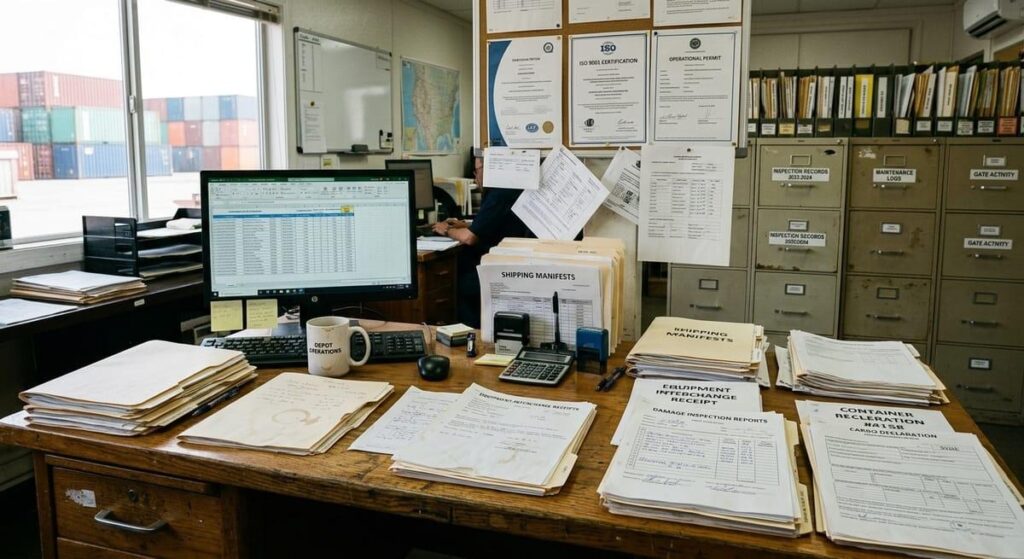
9. What Documentation and Certifications Can You Provide?
Legitimate suppliers provide documentation proving their claims. Request:
CSC certificates for Cargo Worthy containers, business license verification (look for 10+ years in the container industry), proof of insurance and CDL licensing for delivery drivers, written warranty terms specific to the grade purchased, and company references or Google reviews showing delivery history.
CSC documentation should include surveyor’s name, license number, date of inspection, and specific container serial number. Generic or blank CSC certificates are red flags.
Business longevity matters. Companies operating 10+ years have survived market cycles and built reputations.
10. What Warning Signs Indicate Unreliable Suppliers?
| Warning Sign | What It Means |
| Won’t disclose broker status | Operating as middleman without accountability |
| No physical address | Operating from laptop without inventory |
| Can’t provide CSC certification | Lying about grade or selling uncertified units |
| Vague condition descriptions | Doesn’t know what they’re selling |
| Pressure tactics | “Deal expires today” manufactured urgency |
| No written warranty | Major red flag except for As-Is containers |
| Requires 100% prepayment | Zero leverage if container doesn’t match description |
Check Google reviews and filter for 1-2 star ratings to find reputable suppliers. Patterns of complaints about condition, delivery problems, or unresponsive service indicate consistent issues. For detailed guidance on spotting these issues, read our guide on how to avoid shipping container scams.
Delivery, Pricing and Legal Requirement Questions
11. What’s Included in the Total Cost?
E&S Equipment Sales includes delivery in your quoted price. There’s no separate line item for transport, no fuel surcharges added at the end, and no surprises when the truck shows up.
Some suppliers break container cost, delivery, and placement into separate charges, so when you’re comparing quotes, make sure you’re looking at all-in numbers rather than a base price with fees stacked on top.
Beware of:
Fuel surcharges not disclosed upfront, difficult access fees not discussed during quoting, after-hours delivery charges, and repositioning fees if driver can’t place container exactly where desired.
Some suppliers advertise “free delivery” but inflate container base cost to compensate. Compare total out-the-door costs across suppliers. Understanding factors that drive shipping container prices helps you evaluate whether quoted costs are reasonable.
E&S Equipment Sales provides transparent upfront pricing with delivery included and placement at no extra charge within our service area. No surprise fees at delivery.
12. What Site Access Requirements Do I Need for Delivery?
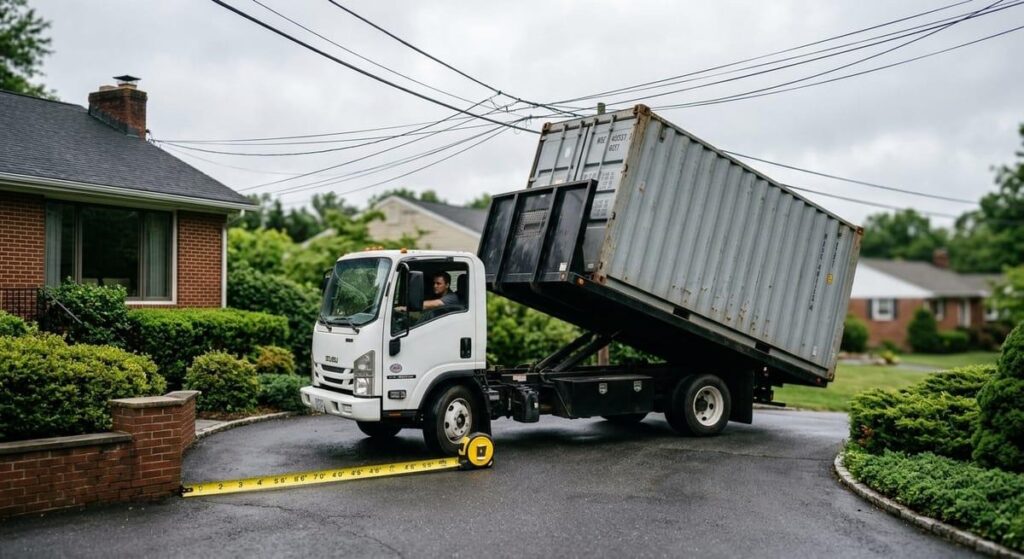
Tilt-bed delivery trucks need specific clearances. Failing to verify access before delivery creates expensive problems.
Minimum requirements:
12 feet of width for truck to navigate driveway, 14 feet of overhead clearance to avoid power lines and branches, 110’ for 40-foot containers, and firm, level ground that won’t sink under truck weight.
Common access problems:
If your property has marginal access, there are options. You can meet the truck at a nearby location with better clearance, or have the container placed near the road for repositioning later.
Not sure whether your driveway or lot will work? Contact E&S Equipment and send a few pictures. Someone from the Dispatch team will follow up to talk through delivery access and figure out the best approach for your site.
13. Do I Need Permits or Insurance?
Permit requirements vary by location and use. Most residential properties allow containers for temporary storage without permits if treated as accessory structures, but verify:
County zoning setback requirements (5-10 feet from property lines), city permits for commercial use or permanent foundations, HOA restrictions, and local building codes for containers used as permanent structures.
Residential storage falls under “accessory structure” zoning with rules similar to sheds. Most jurisdictions allow accessory structures under 200 square feet without permits. A 20ft container (160 square feet) qualifies. A 40ft container (320 square feet) may trigger permit requirements.
Check with your local zoning office before purchasing. Violations result in fines or mandatory removal orders. Ask specifically: “I’m planning to place a [size] shipping container on my property at [address] for [use case]. Do I need permits?”
Insurance considerations: Homeowner’s policies may cover containers under “other structures” provisions, with automatic coverage up to 10% of dwelling coverage limits. Verify: whether your policy covers containers specifically, coverage limits for contents stored inside, liability coverage if someone is injured accessing your container.
14. What Modifications Do You Offer and Do They Affect Warranty?
Not all suppliers modify containers. Those who outsource modifications create delays and quality control issues.
Common modifications:
Roll-up doors for easier access, man doors (36 inches wide, lockable), windows for natural light, wall-mounted A/C units, custom paint, ramps for equipment loading, and lock boxes for additional security.
Modification timeline: Expect 3-5 weeks depending on scope. Simple additions like man doors or windows take 1-2 weeks. Complex projects require 4-6 weeks.
Warranty impact: Structural modifications can void warranties if done incorrectly. Any modification compromising container structural integrity (cutting corner posts, removing significant corrugated wall sections without reinforcement) can void certification and structural warranties.
Cosmetic additions like paint or lock boxes don’t affect structural warranties. Always clarify warranty terms before authorizing modifications.
E&S Equipment Sales performs all modifications in-house with 15 years of experience. We control quality, timing, and accountability. Modifications performed by our team don’t void structural warranties because we engineer them correctly.
15. What Ground Preparation Is Required for Container Placement?
Proper ground preparation prevents settling, door operation problems, and moisture damage. Containers must sit level within 2 inches across their length for doors to operate correctly.
| Preparation Method | Best For | Pros | Cons |
| Gravel bed (4-6″) | Most residential | Good drainage, prevents rust | May settle over time |
| Concrete piers | Soft ground, permanent | Elevates off ground, stable | More labor intensive |
| Railroad ties | Temporary placement | Quick solution | Timber eventually rots |
| Concrete slab | Modified containers | Best stability, permanent | Highest cost |
Gravel provides drainage, prevents direct ground contact promoting rust, and distributes weight to prevent settling. Concrete piers work well for permanent installations and soft ground. Concrete slab is best for permanent container installations.
Avoid placing containers:
Directly on grass or sod, in low-lying areas where water collects, on slopes exceeding 5% unless properly terraced, or under trees where falling branches can damage.
Ground should slope slightly away from container to prevent water pooling.
16. What’s Your Delivery Timeline and Process?
Standard delivery timeline: For most locations in Florida and Georgia, delivery runs about one to two weeks from order confirmation. Seasonal demand can affect timing, so if your project has a firm deadline, ask your E&S sales rep about options when you call..
Delivery process steps:
Supplier schedules delivery based on route efficiency. Supplier contacts you 24-48 hours before delivery to confirm appointment window. Day before delivery, supplier provides more specific arrival time. On delivery day, driver calls 30-60 minutes before arrival.
Tilt-bed delivery method: Specialized tilt-bed trucks transport containers. The truck bed hydraulically tilts, allowing the container to slide backward onto your prepared site. Experienced drivers can place containers within inches of your desired location.
Delivery requires someone 18+ years old on-site to sign acceptance paperwork and walk through the container with the driver.
Why E&S Equipment Sales Answers These Questions Differently
When you ask “Are you a broker?”, we say no and prove it. We own every container we sell.
When you ask “Who certifies your containers?”, we answer “Our owner, a licensed surveyor with 30+ years in the shipping industry.” Michael Bader inspects every Cargo Worthy container and issues CSC certificates when required.
Contact E&S equipment today for any questions you may have.
Frequently Asked Questions
What Is the Most Important Question to Ask When Buying a Shipping Container?
“What exact grade is this shipping container?” is the most critical question because it determines structural integrity, legal usability, warranty coverage, and cost. Demand specific answers using industry terminology: New 1-Trip, Cargo Worthy, Wind and Water Tight, or As-Is.
How Do I Know If a Supplier Is Legitimate or a Broker?
Ask two direct questions: “Do you own this container or are you brokering it?” and “Can I visit your facility to inspect inventory?” Direct sellers own containers, maintain physical storage yards, use their own CDL-licensed drivers, and provide written warranties. Brokers connect you to third parties they don’t control.
Do I Need a Permit to Put a Shipping Container on My Property?
It depends on your location and intended use. Most residential properties allow containers for temporary storage without permits when treated as accessory structures. Contact your zoning office before purchase to avoid violations.
What’s the Difference Between Cargo Worthy and Wind and Water Tight Containers?
Cargo Worthy containers are structurally certified for ocean shipping with valid CSC plates meeting ISO 1496 standards and carry 2-year warranties. Wind and Water Tight containers are storage-grade only with 90-day warranties. Cargo Worthy containers provide legal compliance for overseas transport and better structural integrity.
What Should I Inspect When My Container Is Delivered?
Check these critical areas before accepting delivery: door seals (rubber gaskets intact with no gaps exceeding 1/4 inch), floor condition (plywood solid without holes or soft spots), corner posts and crossbeams (no structural dents), CSC plate presence if Cargo Worthy grade was purchased, and watertight integrity.
How Long Does a Shipping Container Last?
Container lifespan varies based on grade, usage, climate, and maintenance. Once containers exit ocean service, life expectancy increases because salt-spray exposure stops. Repainting every 5-7 years dramatically extends lifespan.
What Ground Preparation Is Required Before Container Delivery?
Containers must sit level within 2 inches for proper door operation. Options include 4-6 inches of compacted crushed stone, concrete piers at corners, pressure-treated timber pads, or full concrete slab. Avoid placing directly on grass, in low areas where water pools, or under trees.
0 Comments