
Most people shopping for a shipping container already have a picture in their head. A big steel box, one set of doors on the end, and that’s about it. And for a lot of projects, that standard setup works perfectly fine.
But what happens when it doesn’t?
Maybe you’re running a construction crew and need forklift access from multiple sides. Maybe you’re storing temperature-sensitive inventory and a regular steel box in the Florida summer heat sounds like a bad idea. Or maybe you’ve got oversized equipment that just won’t cooperate with a single 7-foot-wide door opening.
That’s where specialty shipping containers come in. These aren’t your standard box with standard doors. They’re purpose-built container configurations that solve problems a regular container can’t. And if you’ve never heard of quad door containers or non-running refrigerated units, you’re not alone. Most container sellers don’t even carry them. (If you’re still getting familiar with the basics, our Shipping Containers Buying Guide page is a solid starting point before reading further.)
We stock and sell the full range of specialty containers across Florida and Georgia, and we’ve been doing it for 15 years. So let’s walk through the options and figure out which one actually makes sense for your project.
1) Double Door Shipping Containers (Tunnel Containers)
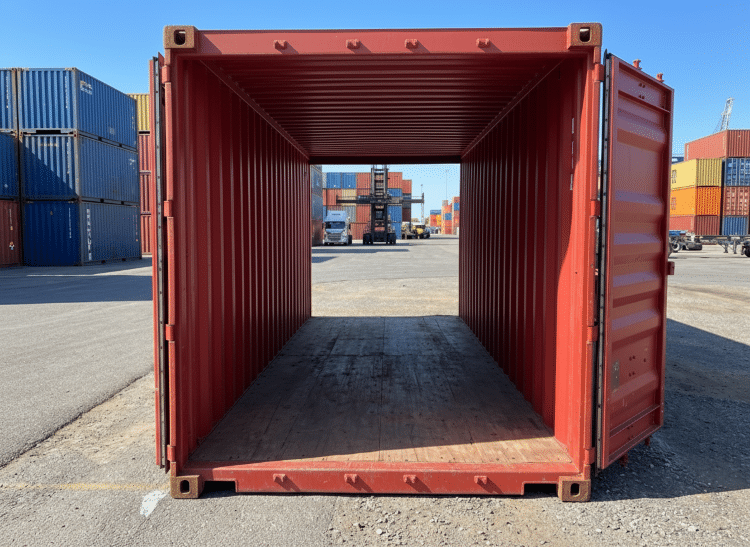
Here’s something a lot of people don’t realize: double door shipping containers aren’t modified. They come from the factory in China with cargo doors on both ends. That’s how they’re manufactured.
This matters because it means the structural integrity is built into the design from the start. You’re getting a container with two full sets of lockable cargo doors, front and back, and neither opening has been cut or welded after the fact. The frame, the corner castings, and the door hardware are all factory-engineered.
People in the industry sometimes call these “tunnel containers” because you can open both ends and look straight through. That drive-through access is what makes them so practical. A forklift can enter from one side and exit the other. You can load seasonal inventory from the front and pull stock from the back without rearranging everything in between.
- Construction: Construction companies love them for staging materials on busy job sites where traffic flow matters.
- Landscaping: Landscaping operations use them to store equipment with quick grab-and-go access.
- General Storage: For anyone who has ever spent 20 minutes rearranging boxes inside a standard container to reach something in the back corner, you already see the appeal.
Double door containers are available in both 20-foot and 40-foot lengths.
2) 20-Foot Tri-Door Shipping Containers
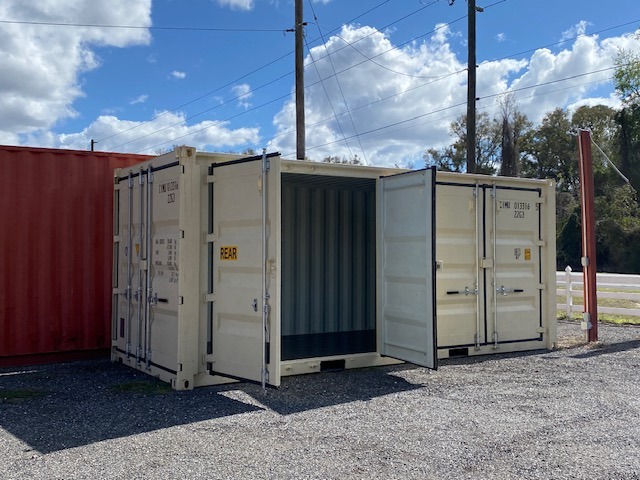
When you need a strategic balance of security and flexible access, the 20-foot new 1-trip Tri-Door shipping container is an exceptional solution. These specialized units feature the main standard loading cargo doors on one end, plus two additional doors situated along the side.
This configuration is perfect for projects where you need more entry options than a standard box but do not require the fully exposed wall of an open-side container. The side doors allow you to reach specific sections of your stored goods, equipment, or materials instantly, without having to unload from the front.
Available in both standard height and high cube configurations, these Tri-Door units give you the option for extra vertical clearance for taller cargo or bulkier equipment. Because they are new 1-trip containers, they arrive in pristine condition, offering maximum longevity, durability, and a clean, professional appearance for your property or job site.
3) Open Side Shipping Containers
If double door containers give you access from both ends, open side containers give you access from the long side. The entire length of one wall folds open on bi-fold doors, creating a massive opening that a standard container just can’t match.
Think about it this way: a 40-foot standard container gives you a door opening that’s roughly 7 feet 8 inches wide. An open side container on that same 40-foot length? You can fold back the full side and suddenly you’ve got nearly 40 feet of clearance. That’s a completely different ballgame for loading oversized items, setting up vendor displays, or accessing stored materials without playing Tetris.
One thing you should know before shopping , open side containers are really only available new. Used open side units are extremely rare in the marketplace because they were never produced in the same volume as standard containers. So if someone’s offering you a used open side at a bargain price, ask questions. (Our guide to costly shipping container buying mistakes covers more red flags like this.)
Open sides come in 20-foot and 40-foot lengths, and the bi-fold doors operate just like the standard cargo doors on the end of any container. The door panels fold flat against the container when fully open, so they stay out of the way while you work.
These are popular for pop-up retail, event setups, and construction sites where wide-load equipment needs to slide in from the side. Farmers and ag operations use them too, especially for storing harvesting equipment that’s too wide for a standard door.
4) Quad Door Containers
Quad door containers are exactly what they sound like , four sets of cargo doors. Standard doors on both short ends, plus additional doors on both long sides. If maximum accessibility is the goal, this is about as close as you can get without removing walls entirely.
These are still relatively uncommon compared to double door and open side models, and most container sellers don’t carry them at all. We’ve been selling them sporadically but consistently enough that we keep them in our lineup. For the right application, nothing else really compares.
The quad door setup works well for operations that need access points from multiple directions. Think about a busy job site where different crews need to reach different sections of stored material throughout the day. Rather than one crew waiting while another digs through the container, everyone has their own entry point.
They’re also a smart choice for temporary staging areas and event logistics where traffic needs to flow through or around the container without bottlenecks. Because all four sides can be opened, you can position a quad door container in the center of a work area and reach it from any direction.
Quad door containers are available in 20-foot configurations. Availability can vary since these are specialty-manufactured units, so if this is something you’re considering, it’s worth reaching out early so we can check current stock or source one for you.
5) Non-Running Refrigerated Containers (Insulated Shipping Containers)
Here’s one that a lot of people overlook, and the timing couldn’t be better with summer right around the corner.
A non-running refrigerated container , sometimes called an insulated shipping container , is basically a retired reefer. The refrigeration unit either no longer functions or has been removed, but all that thick insulation is still intact inside the walls, ceiling, and floor. We’re talking heavy-duty closed-cell foam that was originally designed to keep perishable cargo cold during weeks at sea.
So what does that mean for you? It means you’ve got a container that stays significantly cooler inside than a standard steel box, without needing electricity or a compressor. In the Florida and Georgia heat, a regular container can turn into an oven by mid-afternoon. An insulated unit takes that same sun exposure and keeps interior temperatures noticeably more moderate.
The construction is different from a standard container too. The interior walls are stainless steel (flat panels, no corrugation), and the floors are aluminum T-grid rather than wood plywood. The exterior is always white to reflect sunlight. It’s a completely different build quality compared to a standard dry container.
These 40-foot high cube insulated containers are ideal for storing anything that doesn’t love extreme heat. Feed and grain for agricultural operations. Temperature-sensitive equipment or materials on construction sites. Auto parts, paint supplies, upholstered furniture , anything that warps, melts, or degrades when things get too hot.
We’ll have two of these in stock by the end of the month, and they move fast during the warm season. If insulated storage has been on your radar, now’s the time to ask about availability.
6) Refrigerated Shipping Containers (Active Reefers)
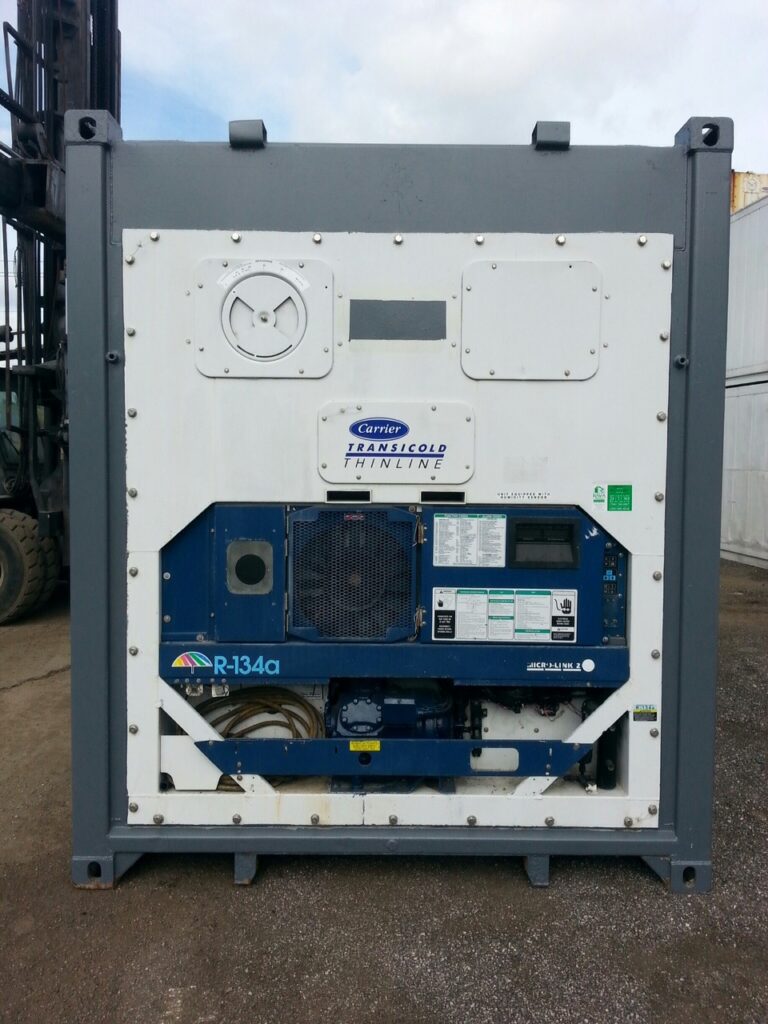
If you need more than just heavy insulation, an active refrigerated shipping container is the ultimate portable cold storage solution. Commonly called “reefers” in the shipping industry, these units come fully equipped with an industrial cooling machine built directly into the front wall of the container.
For businesses in Florida and Georgia, dealing with seasonal surges in temperature-sensitive inventory can be a massive headache. Instead of spending capital on a permanent walk-in freezer addition or leasing expensive off-site cold storage space, an active reefer delivers commercial-grade climate control right to your property.
These units are designed to maintain precise temperatures in the most extreme environments. Whether you need to keep goods perfectly chilled or deep-frozen, active reefers give you total control over the interior climate.
- Food and Beverage: Perfect for restaurants, grocery stores, and event caterers who need reliable overflow storage for produce, meats, and beverages.
- Agriculture: Ideal for farms that need to immediately cool down fresh harvests before transport.
- Medical and Chemical: Provides secure, temperature-regulated storage for sensitive supplies, pharmaceuticals, or industrial chemicals.
It is important to note that because these are industrial cooling machines, they typically require dedicated 3-phase electrical power to operate. When you request a quote, our team will walk you through the power requirements and site prep so you know exactly what to expect before delivery day.
7) High Cube Shipping Containers
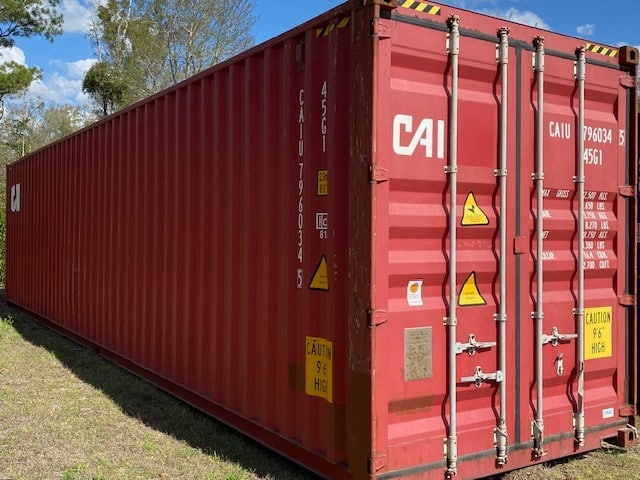
Most standard shipping containers are exactly 8 feet 6 inches tall. High cube shipping containers give you an extra foot of vertical space, bringing the total exterior height to 9 feet 6 inches. While one foot might not sound like a massive upgrade on paper, it completely changes what you can accomplish inside the unit.
Because high cubes share the same footprint as standard containers, you gain significantly more interior storage volume without taking up any additional ground space on your property or job site. This makes them an incredibly popular choice for commercial storage, agricultural applications, and construction sites across Florida and Georgia.
Here is why that extra vertical clearance is so valuable:
- Oversized Equipment: If you are storing tall machinery, excavators, or agricultural tractors with roll bars, a standard container door might scrape the top. A high cube provides the clearance you need to drive equipment straight in safely.
- Maximized Pallet Storage: For businesses managing inventory, that extra foot often means you can stack pallets one tier higher, maximizing your storage capacity and lowering your overall cost per square foot.
- Ideal for Modifications: If you plan on adding a custom wall-mounted A/C unit, insulation, or a drop ceiling, those modifications will eat into your interior space. Starting with a high cube ensures you still have plenty of comfortable headroom to move around once the custom work is complete.
High cube containers are most commonly available in 40-foot and 45-foot lengths, giving you the ultimate combination of floor space and vertical storage volume.
How Do Specialty Containers Compare to Modifications?
This is a question we get constantly, and it’s worth clearing up. Specialty containers and container modifications are two separate things.
Specialty containers , the double doors, open sides, quad doors, and insulated units we’ve been talking about , are manufactured that way. They’re built to those specifications in the factory. The engineering accounts for the different door configurations or insulation from the ground up.
Container modifications, on the other hand, are changes made to a standard container after it’s manufactured. Things like adding a man door, installing a roll-up door, cutting in windows, mounting a wall A/C unit, or applying custom paint. Those are aftermarket changes that a qualified shop handles on-site.
Both have their place, and sometimes you’ll actually want both. A double door container with a roll-up door added to one side, for example, gives you cargo access from both ends plus a quick-access point on the long wall. An insulated container with a wall-mounted A/C unit takes your temperature control even further.
If you want to learn more about what’s possible with modifications, check out our Complete Guide to Shipping Container Modifications & Customizations.
Which Specialty Container Fits Your Project?
Picking the right specialty container usually comes down to answering a few straightforward questions:
What kind of access do you need? If you’re loading from both ends, a double door container handles that. If you need full-length side access for oversized items, open side is the way to go. If you need access from everywhere, a quad door gives you the most flexibility.
Is temperature a concern? For anything heat-sensitive in the Florida or Georgia climate, a non-running refrigerated container’s built-in insulation makes a noticeable difference without any ongoing energy costs.
Are you working with oversized equipment? Standard container doors are about 7 feet 8 inches wide. If your equipment, materials, or pallets exceed that width, an open side container solves the problem instantly.
Do you need to combine specialty features with modifications? Many customers pair a specialty container with one or two modifications to create the exact setup their operation requires. We’ve been doing container modifications for 15 years, so we can walk you through what combinations work and what to watch out for. And if the upfront cost of a specialty unit feels like a stretch, ask about our rent-to-own program. It’s a flexible way to get the container you actually need without compromising on the wrong one.
Every container we sell , specialty or standard , is inspected by our licensed container surveyor before delivery. We’re a family-owned operation that’s been in the intermodal business for over 30 years, and we serve customers throughout Florida and Georgia with inventory in multiple depot locations. You can browse our full range of container products and services to see everything we offer beyond specialty units.
If you’re not sure which specialty container type is right for your situation, that’s exactly the kind of conversation we have every day. Give us a call at 800-995-2417 or request a quote and tell us about your project. We’ll point you in the right direction.
Frequently Asked Questions About Specialty Containers
u003cstrongu003eWhat are the best specialty shipping containers for oversized industrial equipment?u003c/strongu003e
If you are storing extremely wide or awkwardly shaped equipment, an open side shipping container is your best option because the entire side wall folds open. If you are storing tall machinery like excavators or tractors with roll bars, a high cube container provides an extra foot of vertical clearance so you can drive right in without scraping the roof.
u003cstrongu003eHow do refrigerated specialty shipping containers work for perishable goodsu003c/strongu003e?
Active refrigerated containers (reefers) come equipped with an industrial cooling machine built into the front wall. These units require dedicated 3-phase electrical power to operate and allow you to dial in precise temperatures to keep food, beverages, or agricultural harvests perfectly chilled or deep-frozen.
u003cstrongu003eWhere can I buy or rent an insulated specialty shipping container?u003c/strongu003e
Eu0026amp;S Equipment stocks and sells the full range of specialty containers, including insulated and refrigerated units, across Florida and Georgia. Whether you want to purchase a container outright or take advantage of our flexible rent-to-own program, we deliver directly to your business or property.
u003cstrongu003eDo you offer custom container modification services for specialty units?u003c/strongu003e
Yes. While specialty containers come from the factory with unique door configurations or insulation, we can absolutely customize them further. With 15 years of modification experience, our team can install man doors, roll-up doors, windows, lock boxes, or wall-mounted A/C units to create the exact storage solution your project requires.
0 Comments