
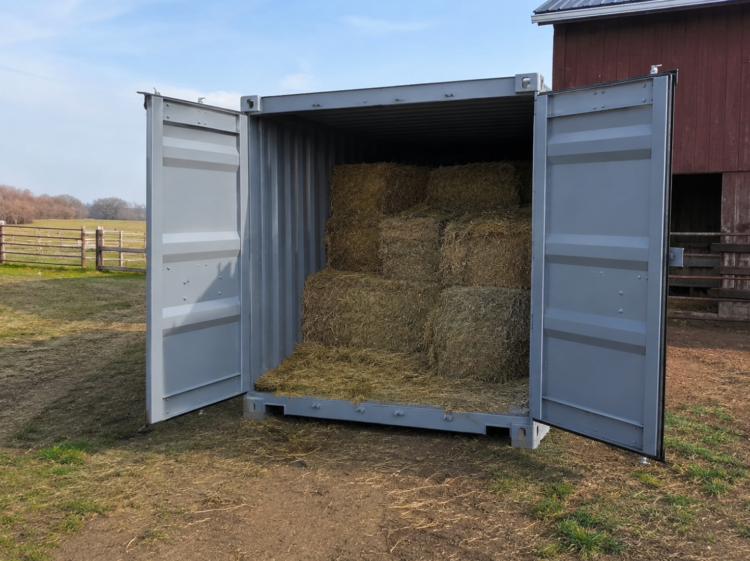
When you need to protect your harvest and equipment fast, farm storage containers are the ultimate solution. It’s late September in south Georgia. The combine has been running since the dew burned off, and there’s rain in the forecast for the weekend. You’ve got hay to get under cover, seed for next season to keep dry, and a sprayer worth more than your first truck sitting out in the weather. Harvest is a race, and the clock doesn’t slow down for anybody.
Here’s the part nobody likes to talk about. A good chunk of a farm’s profit can rot, rust, or walk off before it ever gets sold. Hay molds when it sits in the damp. Seed corn loses viability after one bad humid stretch. Left in the open, a planter or a four-wheeler ages a season every summer.
A heavy-duty steel shipping container fixes a lot of that without the wait or the price tag of a new pole barn. It shows up on a truck, drops on level ground, and locks. No foundation, no permits in most farm settings, no six weeks of construction while the weather does what it wants.
We’re E&S Equipment Sales, a family-owned container company serving Florida and Georgia since 2010. Better Containers, Professional Service is the tagline, and farmers are some of our best customers. Here’s how growers across the state use containers to protect a harvest, and how to set yours up before the trucks roll in.
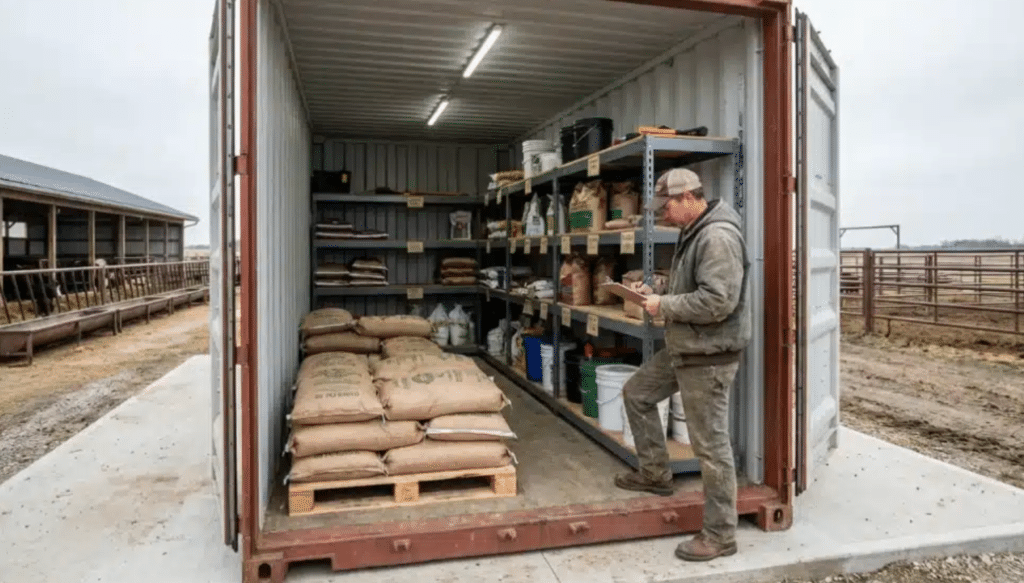
Keeping hay, feed, seed, and grain out of the weather
Weather is hard on stored crops. Spring rain, dead-of-summer humidity, and a wet harvest season all push moisture into anything left under a lean-to. Moisture is what starts the trouble. It feeds mold in hay, clumps and degrades fertilizer, and quietly ruins a seed lot you paid good money for.
A sealed steel container keeps the weather out and keeps dry feed dry. The doors gasket shut, the roof doesn’t leak, and rodents can’t chew their way through quarter-inch steel the way they go through a wooden shed.
How much fits? A 20-foot cargo container holds roughly 20 large round bales, depending on bale size and how you stack them. A 40-foot unit about doubles that, and gives you room to keep bagged feed or palletized grain alongside the hay. For the inputs that really hate moisture, like seed corn or bagged livestock feed, the grade of the container starts to matter. Our shipping containers 101 guide covers the basics, and we’ll dig into grades below.
Shipping container vs pole barn vs grain bin
Farmers ask this one a lot, so here’s a straight comparison for on-farm storage.
| Factor | Shipping container | Pole barn | Grain bin |
| Time to use it | Delivered and ready in days | Weeks of construction | Weeks, plus assembly |
| Foundation | Level ground or a gravel pad | Poured footings and posts | Concrete pad required |
| Moves with you | Yes, relocate it across the farm | No, it’s permanent | No, it’s permanent |
| Security | Steel walls, lockable, lock box optional | Open or partly open | Sealed for grain, not general storage |
| Best at | Mixed storage, equipment, secure inputs | Big covered footprint | Bulk grain only |
A grain bin is the right tool for bulk grain and nothing else. A pole barn gives you a big covered area, but it’s a permanent build with a permanent price. A portable storage container splits the difference for most farms. You get secure, weather-tight space you can lock, and you can move it to a different field or sell it later if your needs change.
Winterizing and securing your equipment
Sun and rain are tough on machinery. Tractors, ATVs, sprayers, and specialty implements all wear faster sitting in the open through a Georgia summer and a wet winter. Seals dry out, electronics corrode, and tires check and crack. A container turns that exposed iron into locked, covered storage for the off-season.
Height is the thing to watch with equipment. A 40-foot high cube intermodal container gives you 8’10” of interior height, which clears the operator station and ROPS bars on most full-size implements. Standard door openings run about 7’8″ wide, so a lot of equipment rolls straight in.
For drive-through loading or longer implements, you’ve got two options. Double-door containers come from the factory with cargo doors on both ends, so they’re built that way rather than cut later. Or we add a roll-up door as a modification, which takes a few weeks to complete, so it’s worth ordering ahead of the season you need it.
Storing chemicals and staying compliant
Fertilizer, crop protection products, and other regulated chemicals need a secure home. Heat degrades them, theft is a real risk on rural property, and Georgia Department of Agriculture rules expect these materials to be stored safely and under lock. A steel CONEX box handles the security side without a special build.
Add a heavy-duty lock box as a modification and you shield the padlock from bolt cutters, which is the first thing a thief reaches for. Keep incompatible products separated with secondary containment trays, and check your county’s requirements before you load anything in. A container gives you the locked, dedicated space those rules are written around.
Which grade holds up on a working farm
We stock and recommend two grades for farm work. New box or used sea box, we’ll tell you straight which fits what you’re storing.
New one-trip containers made a single voyage from the factory. They’re near-perfect, carry a 5-year warranty, and they’re the pick for seed, bagged feed, and anything where one humid week could cost you. Cargo worthy containers are our recommended used grade. They’re inspected and certified structurally sound, carry a 2-year warranty, and handle hay, equipment, fertilizer, and general storage at a better value.
A word of warning. Plenty of suppliers sell a lesser wind and water tight box and label it cargo worthy, and the difference shows up the first wet season. Ask any supplier for documentation in writing before you pay. Our guide to avoiding container scams walks through the rest of the red flags.
Getting your farm ready for delivery
A little prep makes delivery day smooth. Our drivers run hydraulic tilt-bed trailers and deliver farm storage containers to gravel roads, dirt drives, and working farm sites all over Florida and Georgia. There’s no extra charge for placement, and we deliver from container depots throughout the southeast US, pricing from the depot closest to you.
Clearance is the main thing to plan for. A 20-foot delivery needs roughly 60 to 70 feet of straight-line space to set down. A 40-foot unit needs closer to 100 to 120 feet. Our rigs run 65 feet or longer, so a narrow gate, a soft-ground stretch, or a tight turn is worth a phone call before you order.
For the pad itself, level ground is the requirement. Compacted dirt, a gravel pad, or railroad ties under the corners all work, and a level base keeps the doors lined up so they seal right. Delivery runs on a three-tier timeline, so you can plan around the harvest.
| Option | Timeframe |
| Standard | 12 to 18 business days |
| Expedited | 6 to 11 business days |
| Rush | 3 to 5 business days |
If a single harvest or one winter is all you need, ask about rent-to-own. It’s a low-barrier way to get covered storage on the farm with terms up to 48 months, no credit check, and no early-payoff penalty, on new one-trip and cargo worthy units.
Farm storage container questions answered
Do I need a permit to put a container on agricultural land in Georgia?
In most Georgia counties, a container placed on ag land for farm use doesn’t need a building permit, but zoning rules vary by county. A quick call to your county planning office before you buy is the safe move.
What size container do I need for round hay bales?
A 20-foot container holds about 20 large round bales, and a 40-foot unit roughly doubles that. Bale size and stacking change the number, so tell us what you’re baling and we’ll help you size it.
Will a used container keep hay and feed dry through Georgia’s wet season?
Yes, when the doors seal and the roof and walls are sound, both of which we verify before delivery. For seed or bagged feed, a new one-trip container gives you the tightest seals and a 5-year warranty.
Can a delivery truck reach my farm on a gravel or dirt driveway?
We deliver to gravel roads, dirt drives, and working farm sites across rural Georgia all the time. If your access is unusually narrow, steep, or soft, call first so we can plan the drop. There’s no extra charge for placement.
How does rent-to-own work, and is there a credit check?
No credit check and no complicated paperwork, with terms up to 48 months. You make monthly payments and own the container at the end, with no early-payoff penalty, on new one-trip and cargo worthy containers.
What’s the best way to store agricultural chemicals in a container?
Use a cargo worthy or one-trip unit and add a lock box modification for secure access. Keep incompatible products separated with secondary containment, and confirm your county’s rules under Georgia Department of Agriculture guidelines.
Protect this year’s harvest, and use it for years
A container you buy this fall isn’t a one-season fix. It guards your hay and seed now, your equipment over the winter, and your inputs next spring, and it’s still standing the harvest after that. Storage is just the start, too. Here are more ways farms put a container to work the rest of the year.
Call us at (800) 995-2417 for straight answers and a verbal quote, or request a written quote and we’ll get back to you the same day. Tell us what you’re storing and where you farm. We’ll point you to the right size and grade of farm storage container for your operation.
0 Comments