
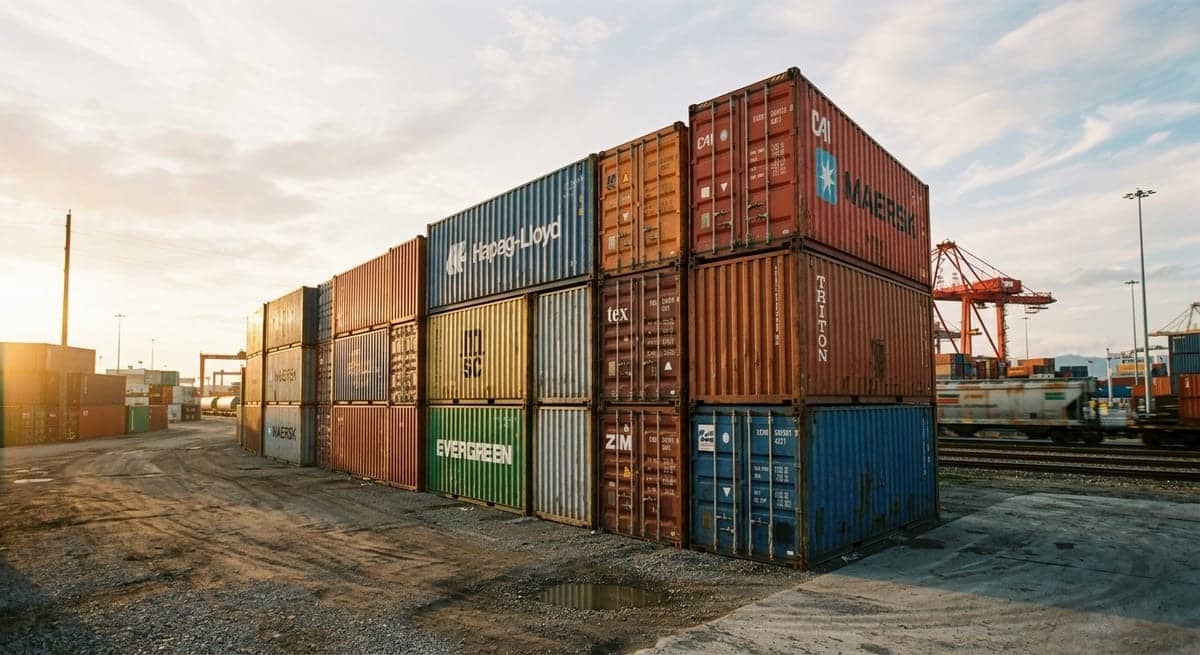
A conex box is a standardized, heavy-steel intermodal shipping container used worldwide for freight transport, on-site storage, and everything in between. If you’ve heard the terms conex box, shipping container, and storage container used interchangeably, they mostly mean the same thing. This guide clears up the terminology, walks through conex box sizes and real-world uses, and explains what container condition grades actually mean so you know what you’re getting before you buy.
Conex Box or Shipping Container? Understanding the Terminology
“Conex” is short for Container Express, a standardized military shipping system developed by the U.S. Army in the early 1950s. The name stuck, especially in government and military contexts, and civilians still use it today when searching for a conex container for sale.
| Term | Origin | When it’s used |
| Conex box | U.S. military logistics, 1950s | Civilian and government purchasing |
| Shipping container | Commercial freight industry | Units in active ocean service |
| Intermodal container | ISO/international standards | Technical term across ship, rail, and truck |
| Storage container | Repurposed ground use | Units retired from ocean service |
| Sea can | Informal slang | Agriculture, construction, rural markets |
One distinction worth knowing: “storage container” usually means a unit no longer certified for ocean transport. For buyers planning to ship goods overseas, that difference matters.
Conex Box Sizes and Dimensions
Conex box dimensions are standardized globally by the ISO, making intermodal containers interchangeable across ships, rail, and trucks worldwide.
| Size | Exterior dimensions | Interior floor space | Door opening |
| 20′ standard | 20′ L × 8′ W × 8’6″ H | ~160 sq ft | 7’8″ W × 7’5″ H |
| 40′ standard | 40′ L × 8′ W × 8’6″ H | ~320 sq ft | 7’8″ W × 7’5″ H |
| 40′ high cube | 40′ L × 8′ W × 9’6″ H | ~320 sq ft + headroom | 7’8″ W × 8’5″ H |
| 45′ high cube | 45′ L × 8′ W × 9’6″ H | ~360 sq ft | 7’8″ W × 8’5″ H |
High cube units add approximately one foot of interior height, a real difference when storing tall equipment or planning modifications. E&S also carries 10-foot containers for tight spaces, plus specialty configurations like open-side and double-door units. Our specialty cargo container guide covers those configurations in detail.
What Are Conex Boxes Used For?
Storage for Farms, Job Sites, and Residential Properties
This is the most common use for a portable steel storage container. Farmers store hay, seed, fertilizer, and equipment. Construction crews use conex boxes for tool security. Residential buyers use them during renovations and for seasonal items. The appeal is universal: weatherproof, vermin-proof, lockable, and movable. Corten steel construction resists rust naturally and holds up well in Florida’s humid climate.
Check out 15 ideas for agriculture uses for shipping containers
Overseas Freight and Intermodal Shipping
Certified units still move cargo across oceans. If you need to ship goods to the Bahamas, the Caribbean, or other international destinations, a properly certified intermodal container is required. E&S’s founder is a licensed container surveyor who can inspect and issue CSC certification for units going into ocean service, a capability most sellers and every broker cannot offer.
Modifications for Workshops and Custom Access
Standard conex containers accept a wide range of modifications. E&S has performed in-house modifications for 15 years: man doors, roll-up doors, windows, wall A/C units, custom paint, and ramps.
Our complete buying guide covers how to plan for modifications before you purchase.
Understanding Conex Box Condition Grades
Grade is one of the most important factors when comparing used conex boxes for sale, and where many buyers get burned.
| Grade | What it means | Best for | E&S warranty |
| New one-trip | One voyage from factory, like-new condition | Modifications, customer-facing locations | 5 years |
| Cargo Worthy (CW) | Inspected and certified for ocean shipping | Long Term Storage, freight, most applications | 2 years |
| Wind and Water Tight (WWT) | Keeps out weather but not ocean-certified | Budget domestic short term storage only | 90 days |
| As-Is | No guarantees | Not recommended | None |
Why Some Companies Mislabel WWT as Cargo Worthy
This happens regularly in the conex box market. A seller lists a container as “cargo worthy” and prices it $300–$500 less than it should be. What the buyer receives is a Wind and Water Tight unit, structurally inferior and ineligible for ocean transport. A WWT unit taken to port for export will fail inspection, and that cost falls on the buyer.
E&S does not sell As-Is containers under any circumstances. Every used conex box we deliver is Cargo Worthy or New One-Trip, inspected before delivery.
CSC Certification
If a conex container is going onto a cargo ship, it must carry a valid CSC plate, certification issued by a licensed surveyor confirming the unit meets structural requirements for ocean transport. Only licensed surveyors can issue these certificates. E&S’s owner holds that license.
For a deeper look at grades and what to verify before delivery, start understanding shipping container grades.
How Much Does a Conex Box Cost?
Conex box cost shifts with market conditions, and the right number depends on size, grade, location, and current inventory. The price difference between a well-graded container and an inferior one is often a few hundred dollars, but what you receive can differ significantly.
Rent-to-own is available for New One-Trip and Cargo Worthy units, with terms up to 48 months, no credit check, and no complicated paperwork. It’s a straightforward way to buy a conex box without a large upfront payment.
For current pricing, request a quote or call (800) 995-2417.
Frequently Asked Questions
What is a conex box, exactly?
A conex box is a standardized, heavy-steel intermodal shipping container originally developed by the U.S. Army in the 1950s. In commercial use, the same units are called shipping containers or intermodal containers. “Storage container” describes a unit repurposed for ground use rather than ocean transit.
What’s the difference between Cargo Worthy and Wind and Water Tight?
A Cargo Worthy container has passed a structural inspection and is certified for ocean freight. A Wind and Water Tight unit keeps out weather but can’t legally be loaded onto a cargo ship. Some sellers mislabel WWT units as Cargo Worthy—a problem that costs buyers at port inspection.
What size conex box do I need?
A 20-foot conex box suits most residential, farm, and small job-site needs. A 40-foot unit fits large inventories and commercial sites. High-cube variants add a foot of interior height, which matters for tall equipment or modifications. E&S also carries 10-foot and 45-foot units.
How much does a conex box cost?
Pricing varies by size, grade, and delivery location. Call **(800) 995-2417** or request a quote for current pricing on conex boxes for sale in your area.
How long does a conex box last?
A properly maintained steel storage container can last 25 years or more in ground use. Corten steel resists rust naturally. New One-Trip units carry a 5-year warranty through E&S; Cargo Worthy units carry 2 years.
What should I confirm before delivery?
Get the grade in writing—Cargo Worthy or New One-Trip, not just “used” or “good condition.” Verify your delivery site has 60–75 feet of straight run on firm, level ground for a tilt-bed truck.
Can a conex box be modified after purchase?
Yes. Standard containers accept man doors, roll-up doors, windows, wall A/C units, and ramps. Discuss your plans before you buy, as grade and size affect which modifications are practical. E&S performs modifications in-house.
0 Comments