

After 30+ years in the intermodal industry and selling over 11,000 containers, we see buyers lose thousands on preventable mistakes every week. This guide walks you through the most expensive errors buyers make when purchasing cargo containers, organized into three phases: before you buy, during the transaction, and after delivery.
At E&S Equipment Sales, we’re locally owned in Lake City, Florida, not a faceless broker, and our owner is a licensed container surveyor. This guide helps you succeed with your container investment, whether you buy from us or not.

Mistake #1: Choosing the Wrong Shipping Container Size
The most common miscalculation is underestimating needed storage space or overestimating capacity and paying for unused volume. Unlike expandable storage units, shipping containers are permanent investments requiring careful size selection.
What Actually Fits Inside a Shipping Container
| Size | Cubic Feet | Interior Dimensions (L×W×H) | Best For |
| 20′ Standard | 1,170 | 19’4″ × 7’8″ × 7’10” | Vehicle + tools, small business inventory, document storage |
| 40′ Standard | 2,390 | 39’5″ × 7’8″ × 7’10” | Full household, multiple vehicles, commercial equipment |
| 40′ High Cube | 2,700 | 39’5″ × 7’8″ × 8’10” | Tall equipment, workshop conversions, stacked pallets |
*External dimensions stay constant (a 40′ container measures exactly 40 feet long), but corrugated walls reduce internal width by 3-4 inches per side. Always calculate storage requirements using internal dimensions when planning your purchase.
How to Calculate Your Correct Container Size
Step 1: List everything you’re storing, including items you’ll acquire in the next 6-12 months. Be specific: “riding mower, push mower, weed trimmer, two chainsaws” not just “tools.”
Step 2: Measure major items’ cubic footage. Standard moving boxes equal 1.5 cubic feet each. Irregularly shaped items (motorcycles, equipment) need more space than physical dimensions suggest.
Step 3: Add 20% buffer for access aisles and inefficient stacking (increase to 30% for business inventory with regular turnover). Packed-solid containers become unusable.
Step 4: Consider access patterns. Frequent access requires items near doors with circulation space. Rarely accessed items can go deeper.
Step 5: Compare total cubic footage to internal container dimensions. Account for modifications, insulation reduces usable space by 4-6 inches on all sides.
Mistake #2: Not Understanding Shipping Container Condition Grades
Failing to distinguish between container condition grades is the single costliest error buyers make because it often leads to purchasing equipment that physically cannot perform the required task. Generally, inventory falls into three distinct categories: New or “One-Trip” containers, which are near-perfect and offer maximum longevity for premium modifications; Cargo Worthy containers, which have cosmetic wear but remain structurally sound enough to be professionally certified for international transport; and Wind & Water Tight (WWT) units, which are retired from ocean service and suitable only for stationary ground storage.
Buying the wrong grade isn’t just a cosmetic issue; it can result in a total loss of your investment. If you purchase a “Wind and Water Tight” container for international shipping, it will be rejected at the port for lacking the required CSC safety certification, forcing you to scramble to buy a second, compliant container while the first sits uselessly accruing storage fees. On the flip side, if you are only looking for backyard storage but don’t know how to spot the difference, you become an easy target for brokers who mislabel lower-quality containers as “Cargo Worthy,” tricking you into paying a premium price for a standard storage unit.
For more, see our full guide on shipping container grades.
Mistake #3: Falling for Too Good to Be True Shipping Container Prices
Hidden costs, broker markups, and misleading pricing structures cost buyers hundreds or thousands beyond quoted prices.
The Real Total Landed Cost Formula for Buying Shipping Containers
Your actual container investment includes:
Container base price + Delivery fees (vary by distance, accessibility, complexity) + Site preparation (concrete pad, gravel bed, railroad ties) + Permits/inspections (varies by jurisdiction) + Foundation materials (blocks, ties, gravel) + Optional modifications (doors, windows, paint) + Potential overage fees (site complications)
How Cheap Shipping Containers End Up Costing More
As-Is condition requiring repairs: Door hardware replacement costs several hundred dollars. Floor board replacement requires specialized lumber and professional installation. Rust remediation, repainting, and structural welding quickly consume initial savings.
Broker markup hidden in delivery fees: Base price looks attractive, then delivery fees appear inflated hundreds above market-rate costs. Total delivered cost matches or exceeds direct seller pricing.
Bait-and-switch tactics: Advertised containers are perpetually “just sold,” but sellers have another at a higher price. Creates false urgency making buyers willing to pay more.
No warranty equals replacement risk: Container fails or arrives worse than described, you have no recourse. The seller keeps money, you need another container. Warranty-free purchase becomes total loss.
Hidden Cost Warning Signs When Buying Containers
- Vague delivery pricing: “Call for quote” means negotiable based on perceived buyer urgency
- Surprise fees during transaction: Administrative, documentation, or placement fees appear after commitment
- Pressure for immediate payment: Pushing payment before full cost breakdown locks you in before discovering total
- Unclear site assessment terms: Some charge assessment fees but never assess sites
Learn more about avoiding cargo container scams.
Mistake #4: Buying Without A Professional Container Inspection
Photos hide problems. Descriptions mislead. Only professional inspection truly verifies container condition before purchase.
What Inspection Should Include
- Exterior structural integrity: Corner posts, side panels, end walls examined for damage, rust, structural compromise. Corner posts bear all stacking weight, any compromise affects safety.
- Interior condition assessment: Floor boards checked for rot, soft spots, missing sections. Interior walls inspected for holes, rust-through, cargo damage.
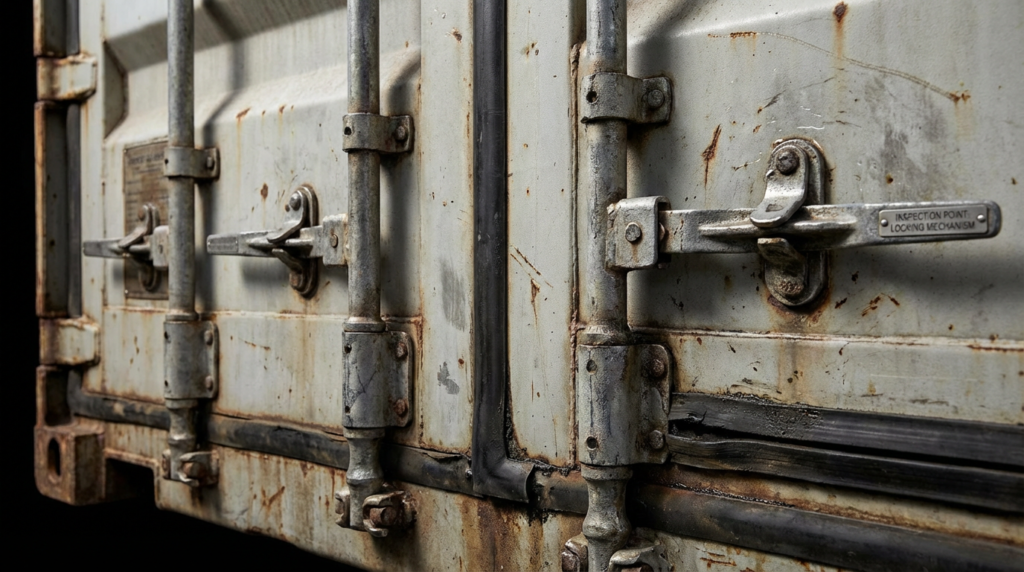
- Door function and seals: Verify smooth operation, proper locking, intact rubber seals. Test all cam locks for proper engagement.
- Floor load-bearing capacity: Walk the entire floor to identify weak spots, check springiness indicating structural problems.
- Frame and crossmembers: Inspect bottom rails, corner posts, roof cross members for structural soundness.
- CSC plate verification: For Cargo Worthy, confirm CSC plate present, legible, corresponds to container being inspected.
- Ventilation assessment: Check passive vents for function and blockage.
- Paint and rust evaluation: Assess surface rust versus structural penetration.
E&S Licensed Container Surveyor Advantage
- Professional credentials: We hold an official license as container surveyor with intermodal industry certification.
- Legal authority: Licensed surveyors certify containers for ocean transport with professional accountability. Licensing ensures expertise and adherence to standards.
- Competitive difference: Most dealers and virtually all brokers cannot certify in-house. Must hire third-party inspectors or skip proper certification.
- Customer benefit: Every container receives professional inspection before delivery, documented evaluation by credentialed professionals. Inspection report provides evidence of condition.
- Cargo Worthy guarantee: When we certify Cargo Worthy, we legally back certification. Documentation satisfies shipping lines and customs.
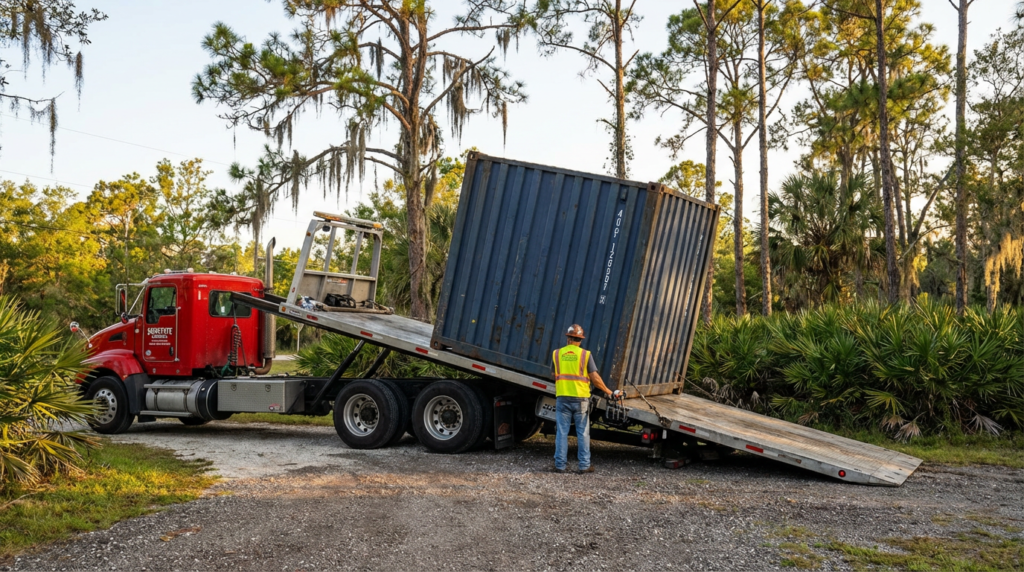
Mistake #5: Ignoring Site Preparation and Container Delivery Costs
A perfect container becomes a disaster if it can’t reach your property or sits on inappropriate ground. Understanding delivery requirements prevents costly mistakes.
Space Requirements for Shipping Container Delivery
| Container Size | Vehicle Length | Width Needed | Overhead Clearance | Turn Radius |
| 20-foot | 45-50 feet | 12-14 feet | 14 feet min | Wide arcs needed |
| 40-foot | 65-70 feet | 12-14 feet | 14 feet min | Near-straight access |
| 45-foot | 70-75 feet | 12-14 feet | 14 feet min | Virtually straight only |
Delivery equipment: Tilt-bed trailers (most common) slide containers off backward, requiring 50-60 feet total clearance. Side-lift trucks provide precise placement but cost more. Crane delivery offers maximum flexibility at the highest cost.
Common Site Access Failures That Increase Delivery Costs
Overhead obstacles: Power lines at 13 feet force rerouting or utility company intervention. Tree branches, building overhangs, carports, awnings create clearance issues.
Ground conditions: Wet weather turns unpaved surfaces into mud traps. Loaded tractor-trailers exceed 80,000 pounds, driveways designed for passenger vehicles might not support weight.
Gate restrictions: Gates wide enough for cars are too narrow for trailers. Calculate clearance based on the trailer’s turning arc, not gate width alone.
Narrow passages: Side yards, paths between trees, landscaped driveways appear passable but don’t accommodate trailer angles during turns.
Underground obstacles: Septic tanks, drain fields, underground utilities restrict where heavy trucks can drive. Call 811 several days before delivery for utility marking.
Mistake #6: Not Checking Zoning and Permit Requirements for Shipping Containers
Discovering after delivery that your city prohibits containers creates expensive, frustrating situations. Zoning violations can force removal, generate fines, and waste entire container investment.
When Permits Are Required for Container Placement
Residential zones: Many municipalities regulate containers, some ban entirely, others permit with conditions (setbacks, screening, quantity limits). Temporary permits (30-90 days) are easier than permanent placement.
HOA-governed communities: Frequently prohibit or severely restrict containers. Check CC&Rs before purchasing. HOAs can force removal and assess fines regardless of municipal regulations.
Commercial properties: Containers visible from public streets sometimes require aesthetic improvements, specific paint colors, landscaping screens, architectural compatibility reviews.
Permanent vs. temporary use: Some jurisdictions distinguish between temporary (construction, moving) and permanent installations. Temporary use might be allowed where permanent requires permits or is prohibited.
Florida, Georgia, and Alabama Container Placement Considerations
Florida: Agricultural counties (Suwannee, Lafayette, Gilchrist) have minimal restrictions. Urban/coastal counties (Miami-Dade, Broward, Palm Beach) trend toward stricter regulations. Hurricane preparedness arguments sometimes help permitting.
Georgia: Rural counties allow containers with few restrictions. Metro Atlanta and urban areas require permits and aesthetic standards. Agricultural exemptions exist for bona fide operations.
Alabama: Lighter regulatory approach in rural areas. Urban centers (Birmingham, Montgomery, Mobile) have structured requirements. “Home rule” provisions allow municipalities broad authority.
Mistake #7: Choosing Broker Model Over Direct Sellers
Understanding broker versus direct seller distinction protects you from markup schemes, accountability gaps, and service failures when buying shipping containers.
How Container Broker Model Works
- No owned inventory: Brokers maintain listings/relationships with container yards nationwide. Find containers from the network, mark up prices, arrange delivery through third parties. Never take physical possession.
- Hidden markups: You pay the broker’s price including a significant margin, several hundred dollars. Markup structure hidden in “delivery fees” or base pricing.
- Third-party delivery: Arrange delivery through logistics companies they don’t control. Communication gaps and accountability issues result.
- Limited accountability: Problems deflect to container source or delivery company. You’re stuck between parties pointing fingers.
- Geographic disconnection: Many brokers operate from distant states. Never seen the container they’re selling. No local presence for resolving issues.
Direct Seller Model Advantages for Container Purchases
Owned inventory: Purchase, inspect, maintain own stock. The container sits in their yard, you can visit and see.
Direct pricing: Pay actual selling price without broker markup layer. Better value by eliminating middleman profit.
Controlled delivery: Own trucks/drivers or directly managed logistics partners. Internal coordination, no third-party arrangements.
Clear accountability: Deal with a company that sold, inspected, delivered, warranted containers. Single-source responsibility eliminates runaround.
Local presence: Physical yard to visit, local phone numbers, service capabilities. Embedded in community, values reputation.
Industry expertise: Handle containers daily. Understand grades, inspect professionally, answer technical questions from hands-on experience.
Our Direct Seller Advantage
- Own inventory sitting in Lake City, Florida yard
- In-house inspection by licensed surveyor
- Own delivery fleet with CDL-licensed drivers
- Physical yard at 637 SW SR-47 (visit by appointment)
- 30+ years intermodal industry experience
- Complete service capabilities (modifications, certification, rent-to-own)
Mistake #8: Not Protecting Yourself Financially When Buying Containers
Between paying and receiving the container, you’re trusting the seller. Smart buyers protect themselves through payment structuring and documentation.
Payment Timing and Structure for Container Purchases
Most customers pay upfront and settle the full amount before delivery. This streamlines the process and locks in pricing when you’ve found the exact container you need.
For staged payments, standard practice requires a 50% deposit to reserve your container. This secures your specific unit and confirms your order. The remaining balance comes due at delivery as cash payment—personal checks and credit cards aren’t accepted on-site.
Both payment methods work. Upfront payment closes out purchase orders cleanly and moves orders directly into the delivery queue. The deposit method spreads costs across weeks, though you’ll need cash ready when the driver arrives.
Mistake #9: Neglecting Post-Delivery Care and Container Maintenance
Proper post-delivery care, placement verification, and ongoing maintenance determine whether a container serves reliably for decades or requires costly repairs.
Condensation Management in Shipping Containers
Why it occurs: Temperature fluctuations create condensation when warm moist air contacts cold metal surfaces. Moisture accumulates on walls/ceiling, drips onto contents.
Solutions:
- Ventilation: Install passive vents near top of end walls. High position releases warm moist air before condensing. Verify vents open and unobstructed.
- Desiccants: Large bucket-style moisture absorbers (several pound capacity) control humidity. Place strategically throughout the container.
- Climate control: For sensitive storage (documents, electronics), consider dehumidifiers or climate control systems.
- Elevate stored items: Use pallets or shelving to lift items off the floor where moisture accumulates worst..
How E&S Equipment Sales Helps You Avoid These Container Buying Mistakes
After 30+ years in the intermodal industry and over 11,000 containers sold, we’ve structured our business around preventing costly mistakes:
- Licensed surveyor on staff providing professional inspection and legitimate CSC certification
- Direct inventory ownership eliminating broker markups and accountability gaps
- In-house modification services with 15 years experience
- Transparent pricing and written agreements protecting you financially
- Local presence at 637 SW SR-47 in Lake City, physical yard you can visit
- Professional delivery with CDL-licensed drivers and specialized equipment
- Comprehensive warranties (5-year One-Trip, 2-year Cargo Worthy, 90-day WWT)
- Educational approach helping you choose right container, even if less expensive
- Rent-to-own programs with no credit checks providing flexible payment options
- Industry association memberships demonstrating professional standing
- Government contract registration through SAM.gov indicating federal procurement
standards compliance
We’ve built our business around preventing mistakes that cost customers thousands. We prioritize long-term customer relationships over quick sales.
Ready to Avoid These Container Buying Mistakes? Next Steps
Contact E&S Equipment Sales today and experience the difference that 30+ years of intermodal expertise, local ownership, and customer-first values make in your shipping container purchase experience.
Frequently Asked Questions About Buying Shipping Containers
What if my container develops problems after the warranty expires?
We remain available to diagnose issues and recommend solutions even after warranty expiration. Many problems can be repaired, door adjustments, seal replacements, rust treatment, floor repairs.
How do I prevent rust and maintain my shipping container long-term?
Address surface rust promptly by wire brushing, applying rust converter, and touching up paint. Keep containers elevated off ground for air circulation and drainage. Perform annual inspections to catch small problems before becoming major issues.