
Choosing the right shipping container foundations is crucial for long-term storage. A 20ft container weighs around 5,000 pounds empty, and a 40ft runs closer to 8500-9000lbs. All of that steel rests on four corner castings, the hardened blocks at each corner, and that is the only part actually touching the ground. What you put under those corners decides whether the box stays level and dry for the next 20 years or starts leaning and twisting inside of two
The right base depends on your soil and how long the container will sit there. In Florida and Georgia that usually means planning around sand, soft ground, and heavy rain. It also has to suit the way the container gets delivered, which is the part people forget.
Do You Need a Foundation for a Shipping Container?
Short answer, not always. For short term storage on firm, dry, level ground, a container can sit on the dirt for a while without trouble. For anything staying put more than a few months, you want a foundation under it.
A handful of things decide it.
- How long the container stays in one spot
- Your ground type and how stable it is
- Drainage, and how much water collects on the site
- What you are using the container for
- The weight of what goes inside
- Whether you plan to move it later
Florida adds a wrinkle. Much of the state sits on sand with a high water table, and parts of Georgia have clay that swells and shrinks with the weather. Both push more sites toward a real pad than owners expect.
Know Your Ground in Florida and Georgia
The right base starts with the dirt you already have. We see three types across our delivery area, and each one changes the call.
Sandy soil covers a lot of Florida. It drains fast, which helps, but it shifts under weight and washes out at the edges, so a contained, compacted pad matters more than people expect. Coastal and low lying lots often sit over a high water table, where the job is to lift the steel and keep water moving away from it.
Clay runs through much of Georgia and the Florida panhandle. It holds water and swells and shrinks with the seasons, which heaves a poorly set container over time. On clay we lean toward a thicker compacted base, or piers that reach past the topsoil to firmer ground.
Muck and organic soil near wetlands is the one to watch. It will not carry a loaded container on its own, and those sites usually need engineered footings. If you are not sure what you have, dig down a foot and look, or ask us when we come out to quote.
Why the Right Foundation Matters
Three things go wrong when a container sits on the wrong base.
It keeps the doors working
Containers carry their load at the corners. Set one on ground that settles unevenly and the frame racks, which is the technical way of saying it twists. The first place you see it is the cargo doors. They stop lining up, and a door that will not close on a storage unit is a real problem.
It keeps the box from sinking
Five thousand pounds on soft sand or wet clay finds the weak spots. One corner drops, the container leans, and now you are paying to fix something a few hours of site prep would have prevented.
It stops rust from underneath
Steel sitting in standing water rusts from the bottom up, where you cannot see it until it is bad. A good base either lifts the container off the wet ground or puts a draining layer between the steel and the soil. With the rain we get down here, that matters more than people think.
What to Put Under a Shipping Container
Your options run from a hundred dollars to several thousand. Here they are, shortest term first.
Gravel pad
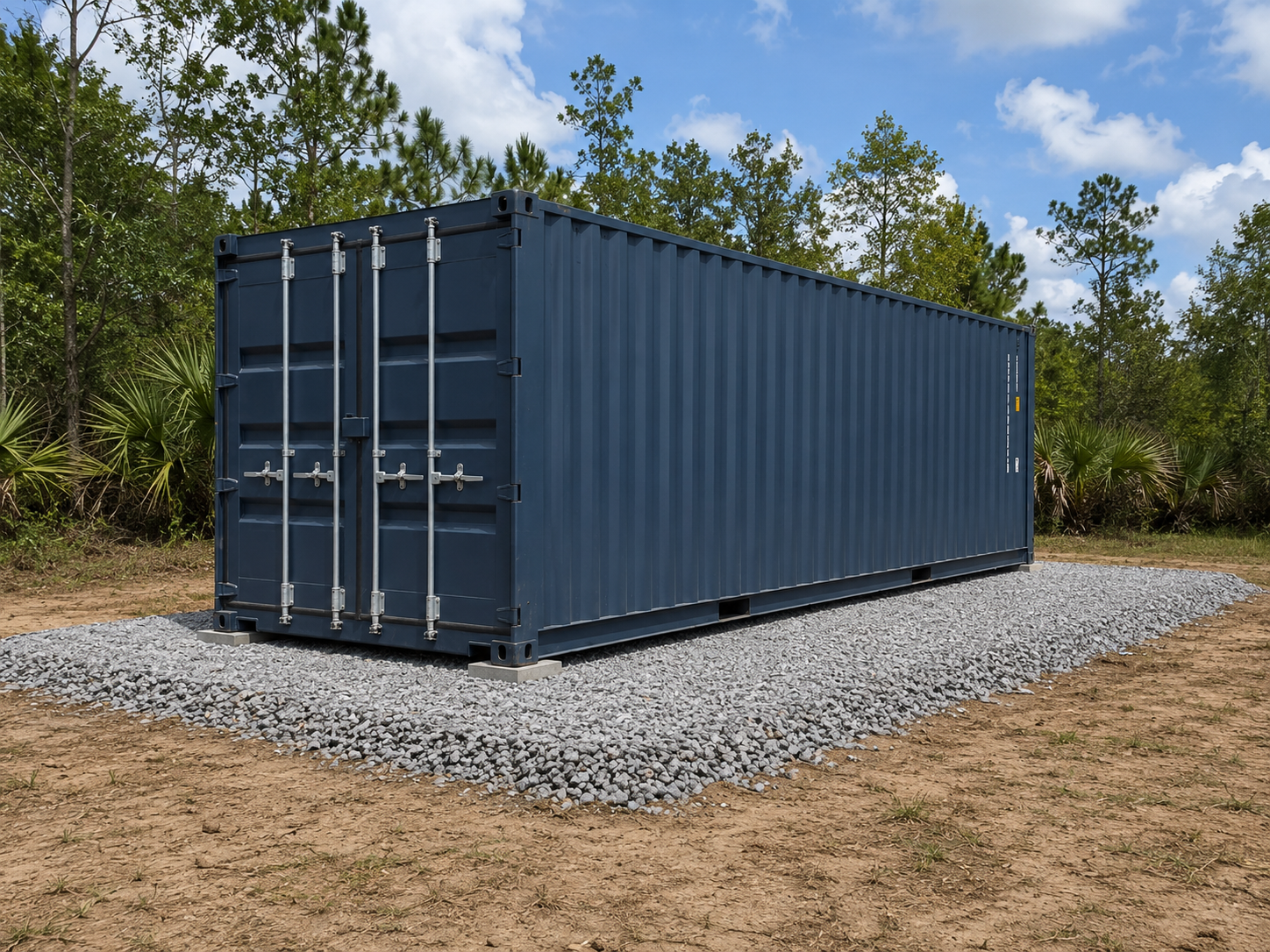
A compacted bed of crushed stone. It drains well, levels easily, and works for most storage containers in Florida and Georgia. This is what we point most customers to, and there is a full spec for it below.
Railroad ties or treated beams
Heavy pressure treated timber laid under the container to lift it off the ground. Cheap, fast, and easy to pull out if you move the box later. The wood gives up eventually and needs a look every so often.
Concrete blocks
Solid blocks stacked under the corners, sometimes called blocking. Quick and low cost for short term placement. Keep the stacks low, because the taller they get the less stable they are.
Concrete piers and footings
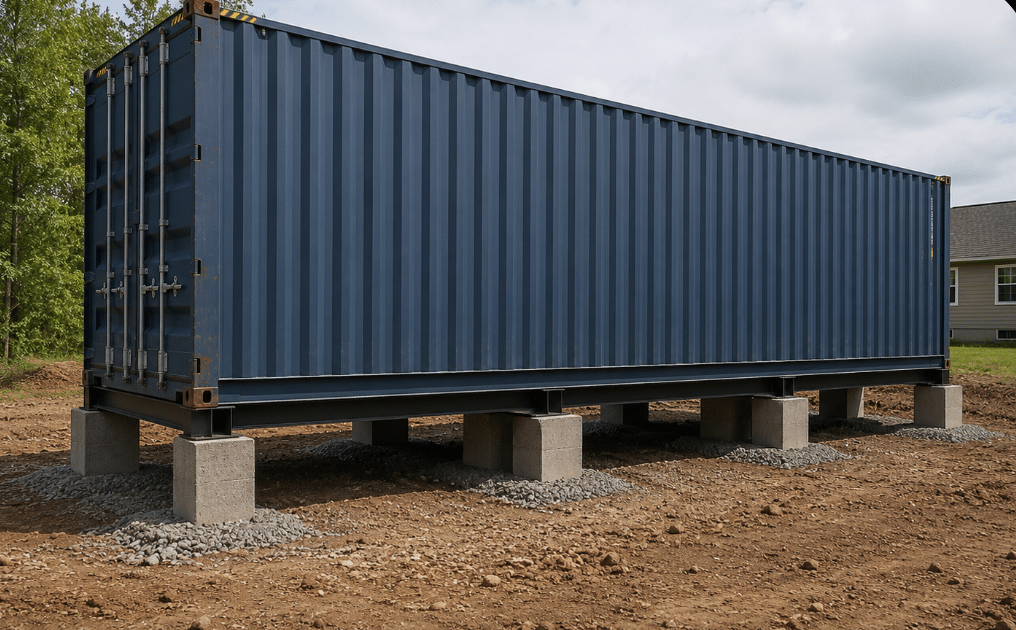
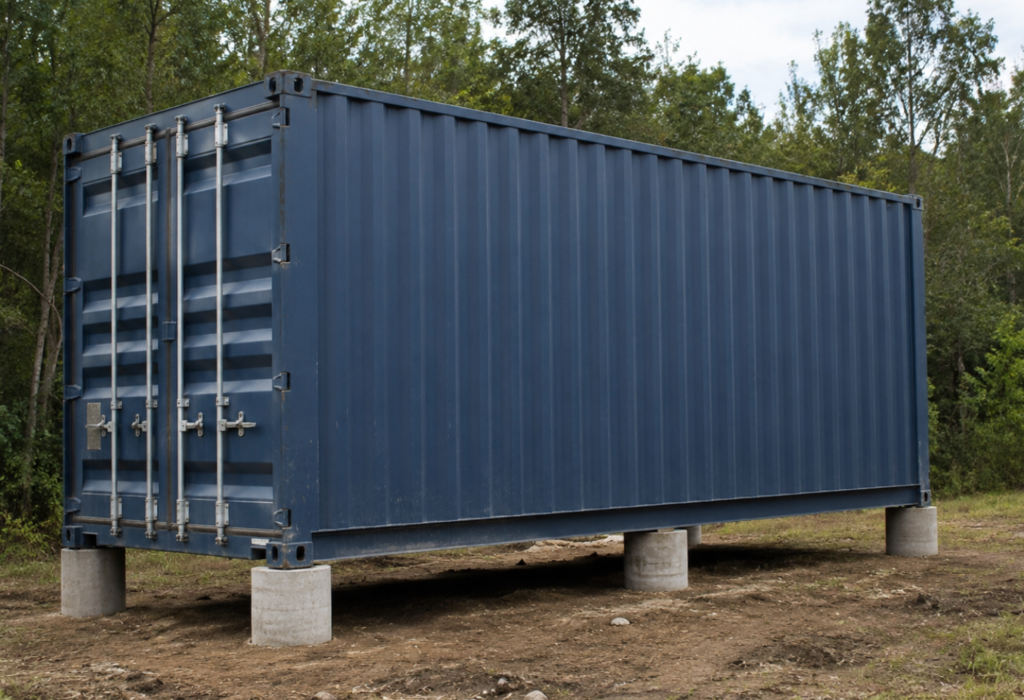
Poured columns set under the corners and load points. A solid middle ground for commercial use or uneven sites, and they let air move under the container.
Concrete slab
A poured pad under the whole footprint. The most stable option and the most expensive, and the right call for offices, occupied spaces, or anything permanent.
What We Recommend for Florida and Georgia
For most storage and farm uses in our area, a crowned gravel pad hits the sweet spot on cost and performance. Here is the build we walk customers through.
Clear the grass and topsoil and level the area. Compact the subgrade until it is firm underfoot. Lay 4 to 6 inches of compacted crushed stone, either number 57 stone or crusher run. Size the pad about a foot past the container on each side so the edges do not wash out. Then crown it, meaning slope it slightly from the middle outward, so rain sheds off instead of pooling under the steel.
The crown is the step most guides skip, and in Florida rain it is the difference between a dry base and a rust problem two years on. Gravel also works with how we deliver. Our tilt bed trailer backs over the spot and slides the container down, and a firm, free draining pad gives the box a clean place to land.
A few more details make the pad last. On soft or sandy ground, lay geotextile fabric under the stone so the gravel does not sink into the soil and vanish over time. Skip rounded pea gravel, since it rolls and never compacts, while angular crushed stone locks together and stays put. Hold the edges with a border of timber, concrete, or a dug shoulder so heavy rain does not carve the pad out from under the corners.
Size the pad to the box. A 20ft container wants roughly 9 by 21 feet, a 40ft wants about 9 by 41, both a foot wider than the steel on every side. If the lot tends to hold water, a shallow gravel trench or a French drain along the uphill edge keeps runoff from collecting under the floor.
Anchoring Your Container for Hurricanes and High Winds
In most of Florida, the foundation also has to keep the container from moving in a storm.
An empty box is heavy, but high wind can still shift it or lift a corner in a bad blow. If your site is in a wind zone, or the container will be occupied or modified, you may need to anchor it. The usual methods tie the corner castings down, either with helical or auger anchors screwed into firm soil or with connections cast into a slab or piers.
How many anchors you need comes down to the container size and the wind rating where you are. Florida wind zones run higher along the coast, and a 40ft box catches a lot of wind on its long side. A typical setup ties down all four corners, and longer containers add points along the rails. If you already have a container sitting loose on a storm prone site, anchors can go in after the fact without moving the box.
Some counties require tie downs for certain uses, and a permitted or occupied unit usually needs engineered anchoring. We handle this across the state, so when we quote your container we can tell you what your county expects. If storm resistance is your main worry, our guide on whether containers are hurricane proof goes deeper.
Common Site Prep Mistakes We See
After thousands of deliveries, the same few problems come up again and again.
- Setting the container on bare grass or topsoil, which traps moisture against the steel and settles unevenly
- Building a pad the exact size of the container, so the edges crumble and wash out within a season
- Using smooth river rock or pea gravel that never compacts and shifts under the corners
- Skipping the slope, so water collects under the floor and rusts it from below
- Leaving no clear, firm path for the delivery truck to back in and set the box down
Most of these cost almost nothing to handle before delivery day. Once a loaded container is on the ground, fixing the base means moving the box, and that is time and money you did not need to spend.
Quickly Choose What Type Of Foundation Your Container Needs
Match your situation to the pad.
- Short term storage on firm, dry ground, go with a gravel pad or railroad ties
- Long term storage on sandy or poorly draining ground, build a compacted, crowned gravel pad
- Office or commercial use with constant door traffic, step up to piers or a slab
- Container home or occupied space, plan on a slab or engineered footings with a permit
Here is the same thing with rough numbers. Costs swing with your site, your region, and local labor, so treat these as ballpark figures, not quotes.
| Foundation | Rough cost | Lifespan | Best for |
|---|---|---|---|
| Gravel pad | $300 to $1,500 | 5 to 10 years | Most storage and farm containers |
| Railroad ties or beams | $40 to $100 depending on qty | 5 to 15 years | Budget setups you may relocate |
| Concrete blocks | $100 to $600 | Short term | Quick, temporary placement |
| Concrete piers | $2,000 to $6,000 | 15 to 25 years | Commercial use, uneven ground |
| Concrete slab | $5,000 and up | 25 years plus | Offices, homes, permanent builds |
What E&S Recommends
We have set more than 13,000 containers on the ground across Florida and Georgia, on our own tilt bed trailers, with our own drivers. So when you call for a quote, we are not guessing about your site. We will tell you what base your container needs for how you plan to use it. We will also tell you what our drivers need for access on delivery day.
We will not sell you concrete you do not need. Plenty of our customers do just fine on a simple gravel pad. If you want a second set of eyes on your spot, request a quote and tell us what you are storing and where it is going.
FAQs
Can I put a shipping container directly on the ground?
For a short stretch on firm, level, dry ground, yes. For long term placement it is risky, because moisture causes rust and uneven ground can twist the frame. A simple gravel pad solves both.
What is the cheapest foundation option?
Concrete blocks and railroad ties are the lowest cost, often a few hundred dollars. They work for short term or relocatable setups, but they do not last as long as gravel or concrete.
How thick should a gravel pad be for a shipping container?
Plan on 4 to 6 inches of compacted crushed stone over firm, cleared subgrade. Size it about a foot wider than the container on each side and crown it so water drains away.
Do I need to anchor my container in Florida?
Often yes, especially in wind zones or for occupied and modified units. Ground anchors or slab connections at the corner castings are common. Your county sets the rules, and we can advise when we quote.
Does a container need a foundation just to be delivered?
For delivery, the main thing is firm, level, accessible ground so the tilt bed trailer can set the box down safely. A foundation is about the long haul. Our delivery guide covers what the site needs on the day.
How big should the gravel pad be for a 40ft container?
About 9 feet wide by 41 feet long, roughly a foot past the container on every side, with 4 to 6 inches of compacted crushed stone. A 20ft container wants the same width and about 21 feet of length.
Can you deliver onto grass or dirt?
Yes, as long as the ground is firm, level, and dry enough for the tilt bed trailer to back in and set the box down. For anything long term we still recommend a gravel pad so the container does not settle or rust.
0 Comments