
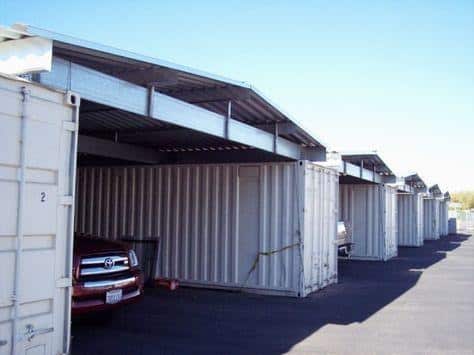
When you’ve invested thousands in vehicles, restoration projects, or automotive inventory, leaving them exposed to Florida’s extreme climate isn’t just risky; it’s expensive. Punishing humidity, intense UV exposure, and hurricane-force winds can devastate unprotected vehicles and auto parts collections in a single season.
Traditional car storage facilities fall short. Climate-controlled storage units charge $150-300 monthly with limited access. Building a garage costs $12,000-25,000 upfront with permits and months of construction. Carports offer minimal protection while sheds lack security for valuable equipment.
Shipping container storage solutions solve these problems by providing weather-tight, secure storage for vehicles and auto parts you own outright. With 30+ years of intermodal experience, ES Equipment Sales has helped hundreds of Florida automotive professionals and collectors protect their investments with certified, inspected containers designed for long-term durability.
Why Choose Shipping Container Vehicle Storage Solutions
Superior Security Compared to Traditional Car Storage Facilities
Shipping containers secure high-value cargo during ocean transport (conditions far harsher than backyard storage). The 16-gauge corrugated steel walls resist cutting, drilling, and prying in ways that garage doors and storage facility partitions cannot match.
Unlike shared-wall facilities where one break-in compromises multiple units, containers provide a single secure access point. Heavy-duty locking mechanisms combined with lock box installations create weather-protected security that deters opportunistic theft. Auto dealerships storing overflow inventory and mechanics securing customer vehicles rely on this protection because containers offer security comparable to commercial-grade safes.
Hurricane-Rated Weather Protection
Containers engineered to survive 30-foot ocean swells and 60+ mph winds during transport can handle Florida’s hurricane season. The structural integrity required for international shipping translates directly to storm protection that carports, sheds, and many permanent structures cannot provide.
Wind ratings for shipping containers meet or exceed residential building codes for coastal zones. Completely sealed against wind-driven rain, these portable vehicle storage units protect vehicles from water intrusion that causes rust, electrical damage, and interior deterioration. Many Florida property owners seek containers because insurance policies favor secure, rated storage for valuable property.
This protection extends beyond major storms. Daily thunderstorms, tropical depressions, and seasonal flooding that damage vehicles in open lots have zero impact on properly sealed containers.
Own Your Storage Solution and Stop Paying Rent
A quality used container eliminates perpetual monthly rental fees while building equity in an asset you can sell, modify, or relocate. The ownership advantage compounds over time; a five-year total cost remains fixed while storage unit rental totals multiply exponentially.
Beyond economics, ownership provides access freedom traditional car storage facilities cannot match. No gate hours restrict when you retrieve parts. No facility rules limit what you store. No storage staff walk past your classic car collection. Your property, your access schedule, your complete control.
Flexible On-Site Placement
Containers go where you need them: next to your shop, behind your house, at the corner of a dealer lot, or across multiple job sites. This positioning advantage eliminates off-site storage inconvenience while providing immediate access for loading parts, retrieving tools, or moving vehicles.
Multi-container configurations expand with growing businesses. Equipment rental companies deploy containers across regions as mobile storage. Construction firms position containers on-site for secure tool storage without daily travel to distant facilities.
Portability adds long-term value. If you relocate, the container moves with you. ES Equipment Sales delivers containers with precision placement, positioning units exactly where you need them using specialized equipment and CDL-licensed drivers.
Choosing the Best Container Grade for Vehicle Storage Quality
Container condition grades significantly impact both price and performance. Understanding what each grade delivers helps you match budget to requirements without overpaying or underbuying quality.
Cargo Worthy: Premium Protection for Valuable Inventory
Cargo Worthy certification means a licensed container surveyor has inspected structural integrity and verified the unit meets international shipping standards. Superior door seals and construction quality provide better long-term durability than WWT containers.
Best For:
- Classic car collections valued $20,000-100,000
- Dealership inventory requiring professional standards
- Repair shop parts departments where insurance documentation matters
- Equipment rental fleet storage
Certification Advantages:
ES Equipment Sales owner holds a licensed container surveyor certification, enabling CSC (Container Safety Convention) certification. This documentation proves structural integrity to insurance companies, satisfies commercial requirements, and qualifies containers for international ocean shipping if needed.
New One-Trip: Pristine Condition for Premium Collections
One-trip containers made a single voyage transporting cargo from overseas manufacturing to US ports. Zero rust, pristine paint, perfect door seals, and factory-fresh interiors characterize these units.
Best For:
- Classic car collections worth $50,000+ (Corvettes, Porsche, vintage restorations)
- Climate-controlled garage conversions requiring best foundation for insulation and A/C
- Applications where pristine appearance affects property value or HOA approval
Most buyers don’t need new containers for basic vehicle storage. If you’re storing standard vehicles or general equipment, new containers deliver minimal functional advantage over Cargo Worthy units. However, for premium vehicle collections or custom workshop projects, new containers provide the foundation that protects long-term investments.
Preparing Your Container for Vehicle and Auto Parts Storage
Interior Setup
Vehicle Clearance: Measure your vehicle’s width at its widest point (usually mirrors), add 12 inches total clearance, and verify this fits within the container’s 7’8″ interior width.
Entry Ramps: Portable aluminum ramps provide flexibility. Permanent concrete or steel ramps offer superior stability for frequent access. Calculate rise-over-run to determine adequate ramp length for your vehicle’s ground clearance.
Floor Protection: Heavy-duty plastic sheeting or interlocking floor tiles prevent oil drips and fluid leaks from penetrating plywood flooring.
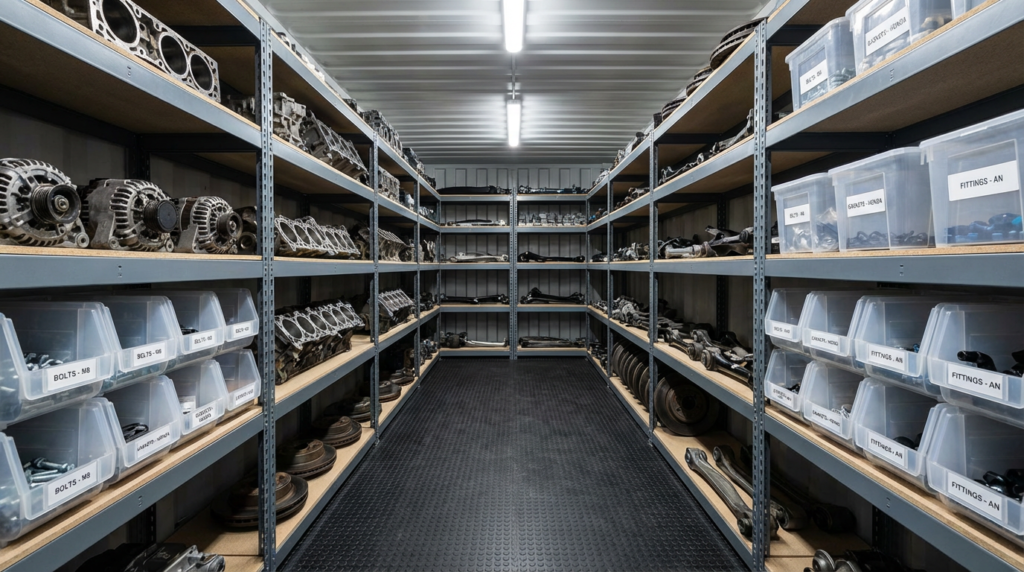
Auto Parts Organization: Wall-mounted shelving maximizes vertical space without obstructing vehicle access. Heavy-duty metal shelving systems support parts inventory weight while keeping items organized. Position frequently accessed parts on eye-level shelves.
Ventilation & Moisture Control
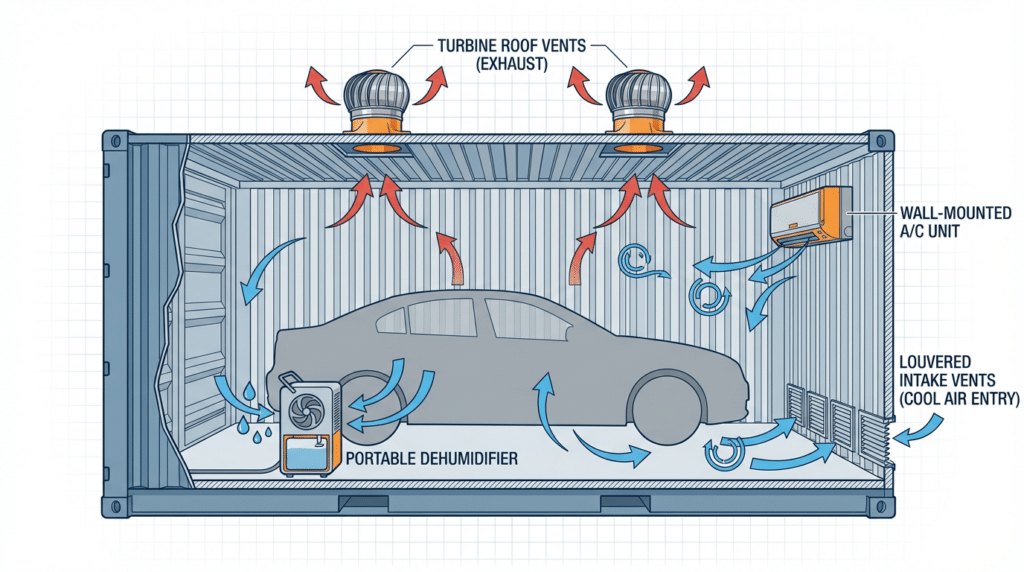
Florida humidity creates moisture management challenges. Sealed containers trap humid air, causing condensation that promotes rust. Passive ventilation through container vents provides continuous airflow without compromising security.
Dehumidifiers sized appropriately for container volume (50-70 pint capacity for 40ft containers) actively control moisture levels. Running dehumidifiers during humid months prevents condensation without expensive active ventilation systems.
Temperature-sensitive parts including batteries, electronics, and rubber components benefit from insulated container sections or dedicated climate-controlled areas. ES Equipment Sales can install wall-mounted A/C units for customers requiring active climate control.
Managing Florida’s Climate for Vehicle Storage
Humidity & Heat Solutions
Florida averages 60-80% relative humidity year-round, creating ideal conditions for rust formation and electrical system corrosion. Condensation forms when temperature differentials occur (cooler nighttime temperatures cause moisture in warm air to condense on metal surfaces).
Humidity Solutions:
- 50-70 pint dehumidifiers for 40ft containers
- Battery tender trickle chargers maintaining charge
- Breathable car covers allowing air circulation
- Desiccant packs inside vehicle interiors
Heat Management:
- Passive roof vents allowing hot air to escape
- Reflective container coatings reducing heat absorption
- Insulation for temperature-sensitive parts
- Wall-mounted A/C units for active cooling
Summer interior temperatures inside containers can exceed 130°F during peak afternoon hours. Heat-sensitive parts include rubber components (belts, hoses, gaskets), aerosol products, batteries, and certain adhesives.
Hurricane Protection for Secure Vehicle Storage
Container wind ratings meet or exceed residential coastal building codes. Properly secured containers resist wind forces that destroy carports and damage unprotected vehicles.
Anchoring requirements depend on property location and local codes. Coastal properties benefit from containers secured to concrete foundations using twist locks or welded anchor points.
CSC certification and insurance documentation matter when filing storm damage claims. Cargo Worthy and New containers from ES Equipment Sales include surveyor certification documenting structural integrity (professional documentation that satisfies insurance adjusters).
Learn more about hurricane protection with storage containers.
Automotive-Specific Container Modifications
Roll-Up Door Conversions for Easy Vehicle Access
Standard shipping container doors swing outward 270 degrees, requiring significant clearance space. Roll-up doors eliminate this limitation by opening vertically, requiring zero ground clearance and minimal forward space.
Full-width roll-up doors span the entire container end, providing maximum opening for vehicle entry. Drive vehicles straight in without angle maneuvering. Installation takes 3-5 business days.
Additional Access Options
Man Doors: Walk-in access without opening main vehicle doors. Standard installation includes weather stripping, locking hardware, and proper framing.
Double-Door Containers: Cargo doors at both ends, creating drive-through capability for properties with access from both container ends.
Side-Opening Containers: Access along the long side benefits forklift loading for parts departments or workshop configurations where side entry improves workflow.
Climate Control & Security Systems
Ventilation Systems: Turbine vents installed in container roofs exhaust hot air through natural convection while louvered vents near container floors allow cool air intake.
A/C Installation: Wall-mounted A/C units provide active climate control for temperature-sensitive applications. ES Equipment Sales cuts openings, installs mounting brackets, and ensures proper sealing.
Security Enhancements: Lock boxes protect padlocks from weather exposure and tampering attempts. Heavy-duty lock boxes enclose padlocks completely, preventing bolt cutter access.
Workshop Customizations
- Wall-mounted shelving: Industrial-grade metal shelving supporting 200-400 pounds per shelf
- LED lighting: Battery-powered or hardwired electrical systems
- Workbench setups: Heavy-duty benches mounted along container walls
- Ramps: Portable aluminum or permanent concrete construction
Organizing Auto Parts for Easy Access
Shelving Layout: Position frequently accessed parts on eye-level shelves. Store heavy items on bottom shelves to prevent tip-over hazards. Reserve top shelves for lightweight, infrequently used items.
Small Parts Storage: Clear plastic bins with labels identify contents without opening containers. Drawer organizers sized for nuts, bolts, and washers keep fasteners sorted.
Inventory Management: Label shelves with part numbers and bin locations. Implement inventory management software for businesses. Conduct quarterly physical counts.
Climate-Sensitive Placement: Store batteries, electronics, and sensitive equipment in insulated sections or climate-controlled areas.
Security & Insurance for Storage
Lock Types: Disc locks feature circular shackles enclosed in hardened steel housings that prevent bolt cutter access. Grade 3 or higher padlocks provide adequate security.
Exterior Lighting: Motion-activated LED floodlights illuminate container areas when movement triggers sensors, surprising intruders and alerting property owners.
Inventory Documentation: Photograph each vehicle from multiple angles before storage, capturing VIN numbers, odometer readings, and any existing damage. Maintain detailed parts inventory lists.
Get Your Free Vehicle Storage Container Quote
Discuss your automotive storage requirements with ES Equipment Sales specialists. We’ll assess your property, review vehicle dimensions, explain grade options, and recommend solutions matching your needs and budget.
No obligation, no pressure (just honest guidance from professionals with 30+ years of industry experience). Most consultations take 15-20 minutes and provide clarity about container suitability, sizing, and costs.
Contact ES Equipment Sales:
Phone: 800-995-2417 or 386-389-0715
Business Hours: Monday-Friday 9 AM – 6 PM, Saturday 9 AM – Noon
Yard Location: 8547 SW US Highway 27, Fort White, FL (appointments available for container inspection)
Whether you’re a classic car collector protecting a restoration project, a dealership managing seasonal inventory, or a mechanic securing customer vehicles and parts, ES Equipment Sales provides the containers, modifications, and expertise that protect your automotive investments.
Frequently Asked Questions About Vehicle Storage Containers
What is the best vehicle storage solution for Florida’s humidity?
Container storage with proper moisture control provides the best protection. Install passive vents to maintain airflow and use dehumidifiers rated for container volume (50-70 pint capacity for 40ft containers). With appropriate ventilation, containers protect vehicles and auto parts effectively in Florida’s climate.
How do I store car parts in a shipping container?
Use wall-mounted heavy-duty shelving to organize parts vertically without obstructing vehicle access. Store frequently accessed parts at eye level, heavy items on bottom shelves. Clear plastic bins with labels help identify contents quickly and efficiently.
Which vehicle storage option is better? Container vs garage rental?
Containers eliminate perpetual rental fees with 24/7 access, no gate hours, and complete control over your storage for vehicles and auto parts. You own the container outright versus paying monthly rental fees that never build equity.
Can I store vehicles with fluids and fuel in containers?
Yes, store vehicles with full fuel tanks and topped-off fluids. Full tanks prevent condensation that causes fuel system corrosion. Place absorbent mats under vehicles to catch minor drips and protect container floors.
0 Comments