
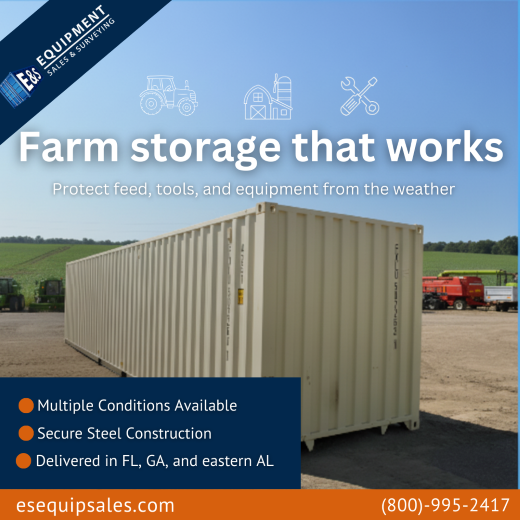
Traditional farm buildings cost thousands to construct with timelines stretching 6-12 weeks. Shipping containers arrive in 7-12 days, cost $2,600-$3,600 delivered, and provide immediate weatherproof storage. Modern farmers across Florida and Georgia are discovering what cargo-worthy storage containers offer: secure protection, flexibility, and real cost savings over pole barns or metal buildings.
Why Storage Containers Beat Traditional Farm Buildings
Hidden Costs of Traditional Farm Storage
Pole barns require months of planning, permitting, and weather-dependent construction. Material costs have increased 40-60% recently while skilled labor grows scarcer. Wood structures demand treatment against rot and insects. Metal buildings rust in humid climates. Foundation settling, roof repairs, and structural adjustments add continuous expenses.
Construction competes with planting and harvest schedules. Weather delays leave equipment or harvests exposed when protection matters most.
How Container Storage Solutions Solve Agricultural Challenges
A 40-foot high cube container provides 2,720 cubic feet of secure storage within 7-12 days. Most rural areas don’t require permits. No weather delays. No contractor scheduling conflicts.
Steel construction withstands agricultural demands that destroy conventional storage. These modular systems resist moisture, pests, and impact damage. Lockable cargo doors provide security that open-sided buildings can’t match, which is critical for expensive equipment, chemicals, or fuel storage.
Agricultural containers deliver immediate value while preserving capital for other farm investments. Relocate storage as operations grow or crop patterns shift. Sell containers when needs change, maintaining 60-75% value after 5-10 years of service.
Learn how to finance a shipping container.
12 Container Farming Uses for Modern Agriculture
1. Farm Equipment Storage and Machinery Protection
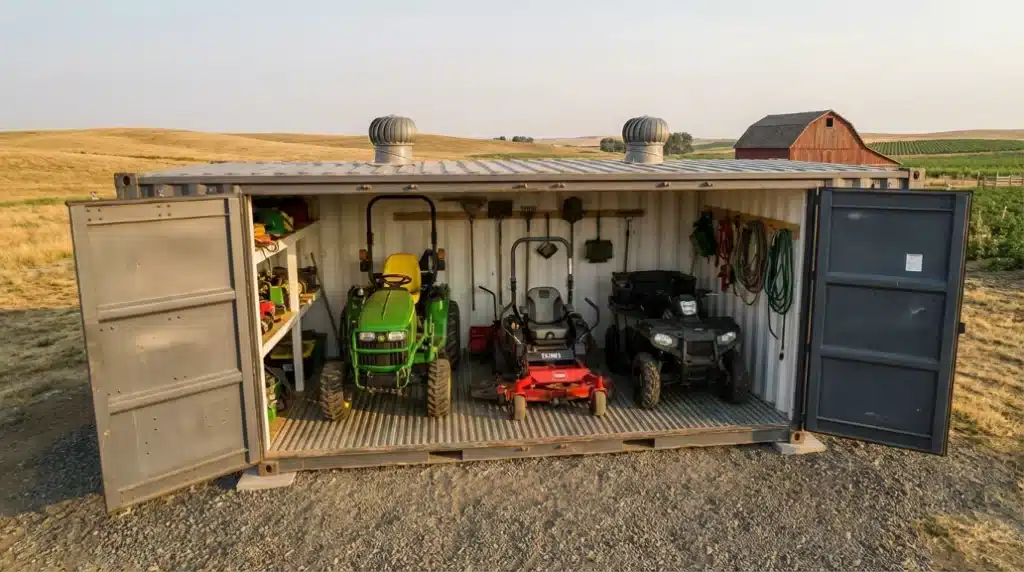
Tractors, combines, ATVs, and implements deteriorate rapidly without shelter. Exposure causes paint degradation, hydraulic seal failure, and electronic corrosion leading to expensive repairs and reduced resale value.
Capacity: A 40-foot container accommodates compact tractors, zero-turn mowers, ATVs, utility vehicles, and smaller implements. High cube models (9’6″ interior height) fit equipment with roll bars or elevated operator stations.
Technical specs: Standard 40-foot units provide 320 square feet with 7’6″ interior height. Door openings measure 7’8″ wide by 7’5″ high on standard units, 8’5″ high on high cubes.
Setup: Level units on compacted gravel preventing ground moisture. Double-door configurations enable drive-through access. Install passive roof vents or whirlybird turbines preventing condensation.
Cost savings: Outdoor storage costs thousands in premature maintenance. A cargo-worthy container providing 20+ years protection costs less than one damaged transmission or combine header repair.
2. Hay Storage Containers and Straw Preservation
Rain-damaged hay develops mold causing respiratory issues in livestock. Wet bales create fire hazards through spontaneous combustion.
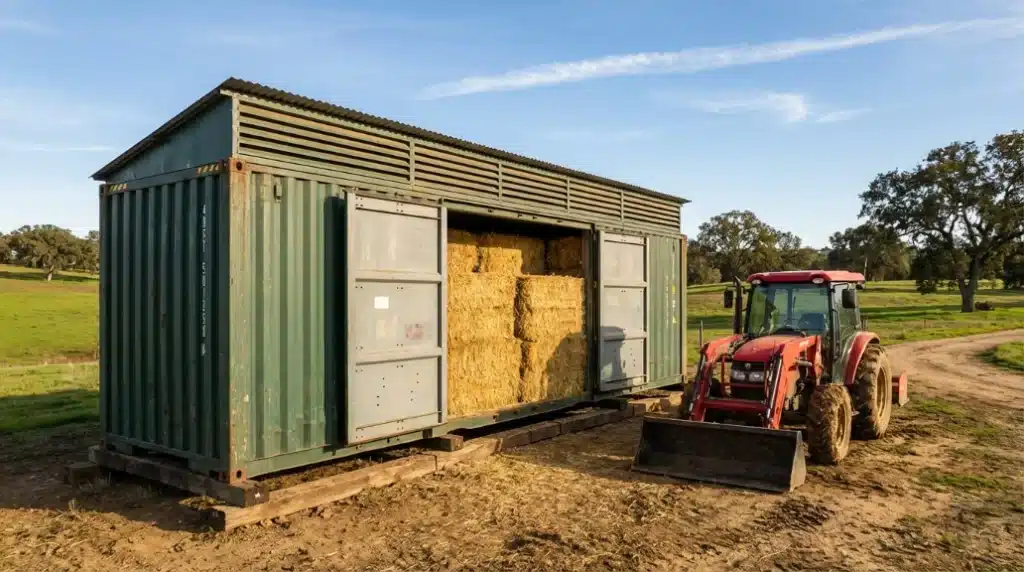
Capacity: 20-foot containers hold 120-140 square bales. 40-foot units accommodate 240-280 square bales. Round bales require high cube models, fitting 6-8 standard 5-foot rounds.
Setup: Elevate units on treated lumber or concrete blocks ensuring airflow beneath floors. Install crossflow ventilation through opposing roof vents. Position for easy forklift or tractor access.
Safety: Never store wet hay because moisture creates spontaneous combustion risk. Wait 4-6 weeks after baling before sealed storage, ensuring moisture content below 18%. Monitor hay temperature the first month. Temperatures exceeding 150°F indicate dangerous fermentation requiring immediate removal.
Cost savings: Preventing even 10% loss on a year’s hay supply pays for the investment in 2-3 seasons.
3. Grain Storage Containers and Livestock Feed Protection
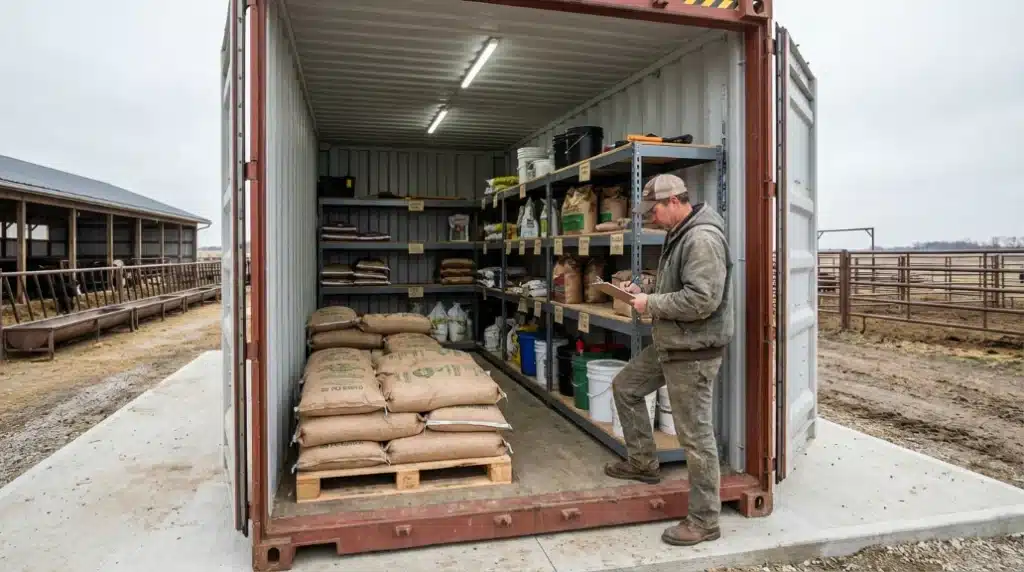
Bagged feed needs weatherproof protection from moisture and pests.Storage containers are a great way to protect feed the elements.
Capacity: 20-foot units store 300-400 50-pound feed bags on pallets. 40-foot containers accommodate 600-800 bags. For bulk grain, units hold approximately 800-1,000 bushels with proper aeration systems.
Technical specs: Bulk storage requires aeration maintaining moisture below 14% for corn, 13% for soybeans. Temperature monitoring alerts to hot spots indicating fermentation or insects.
Setup: Install pallets elevating feed above moisture. Heavy-duty shelving organizes different types. Bulk storage needs professional modifications including aeration systems and loading doors.
Pest prevention: Containers provide superior pest exclusion when doors seal properly. Monthly inspections identify entry points before infestations develop.
Cost savings: Rodent damage costs thousands annually in spoiled feed and veterinary expenses.
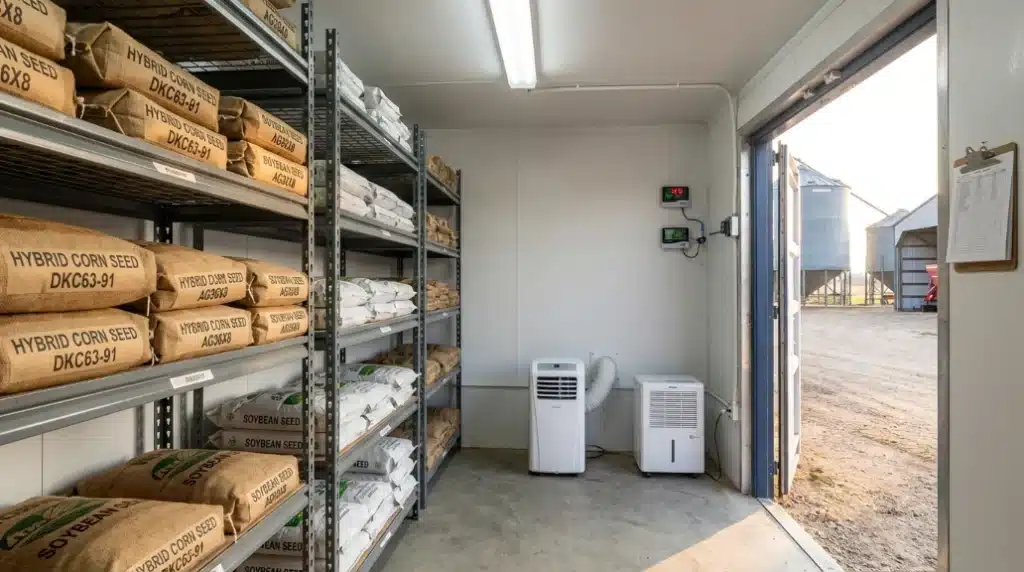
4. Seed Storage Containers and Preservation Systems
Temperature fluctuations, humidity, and pests reduce seed germination rates, which directly impacts yields.
Capacity: 20-foot units store 200-300 bags with organized shelving separating varieties.
Optimal conditions: Maintain 50-70°F with relative humidity below 50%. Each 1% reduction in seed moisture content or 10°F decrease doubles seed viability.
Setup: Climate control is critical. Insulation plus ventilation maintains stable conditions. Install shelving allowing air circulation between bags.
Viability standards: Hybrid corn maintains 85-90% germination when properly stored for 8-10 months. Soybeans preserve 80-85% germination through similar periods.
Safety: Store treated seed separately preventing cross-contamination. Never store treated seed where children or pets might access it.
Cost savings: Germination loss of 10% on large orders costs thousands in reduced stands and replanting expenses.
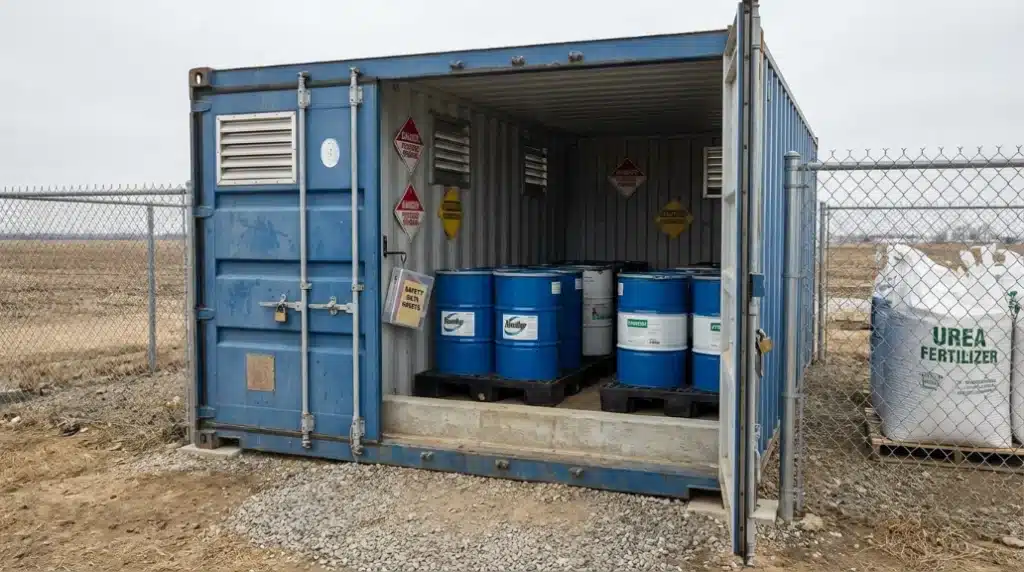
5. Agricultural Chemical Storage and Fertilizer Container Systems
Agricultural chemicals require secure storage protecting product integrity while ensuring safety compliance.
Capacity: 20-foot units accommodate 80-120 55-gallon drums or 200-300 smaller containers. Bulk fertilizer bags stack on pallets, holding 15-20 tons.
Technical specs: Chemical storage requires secondary containment with minimum 110% capacity of largest container. Ventilation must provide minimum 1 air change per hour. Lock systems restrict unauthorized access.
Setup: Install chemical-resistant flooring and spill containment pallets. Proper ventilation prevents vapor buildup. Secure locking restricts access to authorized personnel.
Temperature standards: Liquid fertilizers require storage above 32°F preventing crystallization and below 120°F preventing degradation. Pesticides maintain stability between 40-90°F.
Safety compliance: Federal and state regulations require specific standards. Most require secondary containment, ventilation, restricted access, and emergency response equipment. Keep Safety Data Sheets accessible.
Cost savings: Secure storage prevents theft and degraded chemicals losing effectiveness.
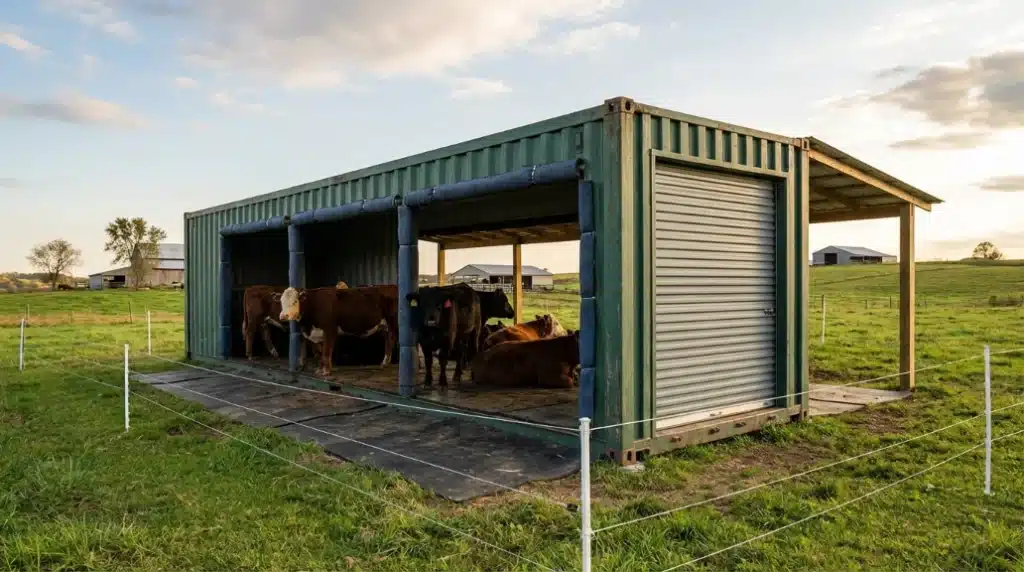
6. Livestock Shelter Containers and Portable Barn Solutions
Modified containers provide mobile shelter at a lower investment than permanent barn construction.
Capacity: A 40-foot unit with open sides accommodates 8-12 cattle or 15-20 sheep/goats.
Technical specs: Guidelines recommend minimum 50-75 square feet per adult cow, 15-20 square feet per sheep or goat. Modifications removing long sides create three-sided structures providing weather protection with natural ventilation.
Setup: Roll-up doors replace standard cargo doors. Remove one full side creating a three-sided shelter. Insulation prevents temperature extremes. Roof overhangs extending 2-4 feet improve protection.
Animal welfare: Heat stress occurs above 80°F for cattle, 85°F for sheep and goats. Wind chill creates cold stress below 32°F for cattle, 20°F for sheep.
Safety: Finish all sharp edges preventing injury. Install rubber matting or deep bedding protecting livestock from steel floors.
Cost savings: Container shelters cost 60-70% less than pole barns while offering portability for rotational grazing.
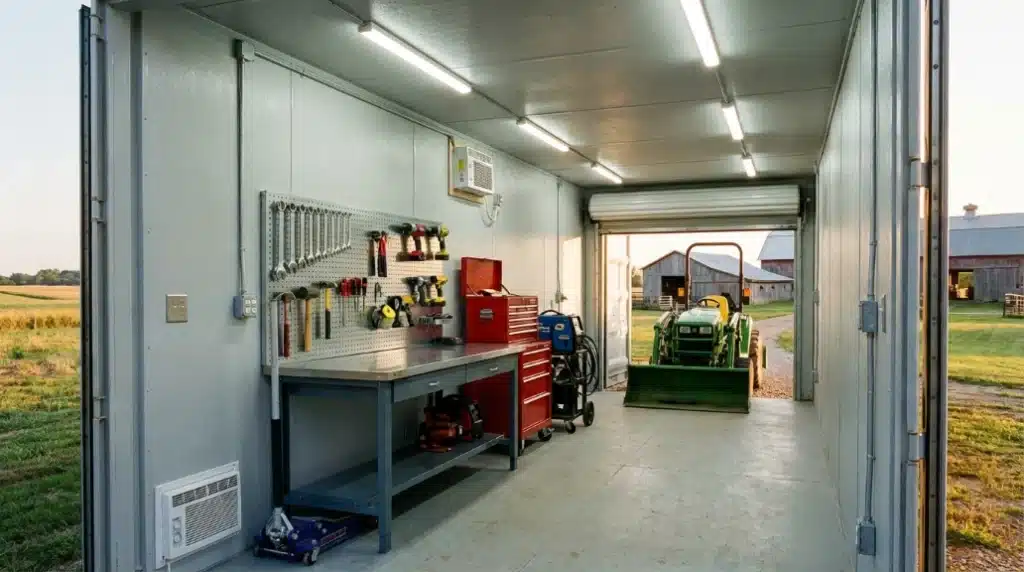
7. Farm Workshop Containers and On-Site Maintenance Space
On-site repair capabilities reduce downtime and eliminate transportation costs to commercial shops.
Capacity: 20-foot units provide 160 square feet for basic maintenance. 40-foot models offer 320 square feet accommodating larger equipment service.
Technical specs: Workshop electrical requires minimum 100-amp service. LED lighting providing 50-75 foot-candles ensures adequate visibility. HVAC systems sized at 1 ton per 400 square feet maintain comfortable temperatures.
Setup: Roll-up doors provide wide equipment access. Heavy-duty shelving organizes tools and parts. Electrical modifications include outlets and LED lighting. Insulation combined with ventilation enables year-round use.
Safety: Install proper electrical grounding. Maintain fire extinguishers within 30 feet. Ensure adequate ventilation during welding or painting. Store flammable materials in approved safety cabinets.
Cost savings: On-site capability delivers real savings versus commercial repair rates and equipment downtime.
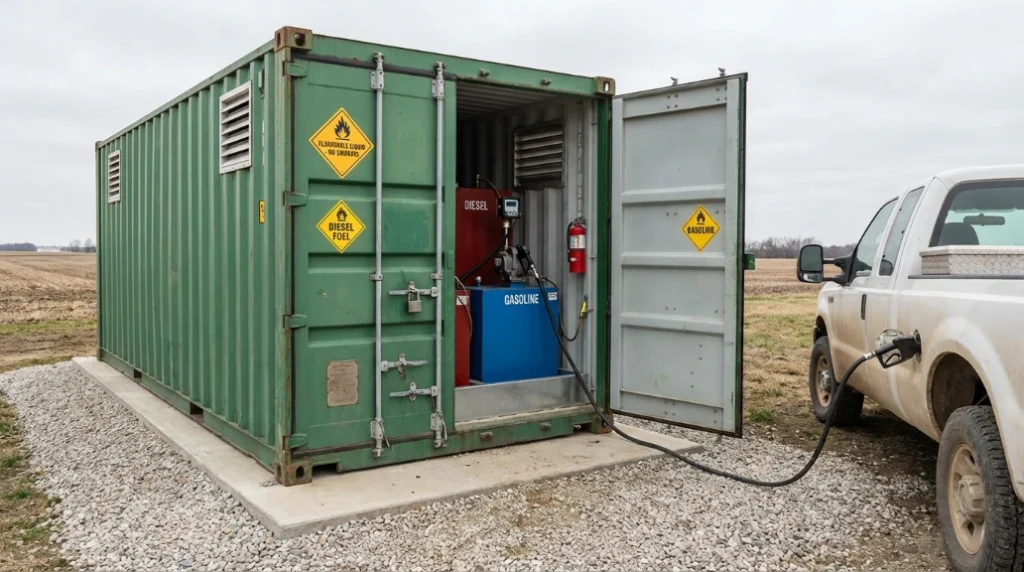
8. Fuel Storage Containers and Bulk Oil Systems
Bulk fuel storage reduces costs through wholesale purchasing while ensuring availability during critical periods.
Capacity: 20-foot units accommodate 2-4 fuel transfer tanks (250-500 gallons each) with room for oil storage and spill containment supplies.
Technical specs: Fuel systems require UL-listed tanks with secondary containment meeting 110% capacity. Ventilation must provide minimum 1 air change per hour. Grounding systems with maximum 10-ohm resistance prevent static electricity ignition.
Setup: Secondary containment prevents environmental contamination. Proper ventilation manages vapor buildup. Secure locking restricts access. Install grounding equipment preventing static hazards.
Fuel quality: Diesel maintains optimal quality 6-12 months in proper storage. Gasoline degrades more rapidly, maintaining quality 3-6 months without stabilizers.
Safety compliance: Fuel storage must comply with NFPA standards, EPA regulations, and local fire codes. Most jurisdictions require permits exceeding 1,100 gallons aggregate capacity.
Cost savings: Retail markup versus bulk delivery creates real savings for operations consuming large amounts of fuel annually.
Learn how our rent to own program works!
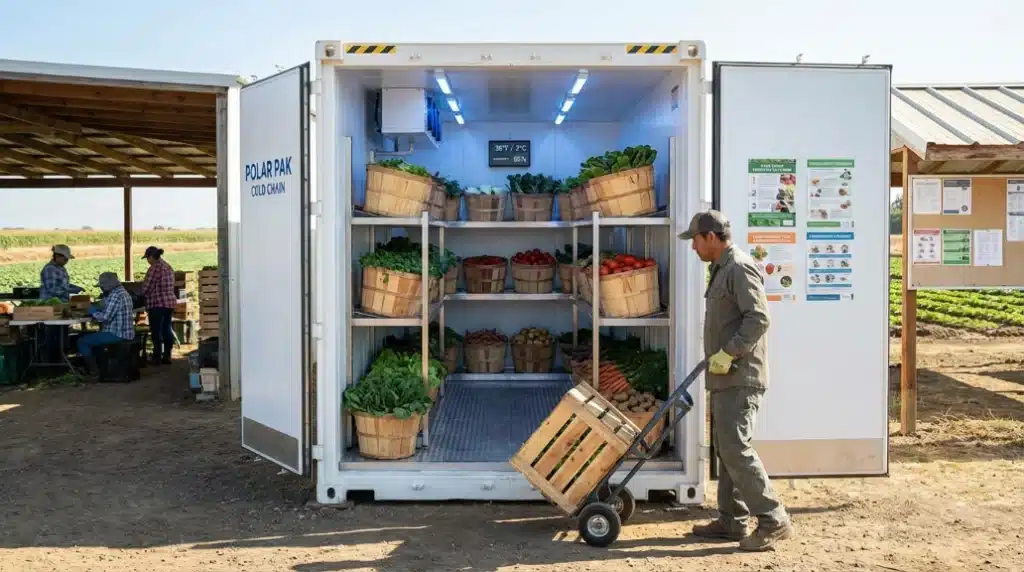
9. Crop Storage Containers and Post-Harvest Produce Systems
Temperature-sensitive crops lose market value rapidly without proper post-harvest handling.
Capacity: 20-foot units accommodate 80-120 bushel crates. Refrigerated containers (reefers) maintain temperature control for crops requiring cold storage.
Technical specs: Refrigerated containers maintain -20°F to +70°F with ±3°F accuracy. Non-running reefers provide R-7 to R-10 insulation without refrigeration costs.
Storage standards: Leafy greens require 32-36°F with 95-100% humidity, maintaining quality 10-14 days. Root vegetables tolerate 32-40°F with 90-95% humidity, storing 1-6 months. Tomatoes require 55-70°F preventing chilling injury.
Safety: Clean and sanitize between uses preventing cross-contamination. Never store produce with chemicals or petroleum products. Maintain temperature monitoring logs for food safety compliance.
Cost savings: Even 5-10% quality degradation reduces income on commercial operations.
Recommended grade: Cargo-worthy, or non-running reefers for insulation
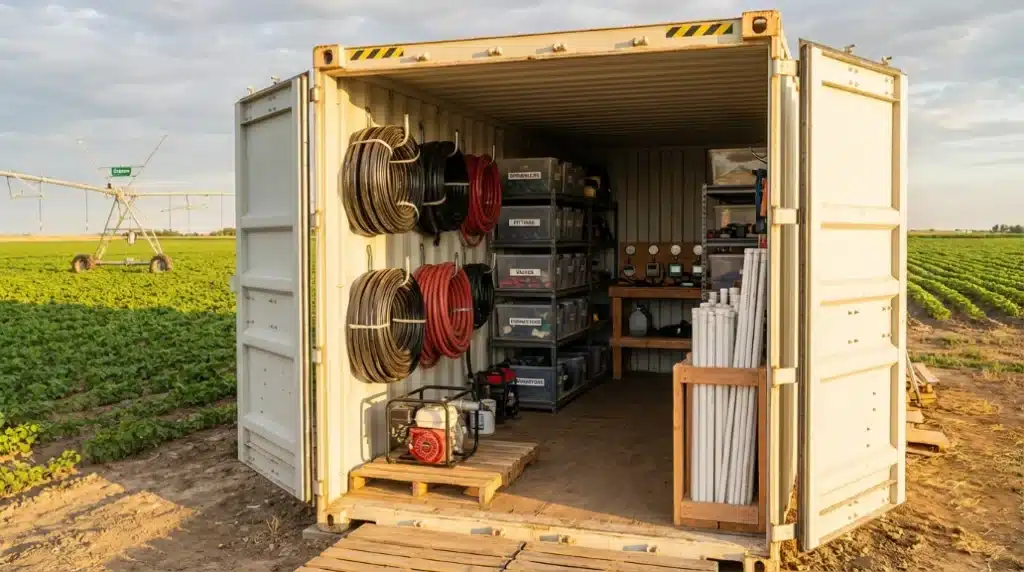
10. Irrigation Equipment Storage and Water System Containers
Irrigation equipment deteriorates rapidly when stored improperly.
Capacity: 20-foot units store complete systems for 20-40 acres including drip tape, sprinklers, fittings, and pumps.
Setup: Organize equipment by system type or field location. Install shelving for small components. Ensure space for rolling or hanging drip lines preventing kinking.
Equipment preservation: Drip tape properly stored lasts 3-5 seasons versus 1-2 exposed. Metal components require dry storage because moisture exposure reduces life 40-60%.
Safety: Drain all water from pipes, pumps, and fittings before winter storage. Coil drip tape loosely. Label components by field simplifying spring installation.
Cost savings: Equipment exposed to weather requires replacement every 3-5 years instead of 8-12 years with proper storage.
11. Portable Infrastructure Storage and Fencing Systems
Portable fencing, gates, water troughs, and handling equipment require organized storage between grazing rotations.
Capacity: 20-foot units store 1,000-1,500 feet of portable electric fencing with posts, insulators, and chargers.
Setup: Install hook systems or shelving organizing equipment by type or pasture. Vertical storage maximizes space efficiency while preventing warping.
Equipment maintenance: Portable infrastructure properly stored maintains functionality longer. Galvanized panels stored dry last 15-20 years versus 8-12 years with continuous weather exposure.
Safety: Disconnect and store energizers separately. Inspect fencing annually for damage. Organize portable panels ensuring stable stacking.
Cost savings: Proper storage reduces annual replacement costs while improving efficiency through better organization.
12. Emergency Livestock Feed Reserve Storage
Drought, delayed deliveries, or unexpected weather create feed shortages threatening operations.
Capacity: 20-foot units store 6-8 weeks emergency feed for 20-30 head of cattle. 40-foot containers accommodate larger herds or extended reserve periods.
Feed preservation: Proper storage maintains nutritional value. Grain-based feeds lose 2-3% protein monthly in poor conditions. Proper storage reduces degradation to less than 1% monthly.
Setup: Elevate feed on pallets preventing moisture damage. Install shelving facilitating rotation (first in, first out). Ensure ventilation preventing condensation.
Safety: Date all incoming feed. Inspect monthly for moisture damage or pest activity. Store minerals separately preventing cross-contamination.
Cost savings: Emergency purchases cost 30-50% premiums over normal pricing. Bulk purchasing plus secure storage generates immediate savings while providing insurance against supply disruptions.
How to Choose the Best Agricultural Storage Container
Container Sizing Guide for Farm Applications
| Size | Dimensions (Interior) | Floor Space | Best Agricultural Uses |
| 10′ | 9’5″ × 7’8″ × 7’10” | 80 sq ft | Tool storage, small chemical storage, remote locations |
| 20′ Standard | 19’4″ × 7’8″ × 7’6″ | 160 sq ft | Small equipment, 120-140 hay bales, 300-400 feed bags |
| 40′ Standard | 39’5″ × 7’8″ × 7’10” | 320 sq ft | Compact tractors, 240-280 hay bales, 600-800 feed bags |
| 40′ High Cube | 39’5″ × 7’8″ × 8’10” | 340 sq ft | Tall equipment, 6-8 round bales, vertical storage optimization |
Understanding Storage Container Grades for Agriculture
Cargo-worthy certification requires passing International Convention for Safe Containers (CSC) inspection standards. Inspections verify structural integrity, weathertight door seals, corner post condition, crossmember soundness, and floor integrity. This certification ensures reliable protection for valuable farm assets.
Important: Many competitors market wind/water tight containers as cargo-worthy at lower prices. This misrepresentation costs buyers expecting certified quality. Understand grade definitions before purchasing.
Popular Agricultural Container Modifications
| Modification | Timeline | Benefits |
| Roll-Up Door | 3-4 weeks | No outward swing clearance, faster operation, easier equipment entry |
| Ventilation Package | 1 week | Prevents condensation, manages temperatures, improves air quality |
| Heavy-Duty Shelving | 1 week | Maximizes capacity, improves organization, protects from floor moisture |
| Insulation & Climate Control | 2-3 weeks | Temperature stability, workshop comfort, preserves sensitive materials |
| Security Upgrades | 1 week | Theft protection, insurance benefits, peace of mind |
Ventilation specifications:
- Passive vents: 12×12″ or 12×24″ louvered designs preventing rain entry
- Whirlybird turbines: 12-14″ diameter, exhaust 600-1,000 CFM depending on wind
- Solar fans: 10-20 watt panels, 800-1,200 CFM, thermostat-controlled
Climate control specifications:
- 20′ containers: 9,000-12,000 BTU AC units
- 40′ containers: 18,000-24,000 BTU capacity
- Heating: Electric (1,500-5,000 watts) or propane (10,000-30,000 BTU)
Ready to Transform Your Farm Storage?
E&S Equipment Sales has served agricultural operations across Florida and Georgia since 2010, delivering over 11,000 containers. Our 30+ years of container industry experience means we understand the unique challenges agricultural operations face.
What sets us apart:
- Licensed container surveyor ensuring quality before delivery
- In-house modification capabilities developed over 15 years
- CDL-licensed drivers navigating rural properties safely
- Wholesale pricing eliminating broker markups
Contact us:
- Phone: 800-995-2417
- Mobile: 386-389-0715
- Hours: Monday-Friday 9am-6pm, Saturday 9am-Noon
- Location: 637 SW SR-47, Lake City (by appointment)
We believe educated customers make the best decisions. No high-pressure sales, just honest guidance helping protect valuable farm investments.
Frequently Asked Questions About Agricultural Storage Containers
How long do storage containers last in agricultural applications?
Cargo-worthy containers provide 20-25 years of reliable service with proper maintenance. New containers exceed 30 years. Basic maintenance including occasional roof coating extends service life even more.
Do containers rust in Florida’s humid climate?
Cargo-worthy containers feature rust-resistant steel designed for ocean environments more corrosive than agricultural properties. Surface rust occasionally develops but rarely compromises structural integrity. Coastal areas with salt air experience accelerated corrosion versus inland locations.
What foundation do I need?
Most applications require 4-6 inches of compacted gravel providing drainage and level surfaces. Hay storage or moisture-sensitive applications benefit from concrete runners elevating units further. Workshops or permanent installations may warrant full concrete slabs.
How do I prevent condensation in stored hay?
Install passive roof vents creating airflow equalizing interior and external temperatures. Elevate units on gravel improving airflow under floors. Stack hay allows air circulation between bales. These strategies combined with proper bale moisture content prevent condensation causing deterioration.
What modifications work best for farm equipment storage?
Roll-up doors provide wide, convenient access. Ventilation prevents moisture damaging hydraulic systems or electronics. Shelving organizes small parts and maintenance supplies. Electrical service enables lighting and power tools, transforming units into functional maintenance facilities.
0 Comments